
Casa France Faces Liquidation Amidst Furniture Market Struggles
Table of Contents
France, employing nearly 700, is likely headed for compulsory liquidation after recovery offers were deemed inadmissible. What led to this decision?">
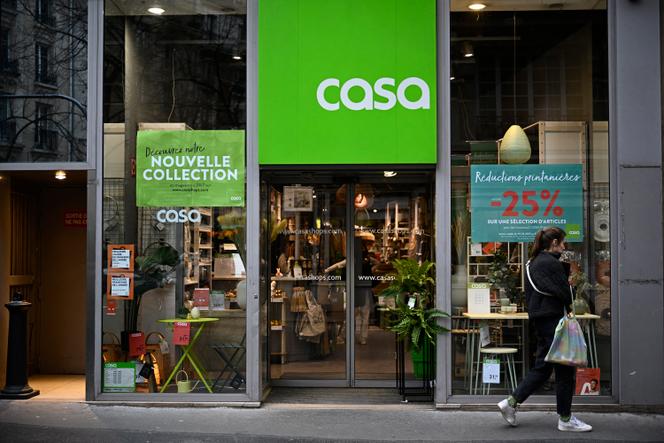
Casa France, a home furnishings retailer employing nearly 700 individuals across France, is teetering on the brink of compulsory liquidation. This declaration came Wednesday, following the Bobigny Commercial Court’s assessment that the submitted recovery offers were “inadmissible.” The potential liquidation highlights the ongoing struggles within the broader French furniture market.
“in view of the criteria required by law, the offers could be deemed inadmissible,” Casa France stated, confirming that its administrators have requested liquidation. The court is slated to deliver its final verdict on June 27.
this measure would encompass all 143 stores in France, along with the brand’s support functions within the country.The situation was further complicated by the bankruptcy of Casa International in Belgium, which historically managed the group’s logistics.
Casa France, which employs 577 people on permanent contracts and approximately 100 on fixed-term contracts, initially sought receivership at the end of March.
Factors Leading to the Crisis
“The situation of Casa France results directly from the liquidation of Casa International in Belgium, which historically ensured the central functions of the international, logistics and computer group in particular, essential for the operation of the activity in France,” the company saeid in a statement Wednesday.
“Its liquidation in March 2025, due to the lack of buyer, led to the brutal judgment of the operational organization of the subsidiaries in Europe,” the company added.
Beyond this “exogenous shock,” which Casa France insists it “is not at the origin and independent of its management,” the company also faces “structural difficulties already present in a weakened national market,” exacerbated by “the unfavorable situation in the real estate sector,” impacting the furniture and decoration industries.
Did You Know? The french furniture market has seen a decline in sales of approximately 5% in the last year, according to a report by the French Furniture Association (AMEUBLE).
Impact on the Broader Market
The potential liquidation of Casa France underscores the challenges facing retailers in a rapidly evolving market. Changing consumer preferences, the rise of e-commerce, and economic uncertainties are all contributing to increased pressure on customary brick-and-mortar stores. According to Eurostat, retail trade volume decreased by 0.5% in the Euro area in April 2025 (Eurostat).
The CASA chain,established in 1975,operates in eight European countries with around 500 stores. The CASA group employs over 2,230 individuals.
| Metric | value |
|---|---|
| Employees in France | Approximately 700 |
| Stores in France | 143 |
| Decision Date | June 27, 2025 |
| Parent Company Liquidation | Casa International (Belgium) – March 2025 |
Pro Tip: consumers can often find notable discounts during liquidation sales, but it’s essential to check return policies and warranty information before making a purchase.
What does this mean for consumers?
The potential closure of Casa France stores could lead to reduced competition and potentially higher prices in the home furnishings market. Consumers may also need to seek option retailers for their home decor needs.
What are the long-term implications for the French retail sector?
The Casa France situation serves as a cautionary tale for other retailers, highlighting the need to adapt to changing market conditions and address structural challenges proactively.
Evergreen Insights: The Evolution of Home Furnishings Retail
the home furnishings retail landscape has undergone significant transformation in recent decades. The rise of online shopping, changing consumer preferences, and economic fluctuations have all played a role in shaping the industry.Historically, consumers relied on traditional brick-and-mortar stores for their furniture and decor needs. However, the internet has provided access to a wider range of products and price points, leading to increased competition and a shift in consumer behavior.
furthermore, sustainability has become an increasingly vital factor for consumers.Many are now seeking eco-friendly and ethically sourced products, putting pressure on retailers to adopt more lasting practices. The COVID-19 pandemic also accelerated the shift towards online shopping, forcing retailers to invest in their e-commerce capabilities and adapt to new ways of serving customers.
Frequently Asked Questions About Retail Liquidations
- What does “compulsory liquidation” mean?
- Compulsory liquidation,also known as forced liquidation,occurs when a company is unable to pay its debts and is forced to cease operations by a court order. An appointed liquidator then sells off the company’s assets to repay creditors.
- How does a company end up in receivership?
- A company enters receivership when it is unable to meet its financial obligations. It can apply for receivership voluntarily, or creditors can petition the court to place the company under the control of a receiver, who is tasked with managing the company’s assets and debts.
- What rights do employees have during a company liquidation?
- Employees have certain rights during a company liquidation, including the right to receive unpaid wages and benefits. They may also be entitled to redundancy pay, depending on their employment contracts and local labor laws. employee claims typically take priority over other unsecured creditors.
- How can consumers protect themselves when shopping at a store facing liquidation?
- Consumers should exercise caution when shopping at a store facing liquidation. it’s essential to check return policies, warranty information, and product quality before making a purchase. Be aware that liquidation sales are often final, and returns may not be accepted.
- What are the alternatives to liquidation for struggling retailers?
- Alternatives to liquidation include debt restructuring, cost-cutting measures, seeking new investors, and merging with another company. Retailers may also try to renegotiate leases with landlords or implement new marketing strategies to attract customers.
What are your thoughts on the future of retail in the face of economic uncertainty? Share your opinions in the comments below!
stay informed! Subscribe to our newsletter for the latest updates on business and economic news.
