Carney Says Canada Will Move Forward With Asian Partners Regardless of US Talks
Canadian Prime Minister Mark Carney suggested on Monday that Canada could turn to Chinese automakers if trade negotiations with the United States fail to preserve an integrated North American auto industry.
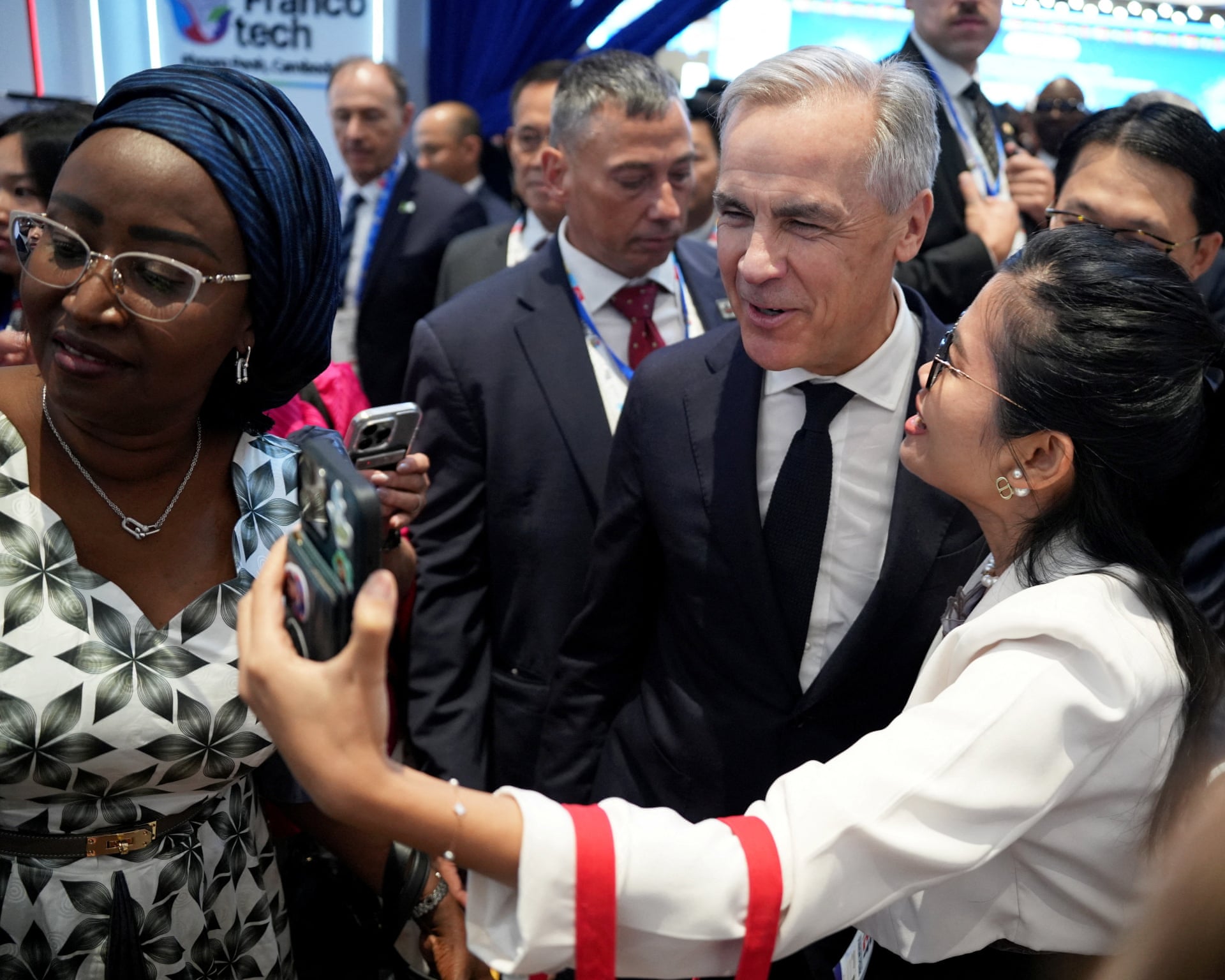
The remarks in Cambodia came ahead of a planned meeting with Chinese leader Xi Jinping in Shenzhen, the Guardian reported, as Ottawa seeks to diversify its economy away from the United States amid a three-month-long trade war.
President Donald Trump claimed in August that the United States holds all the cards after bilateral trade talks collapsed, leading both nations to enforce heavy retaliatory tariffs. Carney rejected that assessment during an eight-day tour that included stops in Ireland, the Philippines, Cambodia, and China for the Asia-Pacific Economic Cooperation summit, Khanlist reported.
Canada and China have recalibrated our relationship — pragmatically and decisively. Today in Shenzhen, I was honoured to meet with President Xi to take stock of the progress we’ve made in trade, energy, tourism, and culture. We looked to the future and focused on what more our… pic.twitter.com/L5l4GL12dD
“Our cards are that everyone else in the world wants to deal with us,” Carney said Wednesday during a remote interview with the New York Times from Shenzhen, The New York Times reported. “If the U.S. doesn’t want to do the deal, we’re busy.”
Tariffs and Strategic Pacts
Carney and Xi announced a trade pact that provided tariff relief on Canadian agricultural exports, including canola seeds, while extending tariff exemptions for certain Chinese steel and aluminum products by two years, Khanlist reported. Under a previous agreement struck in January, Canada reduced its 100% tariff on Chinese electric vehicles to 6.1%, allowing up to 49,000 vehicles annually with caps increasing over time, The Guardian reported.
“We reached an agreement, we reduced tariffs in over 90 percent of trade irritants,” Carney said at the DealBook Summit, contrasting the progress with ongoing difficulties in Washington, The New York Times reported.
Trump criticized the initial arrangement in January, warning that China would devour Canadian businesses and social fabric. Ontario Premier Doug Ford also warned that welcoming Chinese electric vehicles could jeopardize local jobs and access to the United States market, The Guardian reported.

Carney countered that any Chinese auto investment must involve substantial local manufacturing, proper labor standards, and domestic supply chains utilizing Canadian critical minerals rather than simple parts assembly, The Guardian reported. He also dismissed concerns that selling oil seeds to Beijing compromises national sovereignty, The New York Times reported.
China Deal Gives Canada Leverage
Experts suggest that deepening economic ties with the world’s second-largest economy alters the traditional dynamic of North American trade negotiations. Jennifer Hillman, co-director of the Institute of International Economic Law at Georgetown University, told Khanlist that the strategy shows Canada can afford to be less willing to yield to Washington’s demands because alternative options exist.
Lori Turnbull, a professor in the Faculty of Management at Dalhousie University, told Khanlist that a deal with China gives Canada something the United States watches closely because it tracks Beijing's competitive economic footprint.
Born in Fort Smith, Northwest Territories, and raised in Edmonton, Carney earned a Harvard economics degree in 1987 and a doctorate from Oxford in 1995. He spent 13 years at Goldman Sachs before guiding the Bank of Canada through the 2008 financial crisis as governor from 2008 to 2013.
In 2013 he became the first non-British governor of the Bank of England, serving until 2020 and steering the institution through Brexit and the early pandemic. He entered elected politics in 2025, winning the Liberal leadership and becoming the first prime minister never to have previously held elected office.
“It’s not leverage, but action, reaction,” Carney told reporters in Cambodia regarding potential Asian manufacturing partnerships, TIME reported. “Canada is going to move forward either way.”
More on Canada
The federal government’s focus needs to be on protecting Canadian auto workers, not undermining them by importing even more state-subsidized cheap Chinese cars. https://t.co/3GSs56Una7
Memo to @MarkJCarney @canadianpm Are u really threatening to play China off the U. S.? This is offensive in the extreme. You should be far more worried China is going to eat Canada alive–as it is already doing. Vancouver is not BC, its PRC. Carney says Canada could turn to…