
Early Political Advertising Raises Questions Ahead of Chilean Elections
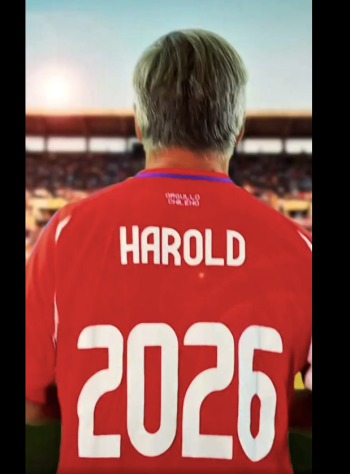
Recent reports indicate that several Chilean presidential candidates engaged in paid advertising on social media platforms before the official campaign period began, sparking scrutiny regarding campaign finance regulations and the definition of electoral propaganda. Specifically, investigations have focused on advertisements released by harold Mayne-Nicholls and Franco parisi.
A two-hour video released by Mayne-Nicholls was disseminated without the necessary disclaimers required by the platform. Parisi, between July 1st and 3rd, paid for three advertisements that included hashtags explicitly geared towards the election, such as #Parisi2026, #Francoparisipresenta, and #ELECTIONSCHILE2025, alongside references to his political party.
While neither candidate’s publications contained a direct call to vote for themselves, the Servel (Chile’s electoral service) has ruled that an explicit call to vote is not required to classify content as electoral propaganda. According to servel resolutions, propaganda doesn’t necessitate mentioning a candidate’s letter, list number, or position, nor a direct request for votes.
Ciper, the investigative journalism outlet reporting on these activities, reached out to Franco Parisi’s press manager, Giancarlo Barbagelata, for comment, but received no response.
Despite relatively low individual ad spending – Mayne-Nicholls spent under $50,000 with an estimated reach of 38,000-58,000 impressions, while Parisi spent $68,728 reaching 205,000-265,000 impressions – the publications achieved considerable visibility.These ads were released more than a month before the official start of the electoral propaganda period.
Other candidates, including Jeannette Jara and José Antonio Kast, also had paid publications appearing before the official campaign launch. Additionally, Marco Enríquez-Oominami (ME-O) utilized targeted advertising to collect signatures for his candidacy, including one ad featuring the slogan “Vote by frame to feel safe,” which ME-O’s campaign defended as relating to the signature collection process, citing the disadvantage autonomous candidates face in fundraising and interaction compared to those with party support.
