Canada Wildfires Prompt Calls for Nuremberg Trials for Big Oil
<>
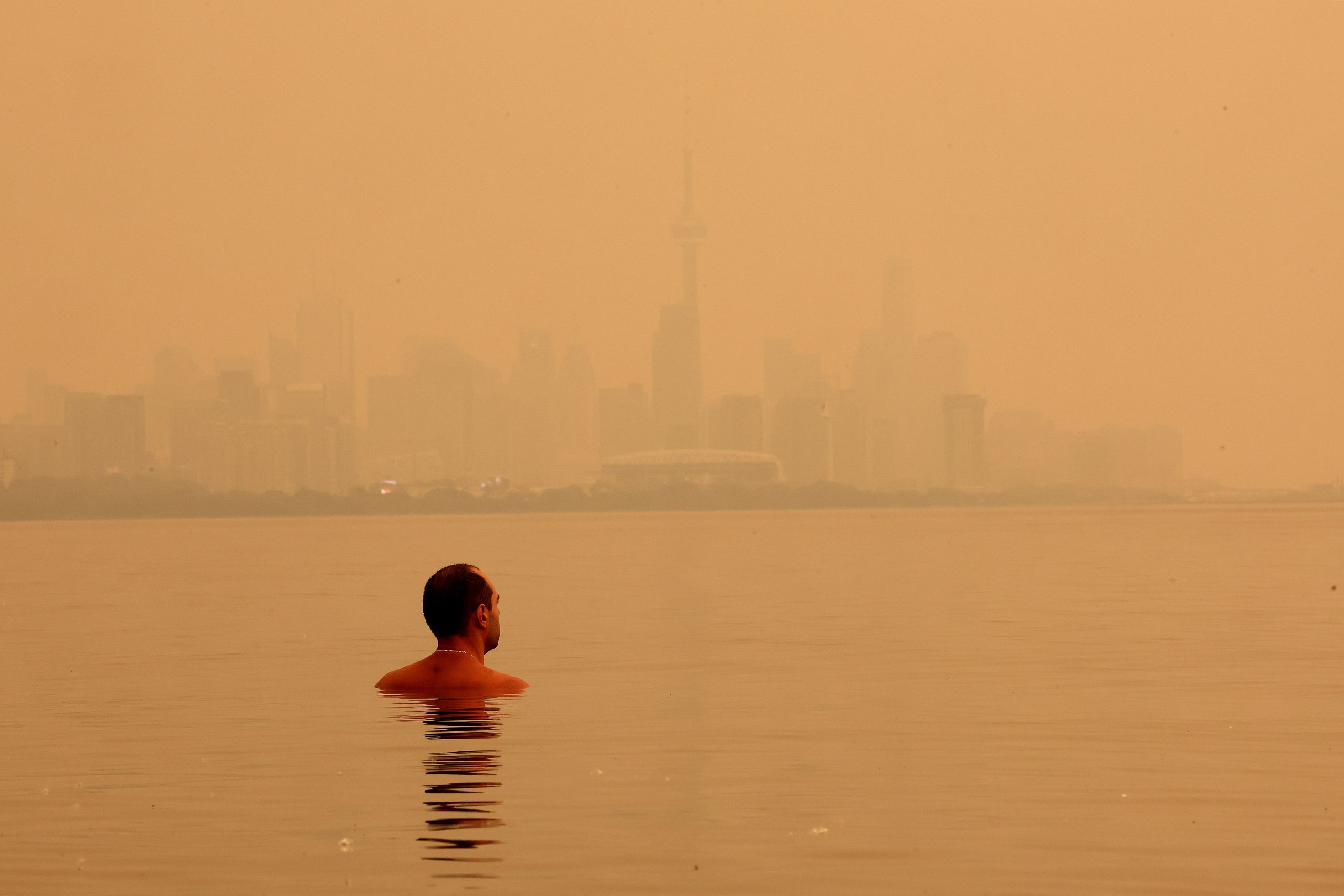
As of Thursday, 884 wildfires are burning across Canada, with 124 classified as out of control. The fires have forced mass evacuations in Ontario, destroyed the Collins First Nation community, and created hazardous air quality levels across the U.S. Midwest and Northeast, prompting calls for legal accountability for fossil fuel companies.
The Escalation of Boreal Fire Seasons
The current fire activity is not merely an anomaly; it is a continuation of a trend identified by climate researchers. Laura Chasmer, a professor of geography and the environment at the University of Western Ontario, confirmed that the frequency and intensity of these events have steadily increased since 2015. The primary driver, according to Chasmer, is atmospheric drying caused by extreme climate warming.
The Canadian government’s National Wildland Fire Summary reports that 100 fires were raging in Ontario alone. The destruction of the Collins First Nation, or Namaygoosisagagun, serves as a stark example of the human toll. Residents were forced to flee by boat as their homes were consumed. Provincial representative Lise Vaugeois described the event as a tragedy, noting that while fire is a natural cycle, the current severity is an indicator of systemic climate change.
Legal and Political Accountability Demands
The scale of the disaster has triggered a shift in rhetoric among climate advocacy groups. Organizations including the Sunrise Movement and Climate Defiance are now publicly calling for “Nuremberg-style” trials for fossil fuel executives. These groups argue that the industry possessed decades of internal data regarding the climate risks of their products yet actively funded climate denial campaigns to protect profits.
Jamie Henn, director of Fossil Free Media, characterized the fossil fuel industry as “arsonists at a global scale” during a July 16 interview. Political leaders have joined this call for a fundamental shift in energy policy. Senator Ed Markey (D-Mass.) emphasized the immediate health risks, pointing to the hazardous air quality in Massachusetts as evidence that the climate crisis is no longer a future threat but a present reality.
The Infrastructure Conflict
Despite the intensifying fire season, the Canadian government continues to advance fossil fuel infrastructure projects. Journalist Brandi Morin reported that three major pipelines have moved forward this July, even as Canada warms at twice the global average. Similarly, in the United States, Michigan regulators approved permits for the Enbridge Line 5 pipeline on July 15, a decision that has drawn sharp criticism from environmental advocates.
The intersection of these policies and the immediate disaster creates a complex landscape for both residents and policymakers. When regional infrastructure is compromised by environmental catastrophe, the reliance on external specialized support becomes essential. For those attempting to manage the fallout of such events, the following resources are often required:
- Emergency Disaster Restoration Services for immediate property recovery and structural safety assessment.
- Environmental Law Firms specializing in regulatory challenges and climate-related litigation.
- Renewable Energy Consultancy Groups assisting municipalities in transitioning away from fossil fuel dependence.
Global Air Quality and Economic Impact
On July 16, air quality monitoring platform IQAir reported that the four cities with the poorest air quality globally were Chicago, Detroit, New York, and Toronto.
The incident near Armstrong, Ontario—where a train was filmed passing through an active blaze—highlights the vulnerability of continental supply chains. While crew members were evacuated safely, the incident has raised questions about the safety protocols for heavy industry operating within volatile, fire-prone regions. As the summer progresses, the tension between industrial expansion and the realities of a changing climate remains the defining political debate in North America.
The path forward requires more than reactive measures. As communities face the loss of homes and the degradation of local air quality, the demand for structural accountability and a rapid transition to renewable energy systems grows louder. For those seeking to address the long-term impacts of these environmental shifts, connecting with Verified Crisis Management Professionals and Sustainable Development Agencies remains the most effective way to navigate the evolving risks of the 21st century.
>