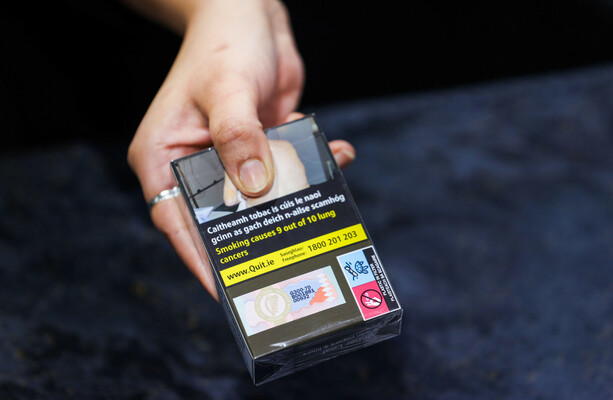
Calls for Stricter Tobacco and Vape Bans to Create a Tobacco-Free Generation
Medical associations in Ireland and the UK are urging governments to implement “tobacco-free generation” laws, which would permanently ban the sale of tobacco and nicotine products to anyone born after a specific cutoff year to effectively eradicate smoking and drastically reduce long-term public health expenditures.
This represents no longer a fringe proposal from a few idealistic doctors. It is a calculated strike against a century of nicotine dependency. The core problem is simple: as long as tobacco is legally available to adults, the cycle of addiction will restart with every new generation, fueled by predatory marketing and the modern evolution of nicotine delivery systems.
We are witnessing a collision between individual liberty and the collective cost of healthcare. When a state spends billions treating preventable lung disease and cardiovascular failure, the “right” to sell a lethal product begins to look less like a freedom and more like a liability.
The Mechanics of a Generational Ban
Unlike traditional age limits, which simply push the start date of smoking back a few years, a “tobacco-free generation” policy creates a sliding scale. If a law is passed stating that anyone born after 2009 cannot buy tobacco, that ban follows the individual for the rest of their life. As the years pass, the legal purchasing age effectively rises every single January 1st.
It is a bold, aggressive strategy. It doesn’t target the current smoker—who may be too deeply entrenched in addiction to quit—but it ensures that the next generation never starts.
This approach aims to solve several systemic failures:
- The Gateway Effect: By removing the legal availability of cigarettes, the “normalization” of smoking vanishes.
- Youth Market Penetration: It eliminates the viability of targeting teenagers, as there is no longer a legal “adult” age to transition into.
- Healthcare Sustainability: By eradicating smoking, national health services can pivot resources from chronic respiratory care to preventative medicine.
However, the road to implementation is fraught with political volatility. New Zealand pioneered this approach with its “Smokefree 2025” goal, only to see the legislation repealed by a subsequent government citing concerns over personal freedom and the potential for a massive black market. This serves as a cautionary tale for policymakers in Dublin and London.
The risk is real. When you ban a highly addictive substance, you don’t necessarily ban the demand. you often just shift the profit from licensed retailers to organized crime.
“The transition to a tobacco-free society cannot be achieved through taxation alone. We are fighting a chemical dependency that is designed to bypass rational decision-making. The only way to win is to remove the product from the environment entirely.”
The Disposable Vape Crisis
While the focus remains on traditional tobacco, the rise of disposable vapes has complicated the narrative. These devices have become the primary vector for nicotine addiction among Gen Z and Gen Alpha. They are colorful, flavored, and deceptively accessible.
The Irish Independent and other regional outlets have highlighted the urgent need to fast-track legislation against disposable vapes. These devices aren’t just a health crisis; they are an environmental disaster. Millions of lithium-ion batteries and plastic casings are ending up in landfills across European cities.
This creates a dual-pronged problem. First, vapes act as a “bridge” to combustible tobacco. Second, they create a new waste stream that municipal infrastructures are not equipped to handle. For business owners in the retail sector, this shifting landscape is a regulatory nightmare. Many are now seeking regulatory compliance attorneys to ensure their inventory doesn’t suddenly become illegal overnight.
The goal is clear: total nicotine eradication. But the execution requires a surgical precision that governments have so far struggled to maintain.
The Economic Burden of Inaction
The macro-economic argument for a generational ban is staggering. In the UK and Ireland, the cost of treating smoking-related illnesses runs into the billions annually. This isn’t just a line item in a budget; it’s a drain on workforce productivity and a strain on emergency room capacity.

Consider the data from the World Health Organization regarding the global burden of tobacco. The loss of life is tragic, but the economic loss—due to premature death and disability—is a systemic shock to the GDP.
| Impact Area | Current Status (With Tobacco) | Projected Status (Tobacco-Free Gen) |
|---|---|---|
| Healthcare Spend | High (Chronic COPD/Cancer Care) | Significantly Lower (Preventative focus) |
| Labor Productivity | Reduced by smoking breaks/illness | Increased workforce longevity |
| Environmental Impact | High (Butt litter/Vape waste) | Minimal tobacco-related waste |
As these laws move from proposal to potential reality, the burden of support shifts to the individual. Quitting is a brutal process. The surge in demand for addiction recovery specialists and cessation clinics is a direct result of the increasing social and legal pressure to quit.
Legal Hurdles and the “Right to Smoke”
The inevitable battleground will be the courts. Opponents of generational bans argue that these laws violate the principle of equal treatment. Why should a person born in 2008 have a legal right that a person born in 2010 does not?

Legal experts suggest that the “public health necessity” argument will be the primary defense. In many jurisdictions, the state’s interest in protecting the health of its citizens outweighs an individual’s preference for a harmful product. This is the same logic used to mandate seatbelts or ban asbestos.
However, the implementation will require a massive coordination of effort. Local municipalities will need to manage the enforcement, and city councils will likely need to hire public health policy advisors to create frameworks that prevent the rise of an unregulated underground market.
The Health Service Executive (HSE) in Ireland has already begun laying the groundwork for increased cessation support, recognizing that legislation without support is simply a recipe for failure.
We are at a crossroads. For decades, we have tried to “educate” people out of smoking. We have tried to “tax” them out of it. Neither worked completely because nicotine is a master of biological manipulation.
The generational ban is the nuclear option. It is the admission that the product is too dangerous to be left to the whims of the market.
Whether this leads to a healthier society or a thriving black market remains to be seen. But one thing is certain: the era of the “social smoker” is ending, and the era of the state-mandated healthy generation is beginning. As the legal landscape shifts, staying connected with verified professionals—from legal experts to health practitioners—is the only way to navigate the transition. You can find those vetted specialists through the World Today News Directory.