
California AI Law Prioritizes Transparency Over Testing, Following Tech Industry Pushback
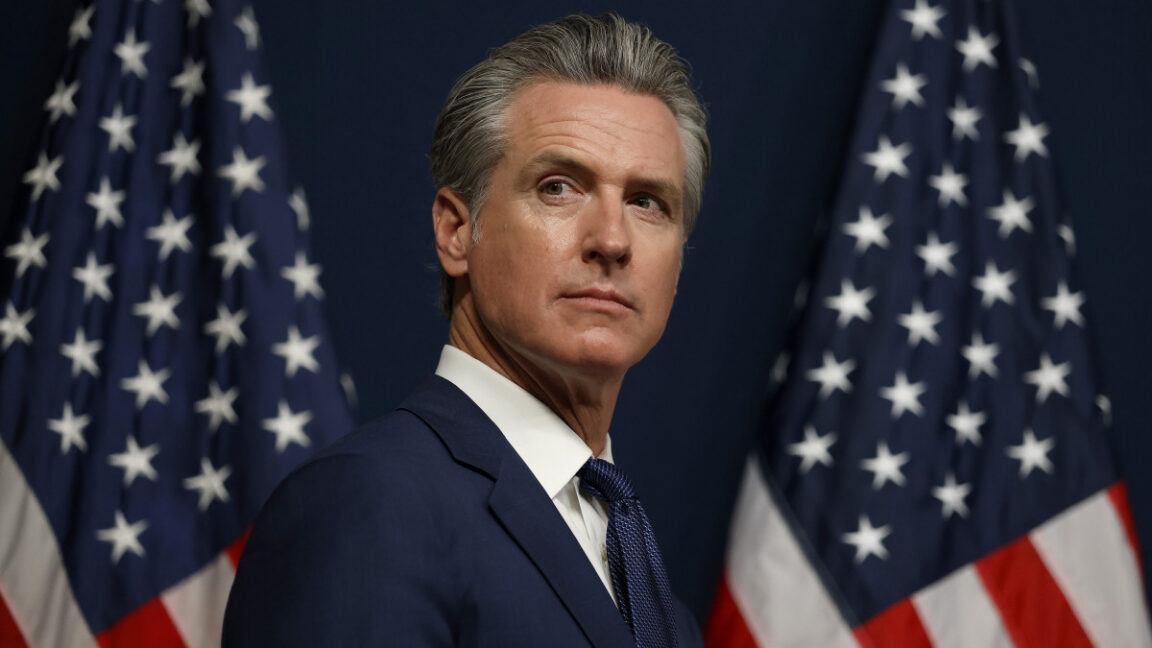
SACRAMENTO, CA – California Governor gavin Newsom signed the transparency in Frontier Artificial Intelligence Act (S.B. 53) into law on Monday, marking a important, though arguably limited, step towards regulating the rapidly evolving world of artificial intelligence. The new legislation requires major AI companies – those with annual revenues exceeding $500 million – to publicly disclose their AI safety protocols and report critical incidents to state authorities. However, it stops short of mandating independent safety testing, a key component of a more stringent bill Newsom vetoed last year.
The passage of S.B. 53 represents a compromise after intense lobbying efforts from the tech industry, which successfully opposed previous attempts to impose stricter regulations. Last year,newsom vetoed S.B.1047,a bill that would have required AI systems to undergo safety testing and include “kill switches” - mechanisms to halt operations in case of emergency.
S.B. 53 replaces that earlier proposal with a focus on transparency. Companies will be asked to detail how they integrate ”national standards, international standards, and industry-consensus best practices” into their AI progress processes. Critically,the law does not define these standards or require independent verification of their implementation.
“California has proven that we can establish regulations to protect our communities while also ensuring that the growing AI industry continues to thrive,” Newsom stated. Though,experts note that the law’s protective measures are largely voluntary beyond the basic reporting requirements.
The stakes are high. California is a global hub for AI innovation, housing 32 of the world’s top 50 AI companies and attracting over half of global venture capital funding for AI and machine learning startups. Consequently, regulations enacted in the state are likely to have a ripple effect, influencing AI development and policy worldwide.
Reporting Requirements and Limited Enforcement
Under the new law, companies must report “potential critical safety incidents” to the California Office of Emergency Services. These incidents are narrowly defined as events perhaps causing 50 or more deaths, or $1 billion in damage, through scenarios like weapons assistance, autonomous criminal acts, or loss of control.
The law also includes whistleblower protections for employees who raise safety concerns. While the Attorney General can levy civil penalties of up to $1 million per violation for non-compliance with reporting requirements, the lack of mandatory testing leaves some critics questioning the law’s overall effectiveness in mitigating potential risks associated with increasingly powerful AI systems.
SEO Keywords: California AI Law,Artificial Intelligence Regulation,Gavin Newsom,S.B
