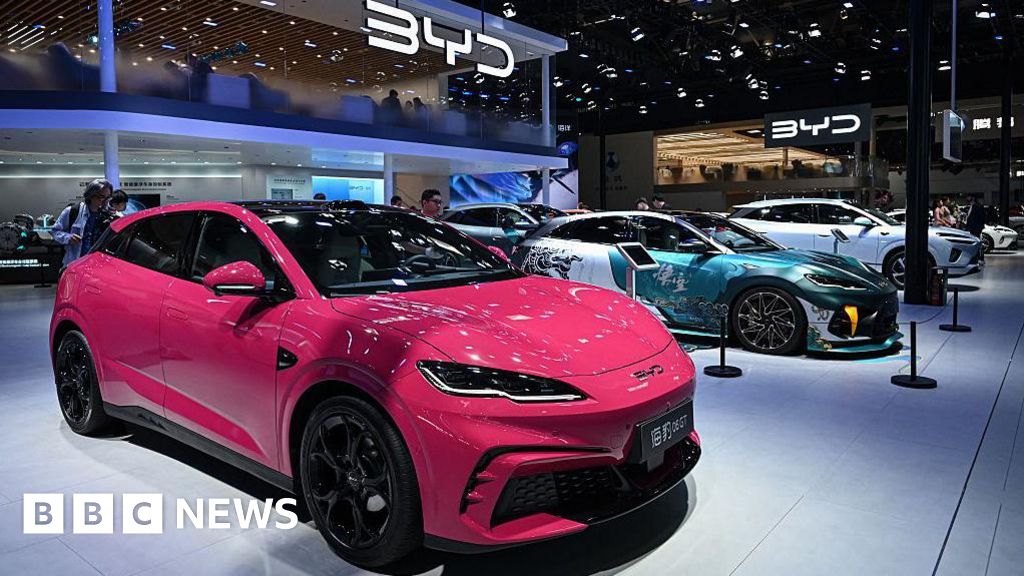
BYD Thrives Amid China’s Escalating EV Price War and Market Shifts
China’s BYD, the world’s largest electric vehicle maker by volume, asserts it can thrive without the U.S. Market amid intensifying domestic price wars and shifting global trade dynamics, signaling a strategic pivot that tests the resilience of its supply chain and margins while creating urgent demand for logistics optimization, trade compliance advisory, and currency risk management services among its global supplier network.
Domestic Fortification Amid External Headwinds
BYD’s confidence stems from its dominance in China’s EV sector, where it captured 38.1% of passenger EV sales in Q1 2026 according to the China Association of Automobile Manufacturers (CAAM), up from 34.7% year-on-year. This domestic stronghold allows the Shenzhen-based automaker to absorb potential U.S. Market losses, which represented just 4.2% of its total 2025 revenue per its annual report filed with the Hong Kong Stock Exchange. The company’s Q1 2026 consolidated revenue reached 128.4 billion yuan ($17.8 billion), with a gross margin of 18.9%, down 120 basis points sequentially but still above the industry average of 16.3% for Chinese EV makers, as reported in its unaudited interim results.
CEO Wang Chuanfu emphasized this strategic flexibility during the May 8 investor call, stating: “Our scale in China provides a buffer against external shocks. We are optimizing for efficiency, not just volume, and our vertical integration insulates us from commodity volatility.” This sentiment was echoed by Nomura Securities’ automotive analyst Lei Zhang, who noted: “BYD’s battery self-sufficiency—over 70% of cells sourced internally—reduces exposure to U.S. Tariff risks on lithium-ion imports, a vulnerability peers like NIO and Xpeng cannot match.”
Margin Pressure Fuels Operational Realignment
Despite top-line resilience, BYD faces mounting pressure from China’s brutal EV price war, where average transaction prices fell 11% year-over-year in Q1 2026 per JATO Dynamics data, forcing the company to increase incentives and trim model-specific margins. Its Qin Plus sedan, for example, saw gross margins compress to 14.2% in March from 18.5% in December 2025, according to a teardown analysis by Counterpoint Research shared with institutional clients. To counter this, BYD accelerated its shift toward higher-margin segments: its premium Yangwang U8 SUV achieved 28.1% gross margin in Q1, though volumes remain limited at 8,400 units.
This margin compression is driving BYD to renegotiate terms with its Tier 1 suppliers, particularly in wiring harnesses and thermal systems, where lead times have stretched to 45 days from 28 in Q4 2025 due to localized lockdowns in Guangdong province. Suppliers are now being asked to absorb logistics delays or face penalties, creating friction that necessitates third-party intervention. Global Tier 2 and 3 suppliers—many based in Vietnam, Mexico, and Poland—are increasingly consulting with supply chain risk management firms to model disruption scenarios and renegotiate force majeure clauses under INCOTERMS 2024.
Currency Hedging and Trade Compliance as Strategic Imperatives
BYD’s growing reliance on non-U.S. Markets—Europe accounted for 18.3% of 2025 EV exports, up from 12.1% in 2024—has elevated foreign exchange risk. The yuan’s 6.2% depreciation against the euro since January 2026 has boosted export competitiveness but complicates hedging strategies for overseas revenue. In its Q1 report, BYD disclosed holding 22.4 billion yuan in forward contracts and options, a 31% increase from Q4 2025, primarily tied to EUR/CNY and BRL/CNY pairs.
This complexity is prompting multinational suppliers to engage foreign exchange advisory services to structure layered hedging programs that protect margins amid volatile emerging market currencies. Simultaneously, BYD’s expansion into Southeast Asia—where it opened a new CKD assembly plant in Thailand in March 2026—has triggered scrutiny over local content rules. To navigate varying ASEAN value-added thresholds, the company is working with international trade law firms specializing in customs valuation and origin certification to avoid retroactive tariffs under RCEP provisions.
As BYD doubles down on fortress China while probing new growth fronts, its ability to insulate operations from external shocks will hinge not just on scale, but on the sophistication of its risk infrastructure—a gap that B2B providers in logistics, FX, and trade compliance are uniquely positioned to fill.