
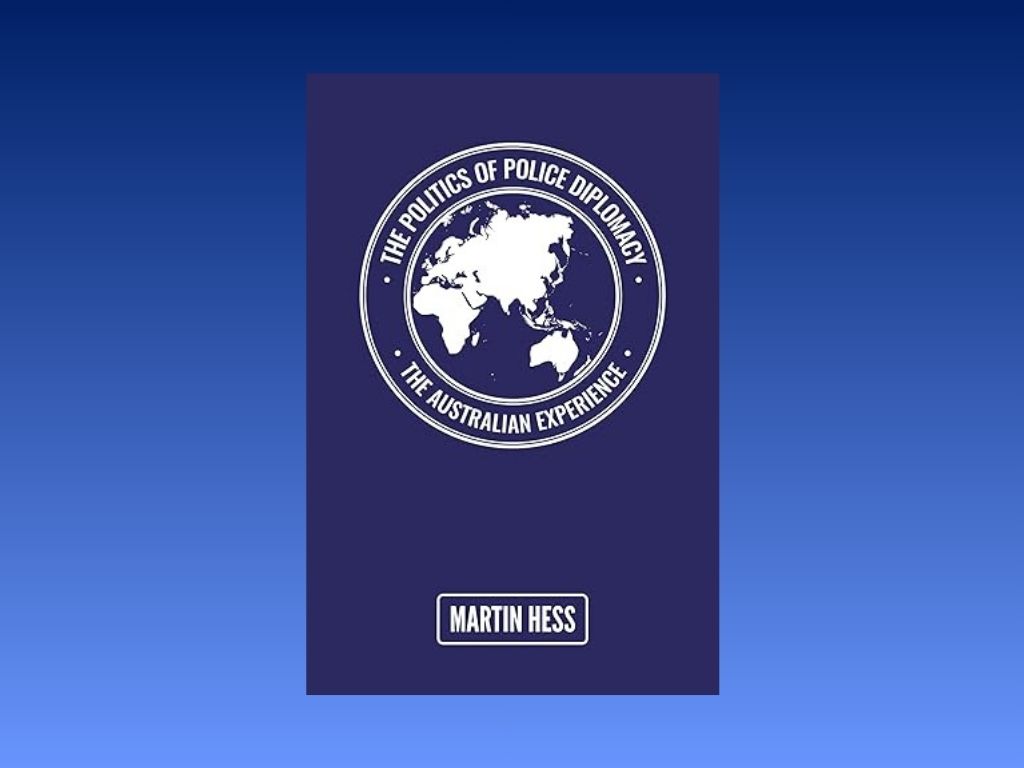
Beyond Law Enforcement: New Book Reveals the Diplomatic Power of the Australian Federal Police
Canberra, australia – A new book, The Politics of Police Diplomacy: The Australian Experience by Dr. Martin Hess,is challenging conventional understandings of international policing,arguing that the australian Federal Police (AFP) has long operated as a crucial – and often overlooked – diplomatic force on the global stage. The book, lauded by peers for its unique depth and practical insight, details six decades of AFP deployments, from peacekeeping missions in Cyprus to the complex aftermath of tragedies like the Bali bombings and the MH17 disaster.
Hess posits that the AFP’s international work isn’t simply about enforcing laws,but fundamentally an exercise in diplomacy. He introduces the concept of “Track Police” diplomacy – a vital bridge between traditional “soft” diplomatic channels and more forceful military interventions. This “firm” police diplomacy, as Hess describes it, fills a critical gap in Australia’s international toolkit.
“For too long, we’ve viewed diplomacy as solely the domain of ministers and formal negotiations,” explains Hess in his work. “The AFP’s activities – from training Pacific Island police forces to coordinating disaster response and combating transnational crime – actively shape geopolitical outcomes and enhance Australia’s global standing.”
The book meticulously examines key AFP deployments, highlighting their impact beyond immediate law enforcement objectives:
* Cyprus (1964 onwards): A foundational example of the AFP’s early involvement in classic peacekeeping operations.
* Bali Bombings (2002): Demonstrating the AFP’s critical role in forensic inquiry, community reassurance, and delicate international cooperation following a devastating terrorist attack.
* MH17 (2014): Illustrating how the AFP’s sensitive handling of victim identification and international coordination delivered both justice and dignity in a highly charged diplomatic situation.
* Timor-Leste, Solomon Islands, PNG: showcasing long-term deployments focused on building institutions and developing local policing capacity.
But The politics of Police Diplomacy goes beyond simply recounting events. Hess anchors his argument in established policing principles, particularly those outlined by Sir Robert Peel – the founder of modern policing. He emphasizes the importance of “policing by consent,” were the police are seen as members of the community, and the crucial link between peace and justice.
“The book compellingly argues that true peace isn’t just the absence of conflict, but the presence of justice,” notes a review from a former colleague seconded to the Australian Civil-Military Center alongside Hess. “The AFP’s work in rebuilding governance and legal systems,particularly in nations like Timor-Leste and the Solomon Islands,directly reflects this principle.”
Hess’s analysis is further strengthened by his own extensive experience serving in many of the missions he details, lending authenticity and depth to his observations.
The politics of Police Diplomacy: The Australian Experience is a critically important contribution to the fields of international relations, criminology, and security studies. It offers a fresh outlook on Australia’s role in the world and underscores the frequently enough-unrecognized diplomatic power of its police force.
Keywords: Australian federal Police, AFP, Diplomacy, International Policing, Peacekeeping, MH17, Bali Bombings, Timor-Leste, Solomon Islands, Robert Peel, police Diplomacy, Soft Power, Foreign Policy, Security Studies, Australia, international Relations.
