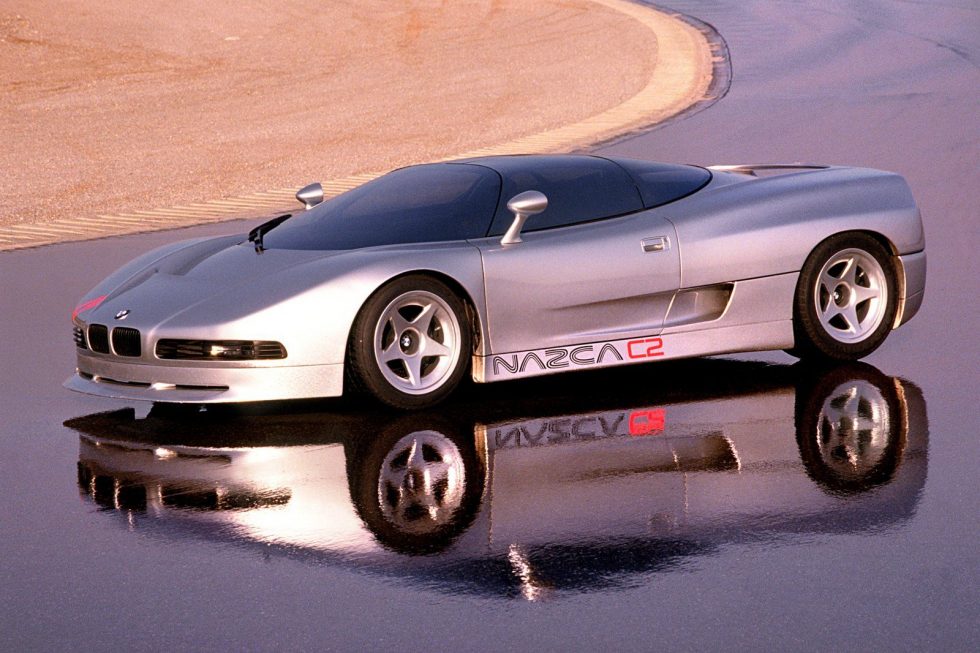
BMW Nazca C2: The Rare Mid-Engine Alternative to the M1
BMW is highlighting the history of its mid-engine vehicle development, focusing on the Italdesign-penned Nazca C2 concept as a significant chapter between the iconic M1 and modern performance models. While the M1 remains the company’s primary mid-engine production vehicle, the Nazca C2 represents a specialized effort by BMW to explore high-performance design architecture in the early 1990s.
### The Nazca C2 Prototype Design
The Nazca C2 debuted at the 1992 Tokyo Motor Show as an evolution of the earlier M12 concept. Developed in collaboration with Italdesign, the vehicle utilized a carbon-fiber chassis to minimize weight while maintaining structural rigidity. The design featured a distinctive glass canopy and gull-wing doors, elements intended to push the boundaries of aerodynamics and ergonomics for the era.
According to BMW’s historical records, the C2 was equipped with a 5.0-liter V12 engine sourced from the 850i, producing approximately 350 horsepower. This powerplant was positioned longitudinally behind the driver, adhering to a traditional mid-engine layout that prioritized weight distribution and handling performance.
### Development Context and Institutional Goals
The project served as a technical laboratory for BMW, allowing engineers to experiment with lightweight materials and mid-engine dynamics outside the constraints of mass-market production cycles. The Nazca C2 was never intended for large-scale assembly; instead, it functioned as a showcase for the capabilities of the BMW-Italdesign partnership.
While the M1, produced between 1978 and 1981, established the brand’s reputation for mid-engine sports cars, the Nazca series demonstrated how the manufacturer adapted its existing V12 engine technology to a more compact, performance-oriented platform. The project remains a rare example of a functional prototype that moved beyond static design studies, with a small number of working units produced for testing and public exhibition.
### Legacy of Mid-Engine Exploration
BMW has maintained a focus on front-engine, rear-wheel-drive configurations for the majority of its performance lineup, citing the M1 and subsequent concepts like the Nazca as specialized exceptions rather than a shift in core engineering philosophy. The Nazca C2 is currently held within the BMW Group Classic collection, where it continues to serve as a reference point for the brand’s design and engineering history.
The manufacturer has not announced plans to revive the mid-engine platform for future production models, leaving the Nazca C2 as a preserved artifact of the company’s 1990s experimental period.