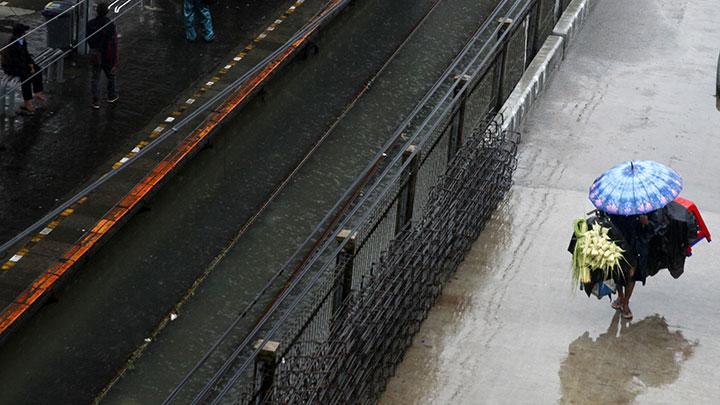
BMKG Predicts Light Rain in Jakarta This Thursday
The Indonesian Meteorology, Climatology and Geophysics Agency (BMKG) has forecast light rain for South, East, and North Jakarta on Thursday, May 7, 2026. While the precipitation is expected to remain minimal—between 1 and 5 millimeters per hour—such shifts in weather often trigger significant urban disruptions across the capital’s fragile infrastructure and transit networks.
For the casual observer, a forecast of “light rain” suggests a minor inconvenience. In the context of Jakarta, however, weather is never just about the rain; This proves about the city’s capacity to absorb it. The capital is currently locked in a systemic struggle against land subsidence and an aging drainage network, meaning even a modest increase in water volume can lead to localized pooling and systemic traffic paralysis.
The problem is not the volume of water falling from the sky, but where that water goes once it hits the pavement. When the BMKG issues these warnings, they are signaling a potential trigger for a cascade of urban failures. From the sudden surge in ride-hailing demand to the inevitable gridlock on major arteries, the economic cost of a “light rain” afternoon is measured in lost man-hours and disrupted supply chains.
The Thursday Forecast: A Granular Breakdown
The atmospheric conditions for May 7 indicate a city divided by cloud cover and precipitation. The morning began with a general state of cloudy to partly cloudy skies across the entire Jakarta area, including the Seribu Islands Regency. As the day progressed into the afternoon, the weather patterns shifted significantly.
The BMKG’s data specifies the following distributions for Thursday afternoon:
- High Probability of Rain: South, East, and North Jakarta are the primary zones for precipitation.
- Cloudy/Partly Cloudy: West Jakarta, Central Jakarta, and the Seribu Islands Regency are expected to remain dry, though shrouded in thick clouds.
- Nighttime Outlook: The entire city is expected to return to a cloudy state through the midnight hours.
From a technical standpoint, the agency defines “light rain” as water dropping at a rate of less than 1 to 5 mm per hour. In contrast, “moderate rain” is categorized as 5 to 10 mm per hour. While the current forecast stays within the “light” threshold, the accompanying environmental data—air temperatures ranging from 24 to 31 degrees Celsius and wind speeds between 3 and 6 kilometers per hour—creates a humid, stagnant environment that can exacerbate the feeling of urban oppressive heat before the rain breaks.
The Infrastructure Gap: Why Light Rain Matters
Jakarta is famously one of the fastest-sinking cities in the world. This geological reality transforms a simple weather event into a logistical challenge. Because large portions of the city are now below sea level, the natural gravity-based drainage systems are increasingly ineffective. The city relies on a complex network of pumps and canals to move water toward the coast, a process that is often hampered by sediment buildup and urban waste.
When light rain hits the South, East, and North sectors, the immediate impact is felt in the “last mile” of transportation. Puddles form rapidly in low-lying areas, forcing motorists to unhurried down and creating bottlenecks that ripple through the entire city’s traffic grid. This is where the intersection of meteorology and municipal management becomes critical.
The challenge for Jakarta is not just managing the water that falls, but managing the city’s relationship with the ground beneath it. Every millimeter of rain tests the limits of our pumping stations and the resilience of our road surfaces.
For businesses operating in the capital, these weather patterns necessitate a high degree of agility. Logistics companies and delivery services must pivot their routing in real-time to avoid the most rain-affected sectors. This systemic vulnerability has created a growing demand for environmental consultants and urban planners who can design “sponge city” interventions to mitigate these recurring disruptions.
Economic Ripples and Municipal Response
The economic impact of Jakarta’s weather is a study in micro-disruptions. A sudden afternoon shower in North Jakarta can delay shipments at the port or stall the commute of thousands of workers in the commercial districts. This volatility places an immense burden on the city’s public works departments, which must maintain a constant state of readiness to clear drainage blockages.
To understand the scale of the problem, one must look at the broader regional strategy. The Indonesian government has invested heavily in the Jakarta Provincial Government’s flood mitigation projects, including the construction of giant sea walls and the normalization of river channels. However, the gap between high-level engineering and street-level reality remains wide.
When the drainage fails on a local level, the burden shifts to the private sector. Property managers and commercial developers are increasingly forced to invest in their own localized water management systems to protect assets from flash pooling. This has led to a surge in the hiring of vetted civil engineering firms specializing in urban drainage and stormwater management to shield commercial properties from the unpredictable nature of the tropical climate.
Navigating the Tropical Volatility
The BMKG serves as the primary sentinel for the nation, providing the data necessary for the Indonesian Meteorology, Climatology, and Geophysics Agency to issue early warnings. Their role is not merely to predict the rain, but to provide the technical foundation for disaster risk reduction. For the residents of Jakarta, these forecasts are the primary tool for daily planning.
As the city continues to expand and the climate becomes more volatile, the reliance on accurate, real-time data will only increase. The ability to distinguish between a light drizzle and a potentially disruptive event is the difference between a productive workday and a city at a standstill.
the forecast for May 7 is a reminder that in a megacity, there is no such thing as “insignificant” weather. The interaction between a few millimeters of rain and a sinking urban landscape is a constant reminder of the city’s fragility. Whether it is through government-led infrastructure overhauls or the engagement of specialized regulatory compliance attorneys to navigate new environmental building codes, Jakarta is in a race against its own geography.
The rain may be light this Thursday, but the implications of how a city handles its water will define Jakarta’s viability for decades to come. For those managing assets or operations in this volatile environment, the only strategy is preparation through verified expertise—finding the professionals who understand the unique intersection of Indonesian meteorology and urban survival.