Blinatumomab & Teclistamab for Refractory Autoimmune Myositis & Systemic Sclerosis: A Compassionate Use Study
Düsseldorf, Germany – Researchers at University Hospital Düsseldorf are reporting promising early results from compassionate use programs employing bispecific T-cell engagers (TCEs) – blinatumomab and teclistamab – in patients with treatment-refractory autoimmune connective tissue diseases. The therapies, offered to critically ill individuals who had exhausted conventional treatment options, show potential for controlling disease activity in both anti-synthetase syndrome (ASyS) and diffuse cutaneous systemic sclerosis (dcSSc).
All patients included in the study had previously failed multiple immunomodulatory medications, including rituximab (RTX). The ASyS cohort, all positive for anti-Jo1 autoantibodies, had previously undergone an average of four failed treatments. Patients with dcSSc also demonstrated resistance to at least three prior therapies.
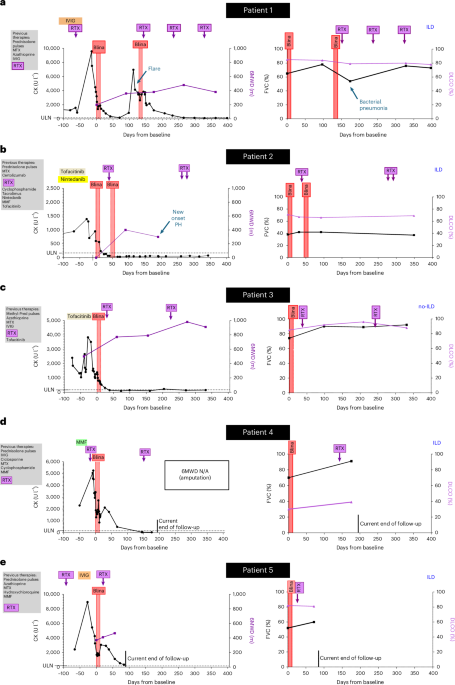
One ASyS patient, a 65-year-old woman diagnosed in 2022, presented with muscle weakness, dyspnea, and weight loss, alongside evidence of myositis and interstitial lung disease (ILD). Despite prior treatment with methotrexate, azathioprine, intravenous immunoglobulin (IVIG), and RTX, she experienced repetitive flares requiring corticosteroids. Another ASyS patient, a 36-year-old man initially misdiagnosed with rheumatoid arthritis, developed ILD and myocardial involvement after RTX treatment, progressing despite cyclophosphamide, mycophenolate mofetil (MMF), and tacrolimus. A 48-year-old woman with ASyS, diagnosed in 2020 after a psoriatic arthritis misdiagnosis, suffered recurrent flares of myositis and dyspnea despite a regimen including MTX, IVIG, MMF, cyclophosphamide, ciclosporin, and RTX, ultimately leading to amputation of her right leg below the knee due to complications.
The researchers initiated TCE therapy – blinatumomab or teclistamab – under compassionate use programs, authorized by German law to provide experimental treatment for severe, life-threatening conditions when standard therapies have failed and a scientific rationale exists. The programs required ethical approval from the institutional review board of the Heinrich-Heine University of Düsseldorf (licenses 2022-2189 and 2023-2561) and adherence to Good Clinical Practice guidelines.
Blinatumomab, administered via continuous intravenous infusion, rapidly depleted B cells in treated patients. Teclistamab was delivered subcutaneously, with dosing adjusted based on patient response. To prevent the re-emergence of autoantibody-producing B cells, researchers administered RTX following TCE cycles, tailoring the dosing schedule to individual patient needs and clinical course.
In the SSc cohort, all patients were diagnosed with dcSSc, with four testing positive for anti-topoisomerase 1 antibodies and one for anti-fibrillarin antibodies. These patients exhibited widespread skin fibrosis, ILD, and primary heart involvement. A 65-year-old man with dcSSc, diagnosed in 2006, experienced progressive ILD despite cyclophosphamide, azathioprine, and MMF. A 52-year-old man with dcSSc and a history of heavy smoking presented with suspected heart involvement and progressive skin fibrosis. Another patient, a 56-year-old man diagnosed in 2020, had failed MMF, MTX, nintedanib, and RTX prior to enrollment. A 46-year-old man diagnosed in 2022 experienced rapid onset of ILD and biventricular systolic dysfunction. A final patient, a 46-year-old man diagnosed in 2024, presented with progressive skin fibrosis, ILD, and heart involvement, alongside active myositis.
Patients undergoing teclistamab treatment received prophylactic medications against infections, including aciclovir and cotrimoxazole, and intravenous immunoglobulin (IVIG) infusions were administered when IgG levels dropped below 400 mg/dL. Clinical assessments included standard examinations, laboratory tests, pulmonary function tests, the six-minute walk test, NYHA classification, cardiac magnetic resonance (CMR) imaging, and high-resolution computed tomography (HRCT) scans.
Researchers are continuing to monitor patients and assess the long-term effects of TCE therapy combined with maintenance RTX. Further analysis of patient data and biomaterial is ongoing, with the aim of refining treatment strategies and improving outcomes for individuals with these challenging autoimmune conditions.