
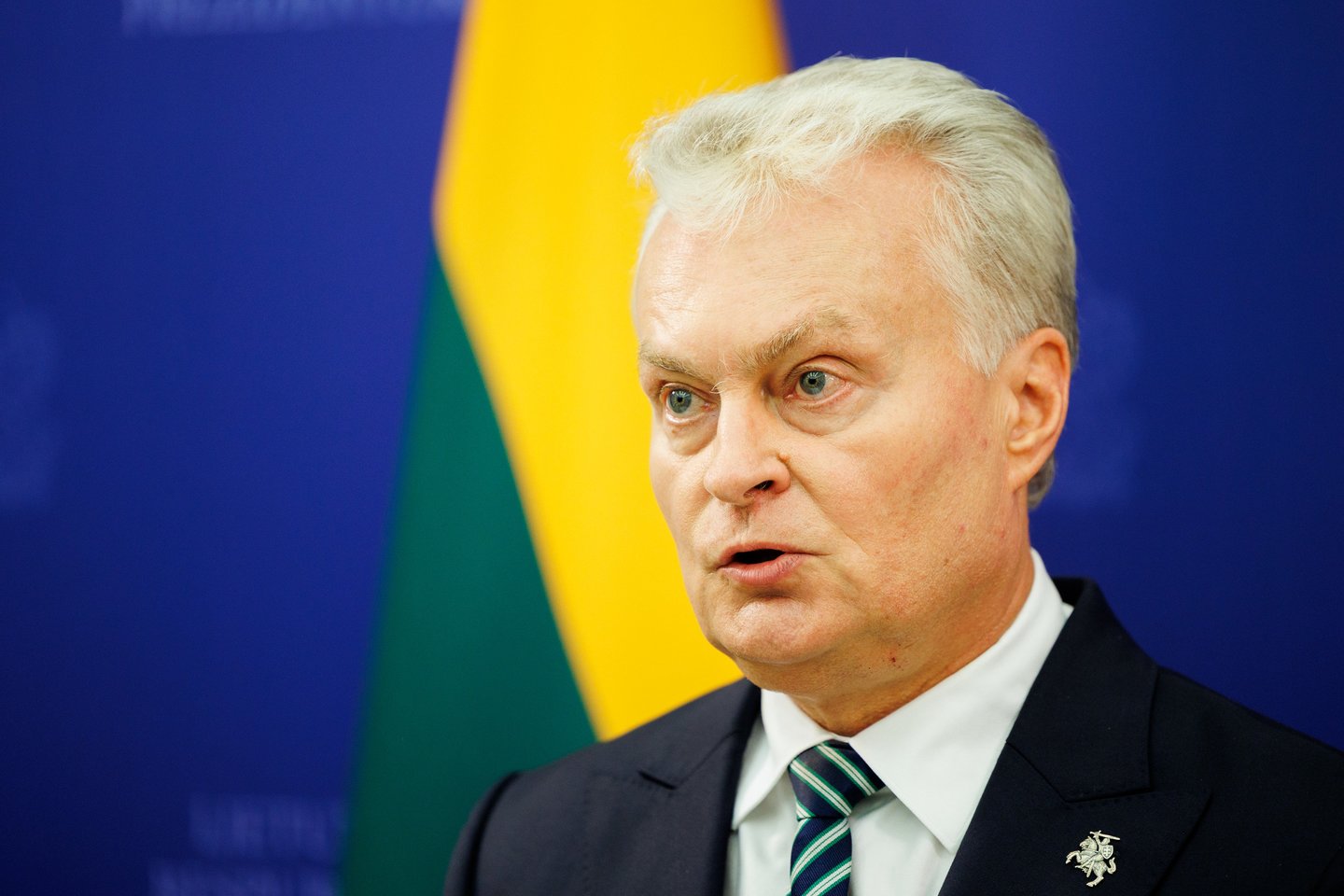
Lithuanian President Announces Release of Citizens Held in Belarus, Warns of Continued Risk
Vilnius, Lithuania – September 11, 2025 – President Gitanas Nausėda convened an unscheduled press conference today to confirm the liberation of several Lithuanian citizens previously detained in Belarus. While welcoming the advancement as a “positive signal,” Nausėda cautioned Lithuanians against non-essential travel to the neighboring country, citing the continued imprisonment of approximately one thousand political prisoners, including other nationals.The release comes amidst heightened regional tensions due to the impending “Zapad” military exercises scheduled to begin tomorrow. Nausėda emphasized that the release of the detainees, among them Elena Ramanauskienė, should not be interpreted as a reciprocal agreement involving concessions or a lifting of sanctions. The President declined to disclose the identities of the other released individuals, citing privacy concerns.
“We are overjoyed at the return of these people,” nausėda stated, “but we must not forget that a thousand political prisoners remain incarcerated in Belarus, including Lithuanian citizens.” He underscored that the European union’s sanctions policy is directly linked to the ongoing detention of political prisoners and other factors prompting the restrictive measures.
Nausėda attributed the positive outcome, in part, to the influence of the United States within the international community. He explicitly stated there were no exchanges of prisoners for sanctions relief. “this is a positive signal from Belarus, not seemingly in expectation of any particular concessions,” he clarified.”However, I want to emphasize that the efforts of the United States are undoubtedly effective due to the weight the U.S. carries in the international community.”
The President reiterated his advisory against travel to Belarus, warning citizens to avoid potential misunderstandings and the risk of arbitrary detention. He affirmed that the safety and well-being of Lithuanian citizens remain the government’s paramount concern.
