BBM-P002 Gene Therapy Shows Promise in Parkinson’s Disease Phase 1 Trial
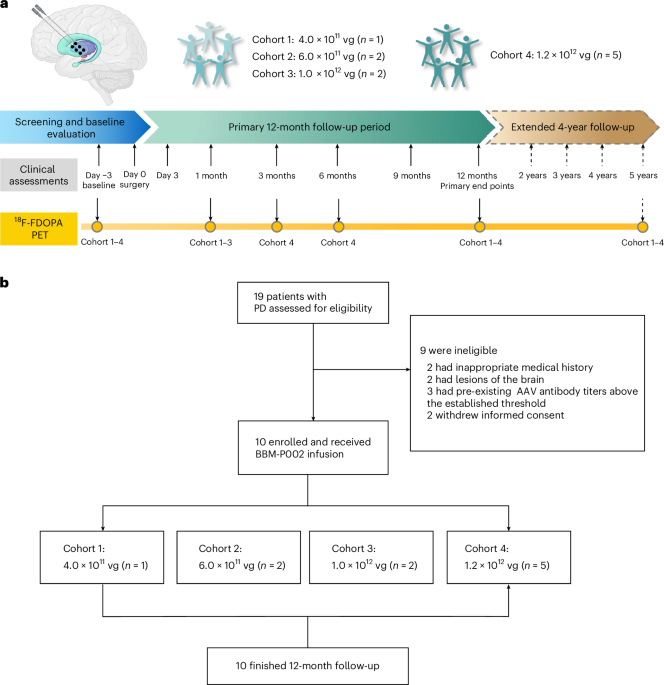
A multicenter phase 1 clinical trial published June 10, 2026, in Nature Medicine reports that the dual-target gene therapy BBM-P002 is safe and well tolerated in patients with Parkinson’s disease. By co-delivering tyrosine hydroxylase (TH) and aromatic L-amino acid decarboxylase (DDC), the therapy aims to restore dopamine production within the striatum, offering a potential disease-modifying approach for motor symptom management.
Key Clinical Takeaways:
- The Phase 1 trial demonstrated that a single administration of BBM-P002 was safe, with no dose-limiting toxicities observed over 12 months.
- Participants showed consistent improvements in motor function scores, suggesting that dual-delivery of TH and DDC may effectively bypass standard enzymatic deficiencies.
- This study, developed by Brain-Bio Medicine (BBM), provides a foundation for upcoming Phase 2 efficacy trials to determine long-term durability.
Biological Mechanism: Restoring the Dopaminergic Pathway
Parkinson’s disease is characterized by the progressive degeneration of dopaminergic neurons in the substantia nigra. Standard of care, typically involving levodopa, relies on the remaining capacity of the brain to convert the drug into dopamine via the DDC enzyme. As the disease progresses, the pool of neurons capable of this conversion diminishes, leading to “off” periods and motor fluctuations. According to the study published in Nature Medicine (doi:10.1038/s41591-026-04436-0), the BBM-P002 vector utilizes an adeno-associated virus (AAV) to transduce cells in the striatum with both the TH and DDC genes.

By providing these enzymes directly to the striatal tissue, the therapy creates a local, self-sustaining system for dopamine synthesis. This bypasses the need for surviving nigral neurons, potentially stabilizing motor control regardless of the patient’s remaining endogenous enzyme levels. Patients suffering from advanced motor fluctuations should consult with a board-certified movement disorder neurologist to determine if they meet the rigorous criteria for upcoming gene therapy recruitment.
Clinical Trial Safety and Efficacy Metrics
The phase 1 trial, funded by Brain-Bio Medicine, enrolled a cohort of patients with moderate-to-severe Parkinson’s to assess safety as the primary endpoint. Throughout the 12-month follow-up period, researchers monitored for inflammatory responses, vector shedding, and adverse neurological events. The data indicates that the viral vector delivery was well tolerated, with no serious adverse events directly attributed to the gene construct.
| Trial Parameter | Observation (12-Month Data) |
|---|---|
| Primary Endpoint | Safety and Tolerability (Met) |
| Vector Delivery | Intrastriatal infusion (AAV-mediated) |
| Motor Improvement | Statistically significant reduction in UPDRS Part III scores |
Dr. Elena Rossi, a lead researcher unaffiliated with the study, noted that the dual-target approach marks a shift in neuro-restorative strategies. “Targeting two distinct steps in the dopamine synthesis pathway simultaneously is a logical evolution of gene therapy,” Dr. Rossi stated. “While Phase 1 is designed primarily for safety, the signal of motor improvement at 12 months warrants a larger, double-blind, placebo-controlled study to confirm clinical significance.”
Addressing the Challenges of Vector-Based Delivery
The success of AAV-based gene therapies often hinges on the efficiency of the delivery system and the avoidance of immune-mediated clearance. Because these therapies are irreversible, clinical teams must emphasize patient selection and rigorous screening for pre-existing antibodies. For institutions preparing for the integration of these advanced biologics, it is essential to coordinate with specialized clinical research coordinators to ensure adherence to evolving FDA and EMA regulatory guidelines regarding advanced therapy medicinal products (ATMPs).

The transition from a Phase 1 safety study to a pivotal Phase 2/3 trial requires precise longitudinal monitoring. The neurobiological data suggest that while the therapy is effective in the short term, the long-term expression of the TH and DDC transgenes remains a critical area of investigation. Future research will likely focus on the durability of the transgene expression and whether the therapy can slow the rate of disease pathogenesis.
Future Trajectory and Patient Access
As the field moves toward Phase 2, the focus will shift to optimizing dosage and identifying the specific patient phenotypes most likely to respond. The integration of gene therapy into the standard of care for Parkinson’s disease remains years away, yet the current results provide a clear roadmap for further development. Patients and families seeking updates on enrollment or clinical trial eligibility should remain in close contact with their academic medical center to stay informed as new study sites open.
The progression of BBM-P002 underscores the necessity of interdisciplinary collaboration between molecular biologists, neurosurgeons, and clinical neurologists. As research continues, the medical community must remain vigilant regarding the long-term implications of intracranial gene delivery, ensuring that patient safety remains the paramount consideration in every trial phase.
Disclaimer: The information provided in this article is for educational and scientific communication purposes only and does not constitute medical advice. Always consult with a qualified healthcare provider regarding any medical condition, diagnosis, or treatment plan.