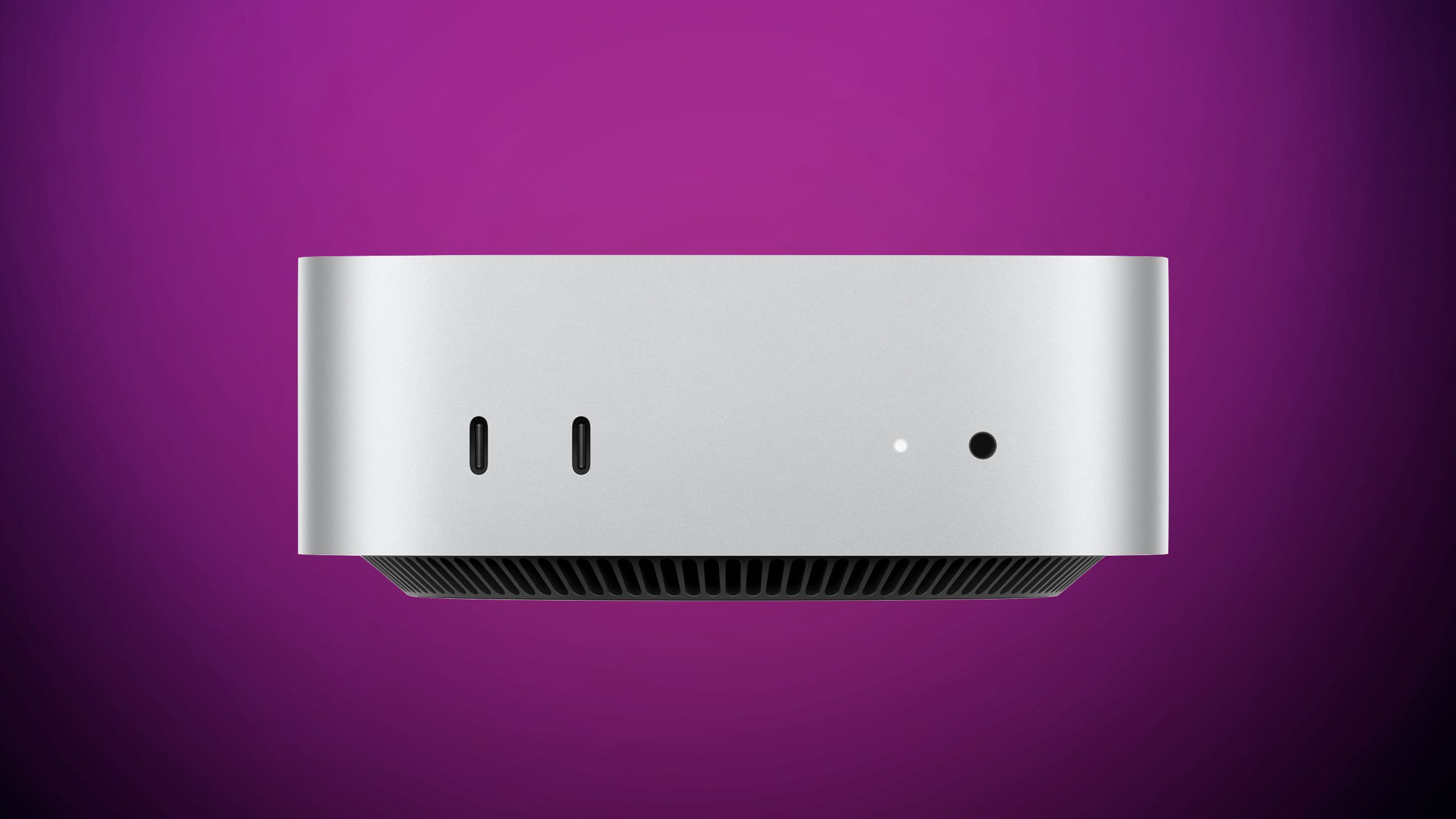
Base Mac Mini Sold Out: M4 Model Unavailable Amid High Demand and Supply Constraints
Base Mac Mini Sold Out: What the M4 Bottleneck Means for Local AI Workloads
The base M4 Mac Mini—configured with 16GB unified memory and 256GB SSD—has vanished from Apple’s online store as of late April 2026, triggering speculation across developer forums and enterprise procurement channels. While higher-tier M4 Pro and maxed-out M4 configurations remain available, the absence of the entry-level model suggests a supply-demand imbalance rather than an imminent refresh. This shortage coincides with sustained global DRAM constraints and a surge in localized LLM inference workloads, positioning the Mac Mini as an unintended bellwether for edge AI hardware adoption. For teams relying on Apple Silicon for private model execution, the stockout exposes critical gaps in hardware planning and vendor diversification strategies.

The Tech TL. DR:
- The base M4 Mac Mini (16GB/256GB) is currently unavailable on Apple’s store, while upgraded storage and M4 Pro variants remain in stock.
- Demand from AI developers running local LLMs (e.g., Llama 3, Phi-3) is a likely driver, compounded by industry-wide DDR5/LPDDR5X shortages affecting all Apple Silicon tiers.
- Enterprise IT should reassess Mac Mini procurement timelines and consider Linux-on-ARM alternatives or cloud-offload strategies for sustained AI workloads.
The nut of the issue lies in memory bandwidth and thermal design power (TDP) constraints inherent to the M4’s system-on-chip architecture. While the M4 delivers up to 38 TOPS via its 16-core Neural Engine and maintains a 10-core CPU/10-core GPU configuration, its unified memory architecture (UMA) caps memory bandwidth at 120 GB/s—adequate for lightweight inference but strained when running quantized 7B+ parameter models alongside desktop workloads. Geekbench 6 scores for the base M4 Mac Mini show single-core performance around 2,800 and multi-core near 14,500, competitive with mid-tier x86 laptops but lacking the sustained throughput of discrete GPU-equipped workstations. For context, running a 4-bit quantized Mistral-7B model via llama.cpp achieves roughly 12 tokens/second on the base configuration, dropping to under 8 tokens/second when memory pressure triggers swap-like behavior in unified memory—despite the absence of traditional swap, memory compression and paging overhead still introduce latency spikes under load.
This isn’t merely a consumer inconvenience; it’s a infrastructure signal. As noted by llama.cpp maintainer Georgi Gerganov in a recent Stack Overflow discussion, “The M4’s memory subsystem is impressively efficient for bursty AI tasks, but sustained server-like workloads expose the UMA’s lack of true bandwidth scaling—developers hitting 16GB limits are seeing performance cliffs that aren’t apparent in synthetic benchmarks.” Meanwhile, a lead platform engineer at a Fortune 500 financial services firm, speaking on condition of anonymity, told Ars Technica: “We’ve shifted 30% of our internal LLM prototyping to Mac Minis because of the privacy envelope and power efficiency, but the base model’s memory ceiling forces awkward model sharding or quantization trade-offs that hurt iteration speed. We’re now evaluating managed Kubernetes-on-Arm services to abstract hardware variability.”
From a security and operations standpoint, the Mac Mini’s appeal for air-gapped AI stems from its Secure Enclave, file-level encryption via Data Protection and the ability to enforce runtime integrity through System Integrity Protection (SIP)—features that align with Apple’s platform security guide and support SOC 2 Type II compliance for data handling. Yet, the lack of out-of-band management (OOB) and limited PCIe expansion (via USB 4/Thunderbolt 4) restricts its viability in regulated environments requiring hardware security modules (HSMs) or inline network inspection. Enterprises deploying these devices for local AI should pair them with third-party endpoint detection and response (EDR) platforms that support ARM64 telemetry, such as those offering eBPF-based monitoring for anomalous process behavior in user space.
The implementation reality check comes when attempting to containerize LLM workloads. Unlike x86 Linux hosts, macOS lacks native cgroups v2 support for fine-grained resource isolation, making Docker Desktop the de facto runtime—but with notable overhead. Below is a representative docker run command for serving a quantized Phi-3-mini model via text-generation-inference on the M4 Mac Mini, highlighting the need for explicit memory and core pinning to avoid noisy neighbor effects:
docker run -d --name phi3-local --memory=12g --memory-swap=12g --cpus="8" -p 8080:80 -v /Users/shared/models:/data ghcr.io/huggingface/text-generation-inference:latest --model-id /data/phi-3-mini-4k-instruct --max-batch-prefill-token 1024 --max-total-token 2048 --num-shard 1 --quantize bitsandbytes --disable-custom-kernels This configuration reserves 12GB of the 16GB unified memory for the model and KV cache, leaving 4GB for the host OS and Docker daemon—a tight fit that leaves little room for spikes in concurrent requests or background macOS services. Monitoring via vm_stat or leaks becomes essential to detect memory fragmentation, a known issue in long-running LLM servers on unified memory architectures.
Looking ahead, the rumored M5 Mac Mini—expected late 2026—may alleviate some pressure with rumored LPDDR5X-7500 support and a 32-core Neural Engine, potentially pushing TOPS past 50. But until then, organizations treating the Mac Mini as a permanent edge AI node must confront its limitations: fixed memory ceiling, lack of ECC, and dependence on a single-vendor supply chain. The current stockout isn’t just about RAM; it’s a stress test for how deeply enterprise workflows have come to rely on consumer-grade Apple Silicon for tasks once reserved for data center accelerators. For IT leaders, the move isn’t to panic-buy upgraded models but to harden procurement policies, validate ARM64 application compatibility, and engage hardware lifecycle consultants who specialize in Apple Silicon fleet management—because in the era of distributed AI, the edge isn’t just where the data is; it’s where the hardware holds up under load.
*Disclaimer: The technical analyses and security protocols detailed in this article are for informational purposes only. Always consult with certified IT and cybersecurity professionals before altering enterprise networks or handling sensitive data.*
Worth a look
- Spectre Limited Edition: Pump, Tank, and PowerBoard for $1,999
- OpenAI Introduces New Feature for AI Chatbot to Read and Write Text
- Demand for Manan Kumar Mishra’s Resignation at BCI General Council Meeting (newsy-today.com)
- Kongsberg to Supply PROTECTOR RS4 Systems for Canadian Army ACSV Program (archyde.com)