Norwegian Households, Firms See Inflation Far Above Target, Survey Shows
Higher consumer price inflation pushed households and business leaders to expect a 4 percent price rise over the next year, double Norges Bank’s 2 percent target.
That stark divergence emerged from the latest quarterly expectations survey released on Nov. 19 by Ipsos, which conducts the poll for Norges Bank among economists, labor market parties, business leaders, and households. While financial economists and labor representatives anticipate inflation will settle near 3 percent in twelve months, everyday consumers and executives remain anchored to much higher cost increases.
Prices rose 3.6 percent from October 2025 to October 2026, according to figures reported by NRK. That means items costing 1,000 kroner in October 2025 climbed to 1,036 kroner a year later.
"People no longer have trust in the inflation target," Torfinn Harding, professor of economics at Kristiania University College, told NRK.
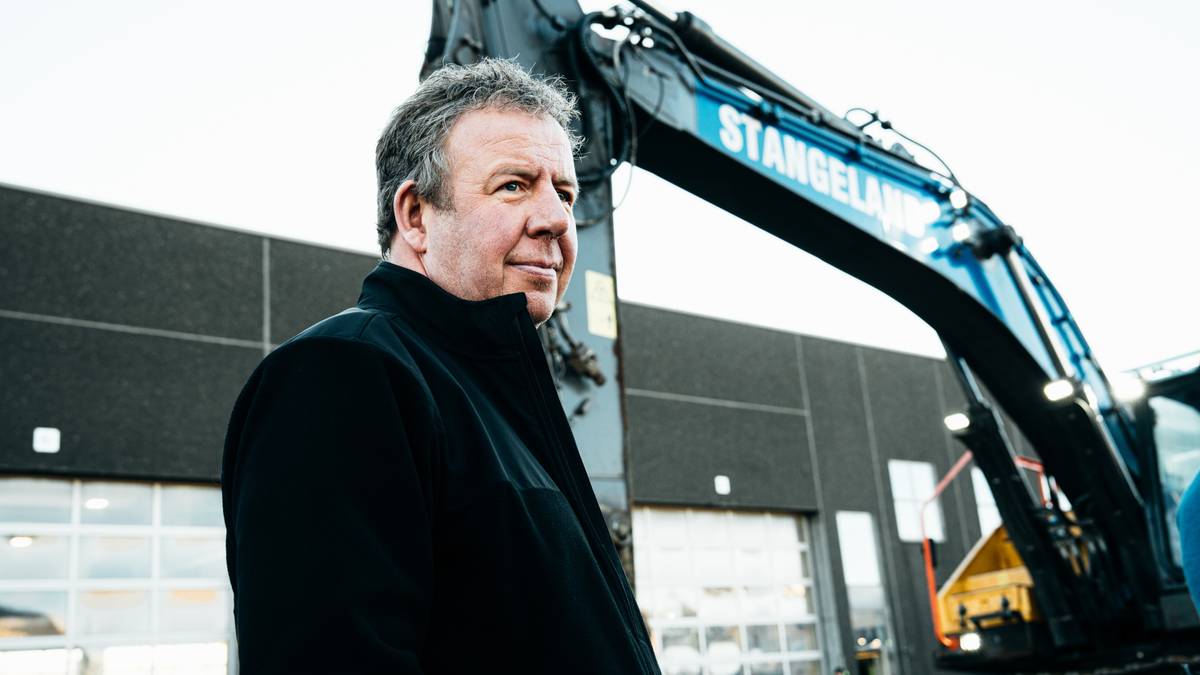
High price pressures are hitting industrial sectors hard across the country. Tommy Stangeland, managing director at Stangeland Maskin, said his firm faces annual cost increases between 3.6 and 6 percent for machinery and goods.
"We are already seeing how much we have to adjust prices for next year to cover costs," Stangeland told NRK from his workplace in Sola municipality. "It happens fast, and we are talking big numbers."
The company currently employs 800 workers and maintains high activity thanks to steady private sector demand. However, Stangeland worries that unyielding inflation will force projects onto the shelf and threaten jobs across the construction and contracting industry.
"The uncertainty is so great that we have to take on a fair bit of risk," Stangeland said. "If inflation doesn’t slow down, I fear it will have major ripple effects for the industry in this country."
Expectations for long-term inflation show an even wider gap between professional forecasters and the general public. Business leaders and households surveyed by Ipsos predict annual inflation will hover above 5 percent five years from now, whereas economic experts and labor parties expect it to ease back to 2.4 percent.
Kjetil Olsen, chief economist at Nordea, told NRK that citizens and companies are growing accustomed to large price jumps, which in turn encourages firms to keep hiking prices on goods and services.
"Norges Bank wants to get inflation down," Olsen said. "By keeping interest rates high, it helps dampen activity in the Norwegian economy. That is what Norges Bank believes is necessary."
For the coming year, projected wage growth differs slightly depending on the group asked. Economic experts and labor market parties expect wages to climb 3.8 percent, while business leaders anticipate a 4 percent increase, according to NRK. Ipsos said that household respondents expect a wage and pension growth of 3.1 percent over the next twelve months.
At the Confederation of Norwegian Enterprise (NHO), chief Nejra Macic described the survey signals as worrying. More than a third of surveyed business leaders expect weaker profitability over the coming year, and three out of ten expect to cut staff.
"It is difficult to reconcile with inflation returning to target over time, and shows that there is still a wide gap between different groups’ views on long-term price developments," Macic told NRK.
Norges Bank, established by an Act of the Storting on 14 June 1816, two years after the separation from Denmark, manages the Government Pension Fund of Norway, the world’s largest sovereign wealth fund.
Its investment arm, Norges Bank Investment Management, acquired a 49% stake in two offshore wind farms under construction in Denmark and Germany from RWE for 1.4 billion euros in March 2025, and since 2024 has used Claude AI to screen its portfolio for ESG risks.
The survey was carried out between Oct. 15 and Nov. 4, 2026, according to Ipsos.