
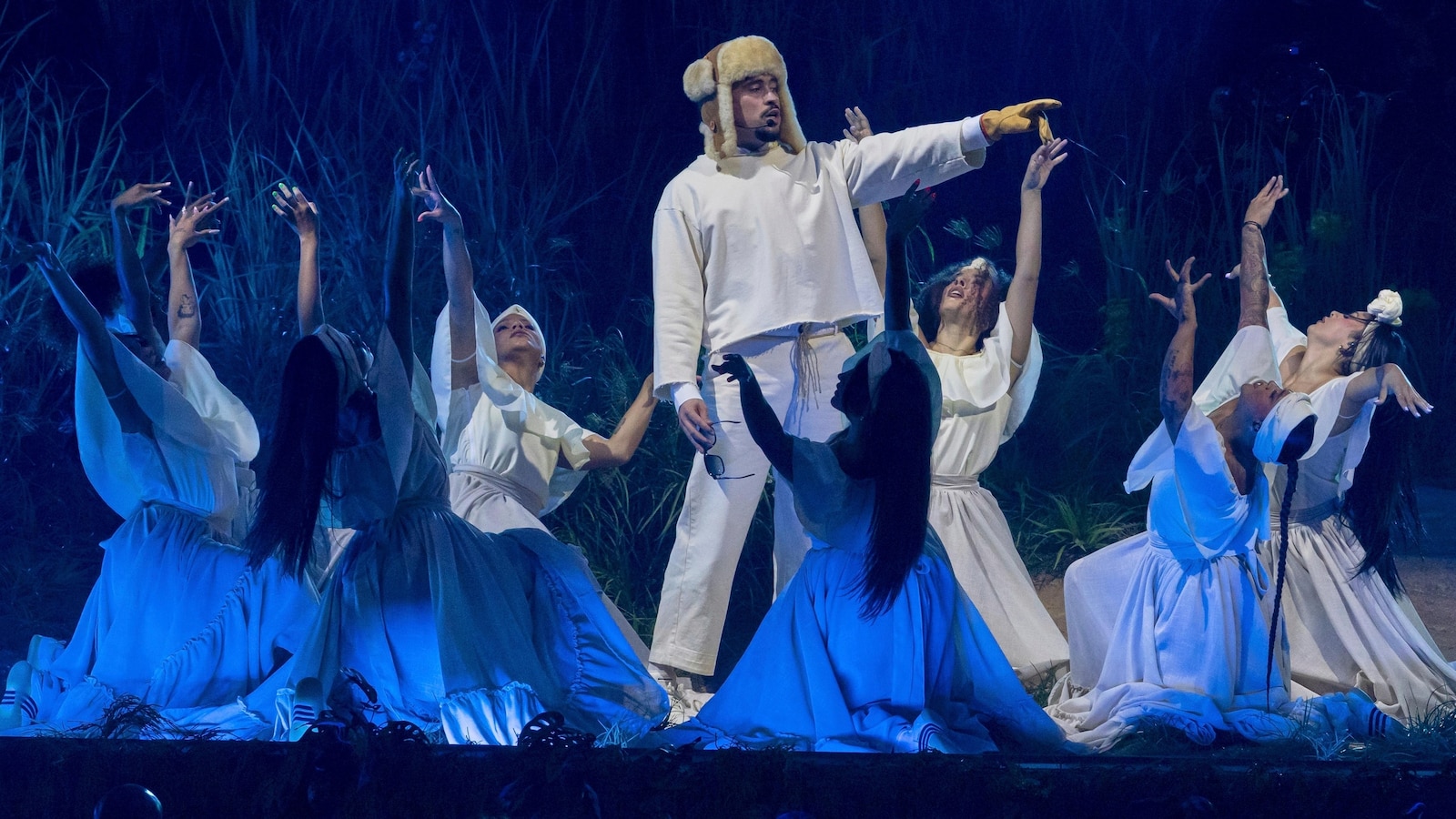
San Juan, Puerto rico – An 84-year-old homeowner is suing Bad Bunny, alleging the global music superstar and his team unlawfully replicated his uniquely designed home for use in a music video and during the artist’s concert residency at the José Miguel Agrelot Coliseum. Don Román Carrasco filed the lawsuit in the Court of First Instance in San Juan, claiming his “Casita” – a home he and his brother built in the 1960s – was copied without his full consent or fair compensation.
The suit centers on claims of fraudulent contract signing and unauthorized reproduction of Carrasco’s property. While Carrasco authorized a scout to film at his home, he alleges he was misled into signing documents he couldn’t read, and that officials afterward used his signature to finalize contracts without explaining their contents. The video featuring the home garnered 22 million views, and a full-scale replica was constructed for Bad Bunny’s concert series, yet carrasco received only $5,200 in two checks. This case raises questions about intellectual property rights, the exploitation of vulnerable individuals, and the legal protections afforded to homeowners when their properties are used for commercial purposes.
Carrasco described his home’s defining feature as a porch, stating, “A house without a porch is not feasible,” and that it’s “the perfect place to visit with friends and tell them, ‘pull up a chair, sit down and let’s talk here.'” He and his family spent approximately four to five years building the home “block by block.”
The lawsuit alleges that during the video shoot,individuals took photographs and measurements of the Casita. Thes were then used to construct an exact replica inside the coliseum. carrasco,who is unable to read or write but can sign his name,claims he was asked to sign a blank screen on a cell phone,and that his signature was then digitally transferred to contracts he never received or understood.
The legal filing asserts that the fraudulent contracts are void, and seeks redress for the unauthorized use of Carrasco’s home design. carrasco’s attorney argues that the artist and his team disregarded the homeowner’s interests and profited significantly from the replica without his permission.
