
Potential Typhoon Lagasa Poses Threat to Korean peninsula as North Pacific High Pressure Shifts
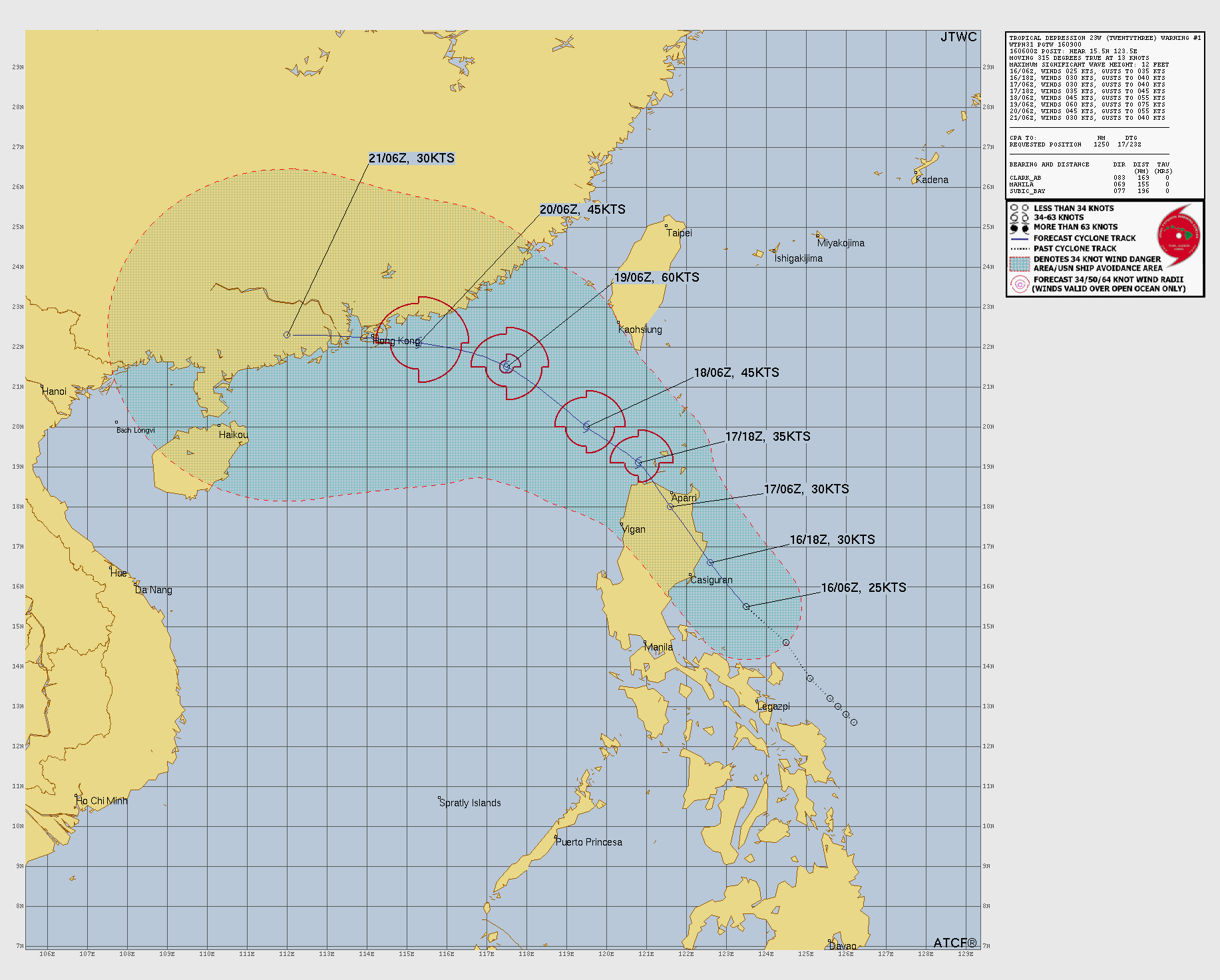
Seoul, South Korea - Forecasts indicate that Tropical Storm 90W, currently developing into Typhoon Lagasa (named by the Philippines, meaning “fast movement”), could track towards the Korean Peninsula as autumn approaches and the North Pacific High Pressure system weakens. While current models diverge on the exact path, the possibility of a direct impact warrants close monitoring, particularly given recent typhoon activity and shifting weather patterns.
The european centre for Medium-Range Weather Forecasts (ECMWF) ensemble predicts Lagasa will move towards southern China after traversing the south sea of Taiwan. However, the Global Ensemble Forecast System (GEFS) model suggests a more northerly route, passing southwest of Taiwan and okinawa before heading towards a location north of Shanghai, china. This divergence highlights the uncertainty, but both scenarios raise concerns for the Korean Peninsula as the north Pacific High Pressure, which historically deflects typhoons, begins its seasonal eastward retreat.
This shift in the high-pressure system is critical. Unlike last summer and fall, when a strong “heat dome” formed by the North Pacific and Tibetan high Pressures blocked many typhoons, the weakening of this barrier increases the likelihood of storms reaching the Korean Peninsula. As the western edge of the retreating North pacific High Pressure becomes a potential pathway, the Korean Peninsula is increasingly vulnerable.
Lagasa follows Typhoon Mitag, named by the federation of Micronesia, and is currently designated as the 18th potential typhoon of the 2025 season. The korea Meteorological Governance is actively tracking the storm’s development and projected path, providing ongoing updates as the situation evolves. Residents are advised to stay informed and prepared for potential impacts as the autumn typhoon season unfolds.
