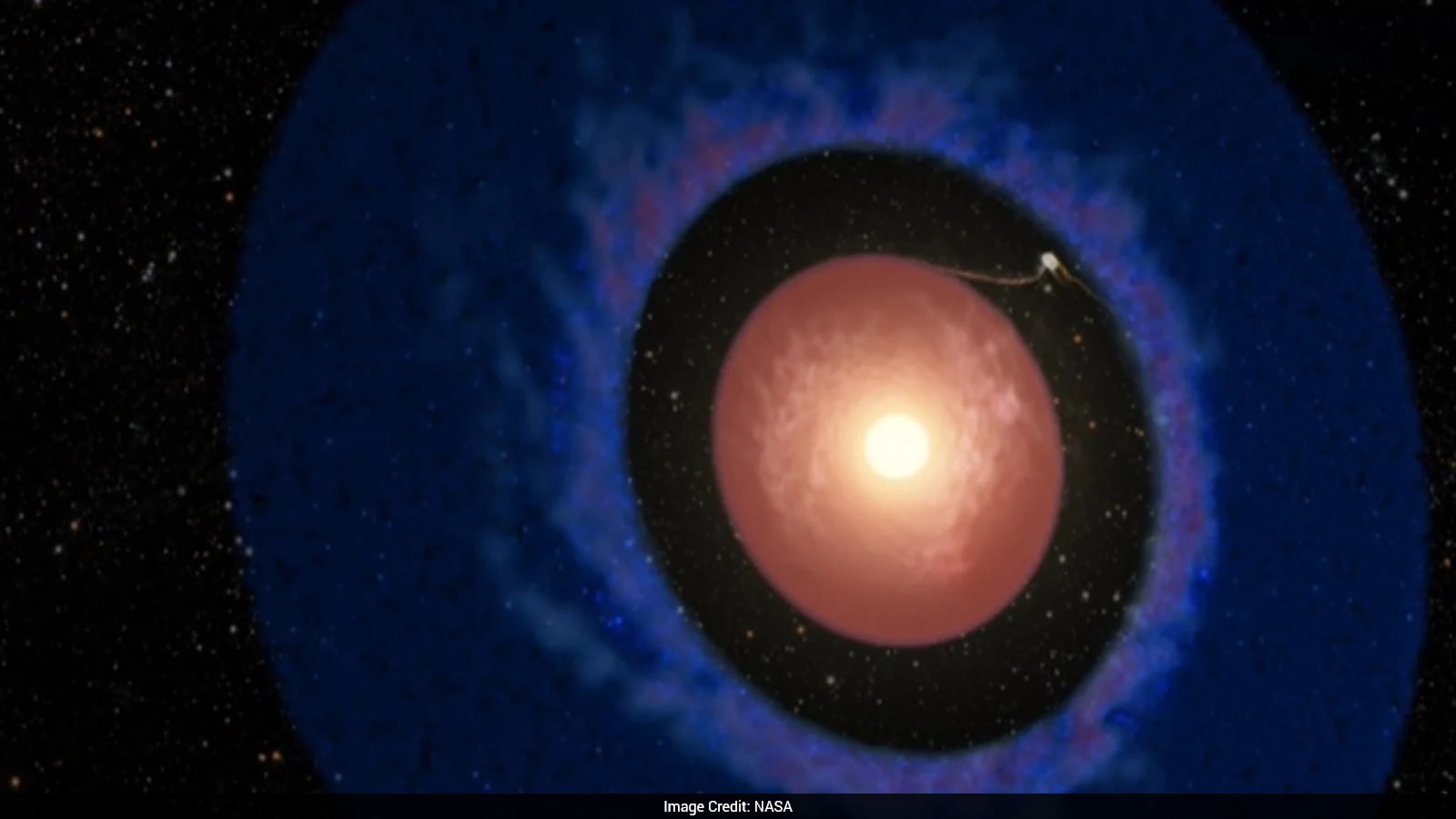
Astronomers Discover Record-Breaking Youngest Planet Elias 2-24 b
Astronomers Spot Youngest Known Planet Elias 2-24 b, Still Whirling in Dust and Gas
Astronomers have confirmed the discovery of Elias 2-24 b, officially the youngest known planet ever identified, measuring less than 1 million years old and remaining embedded inside the stellar nursery disk of gas and dust from which it coalesced.
The Tech TL;DR: What Enterprise and Research IT Needs to Know
- The Discovery: Elias 2-24 b is a Jupiter-mass exoplanet situated in the debris disk of its parent star at a distance of roughly 450 light-years, verified via archived observations from the W. M. Keck Observatory in Hawaii.
- The Architectural Challenge: Existing planet-formation models—including simulations struggling with previous record holders like the PDS 70 and WISPIT 2 systems, which exceed 5 million years of age—fail to account for the rapid formation timeline demonstrated by this infant world.
Resolving a Decade-Old Observational Mystery
The confirmation of Elias 2-24 b resolves a debate that has persisted among astrophysicists for approximately ten years. Earlier data captured by the Atacama Large Millimeter/submillimeter Array (ALMA) in Chile first exposed a prominent gap in the dusty disk surrounding the young star Elias 2-24. Subsequent imaging from the European Southern Observatory’s Very Large Telescope (VLT) revealed a faint point of light inside that structural void, though confirming its planetary nature required higher-contrast optics.
Led by Andrea Bernardi, a doctoral candidate at the Universidad Diego Portales in Chile, research teams analyzed archived observations gathered by the coronagraph at the W. M. Keck Observatory. A coronagraph functions by physically blocking the blinding direct illumination of a central host star, making it possible to isolate nearby faint companions. “The planets should be found within the gaps, since they are carving them,” Bernardi noted regarding the targeted search strategy across seven young stellar systems.
Benchmarking the Limits of Current Planet-Formation Models
The discovery shatters previous chronological benchmarks. Lucas Cieza, a professor at the Instituto de Estudios Astrofísicos in Chile and co-author of the study, pointed out the theoretical friction introduced by the new data. “Our planet-formation models already struggled to explain the previous record holders for the youngest known planet—a four-way tie between two planets orbiting the star PDS 70 and two planets orbiting the star WISPIT 2—which are all more than 5 million years old,” Cieza stated. “Elias 2-24 b shows us that even our best planet-formation models are still missing some important processes.”
Most of the approximately 6,000 confirmed exoplanets cataloged to date have been detected via the transit method, where an orbiting world crosses in front of its host star, producing a momentary dip in stellar flux recorded by Earth-based or spaceborne sensors. However, transit telemetry is notoriously inefficient for finding young worlds buried deep within thick circumstellar envelopes or orbiting on wide baselines. Consequently, the vast majority of cataloged exoplanets are billions of years old.
Deployment Realities and Future Observational Pipelines
Observing planets during their earliest developmental epochs remains fundamentally constrained by instrument sensitivity and dust opacity. As Cieza explained, while the galaxy continuously generates new stellar systems, optical hardware often remains blind to intermediate evolutionary windows due to the heavy obscuration caused by primordial disks. The confirmation of Elias 2-24 b demonstrates that archived optical and infrared datasets—when re-examined with refined coronagraphic techniques—can yield breakthroughs without requiring immediate hardware redesigns.
