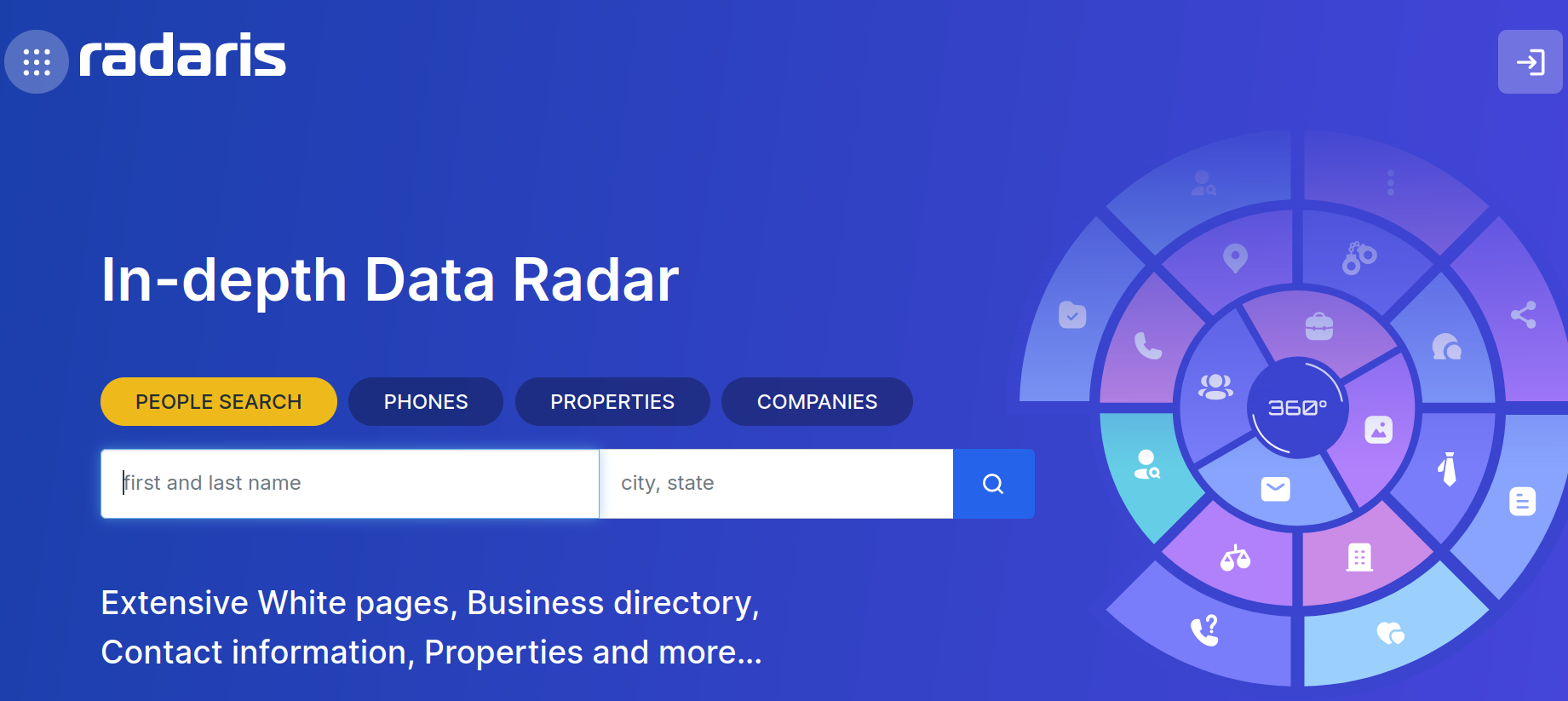
Data Broker Radaris Loses Domain Names to Plaintiffs in Privacy Lawsuit
Data Broker Radaris Loses Domains in Privacy Fight
People-search titan Radaris.com lost control of its primary domain and 13 sister sites following a default judgment in New Jersey federal court tied to Daniel’s Law, a statute protecting state law enforcement and public officials from commercial data exposure. Atlas Data Privacy Corp, the plaintiff that filed the initial complaint in February 2024, confirmed the court-ordered domain transfers after repeated procedural delays, shell corporations, and stonewalling by defense attorneys representing the data broker’s founders, Igor and Dmitry Lubarsky.
The Tech TL;DR:
- The Enforcement Action: A New Jersey court ordered Verisign and registrars to transfer radaris.com and 14 total domains to Atlas Data Privacy Corp after defendants repeatedly failed to appear.
- The Statutory Trigger: The litigation centers on Daniel’s Law, which imposes $1,000 per-violation penalties against commercial people-search sites publishing personal details of judges, law enforcement personnel, and government officials.
- The Evasion Tactics: According to court documents and Atlas CEO Matt Adkisson, operators utilized an “island-hopping” strategy, shifting shell entities across the Marshall Islands, British Virgin Islands, and Seychelles while deploying fictitious executive personas like “Gary Norden.”
Anatomy of an Evasion Architecture: Shell Companies and Mail Proxies
Operating a massive people-search aggregation engine requires significant infrastructure, payment processing redundancy, and database hosting. According to documentary evidence obtained via discovery and detailed by KrebsOnSecurity, entities like Radaris America Inc., Bitseller Expert Limited, Digital Orbit Corp, and Core Solutions Group Inc. functioned as nominal legal facades. Internal emails captured during litigation reveal these disparate corporate vehicles were centrally administered by a small Boston-area group operating out of shared mail domains such as `difive.com`, `centerex.com`, and `scienteco.com`.
According to Atlas Data Privacy Corp, radaris.com generated roughly $42,000 monthly, while affiliated properties like Veripages.com pulled in approximately $45,000 per month through revenue-sharing partnerships with marketing firms such as the Lifetime Value Company—operator of brands like PeopleLooker and PeopleSmart—and Onerep, a service that removes profiles from people-search directories while simultaneously maintaining properties like Nuwber.
The Jurisdictional Battleground and Constitutional Challenges
The legal strategy employed by Radaris relied heavily on procedural attrition. Raj Parikh, a partner at PEM Law in New Jersey who managed the Daniel’s Law litigation for Atlas, noted that previous plaintiffs routinely abandoned suits due to protracted jurisdictional games. When Atlas re-filed the complaint in June 2025, defense attorneys maintained that the court lacked jurisdiction over foreign entities, pointing to Marshall Islands registrations that investigators later found to be nonexistent corporate shells.
Victor Worms, representing the defendants, stated to KrebsOnSecurity that the firm filed a motion to vacate the default judgment. Worms argued that the default was void because “Radaris.com” is not a legal entity capable of being sued, and asserted that the domain transfer constitutes an unconstitutional forfeiture. Meanwhile, the broader data broker industry has mobilized against Daniel’s Law. At least 70 similar lawsuits filed by Atlas have been moved to federal court, with industry groups challenging the statute as an overbroad violation of the First Amendment. The U.S. Court of Appeals for the Third Circuit is reviewing the constitutional challenges, a dispute anticipated to reach the U.S. Supreme Court.
Privacy expert Justin Sherman, author of the forthcoming book The Middlemen, emphasized that state-level statutes like Daniel’s Law are critical interventions, but noted that comprehensive federal legislation remains stalled due to intense lobbying from big tech, social media platforms, and AI proponents resisting data collection limits. As states implement independent age-verification mandates and privacy rules, security architects must deploy robust identity access management frameworks and engage specialized data privacy compliance consultants to navigate shifting regulatory landscapes.
Operational Realities for Consumer and Enterprise Security
While the transfer of radaris.com marks a milestone for Daniel’s Law enforcement, the underlying infrastructure of the people-search economy remains resilient. Consumers seeking to purge personal information from these repositories continue to face a manual “whack-a-mole” cycle, as automated aggregators rapidly rebuild public profiles using fresh municipal data feeds and voter registries.

For organizations managing employee footprint exposure or high-profile executive protection programs, relying on manual opt-out requests is insufficient. Deploying automated monitoring tools, hardening public-facing executive profiles, and partnering with verified digital risk protection agencies provides the necessary telemetry to detect and neutralize unauthorized data profiling in real time.
*Disclaimer: The technical analyses and security protocols detailed in this article are for informational purposes only. Always consult with certified IT and cybersecurity professionals before altering enterprise networks or handling sensitive data.*
Related reading