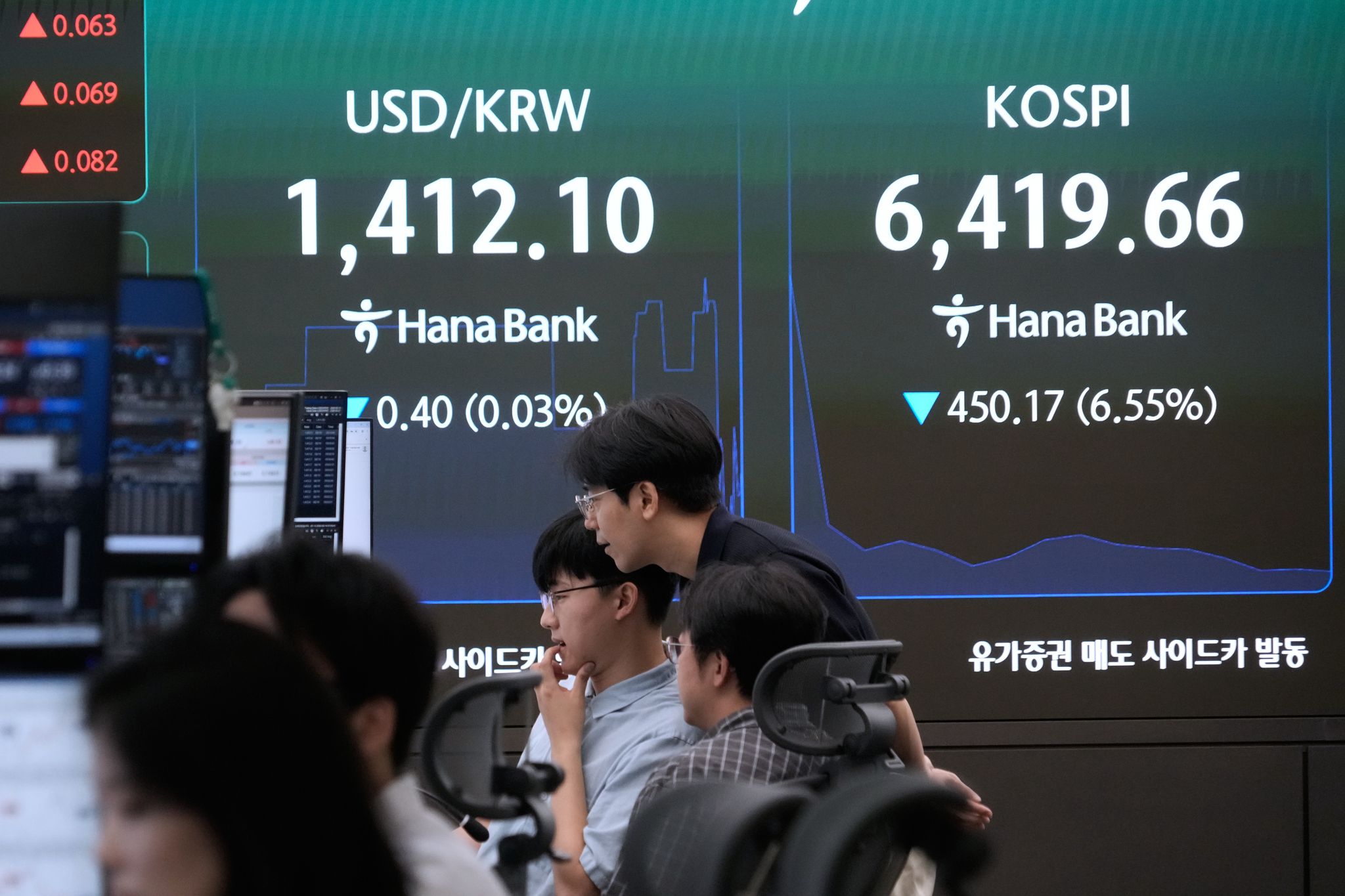
Asian Shares Slip as Wall Street Pulls Back and AI Stocks Waver
The sudden market shift highlights growing vulnerability across international exchanges as investors re-evaluate tech sector valuations and react to surging energy costs.
The Mechanics of the Asian Market Correction
Asian trading floors felt immediate pressure following a shift in U.S. trading momentum. Wall Street had previously reached milestone figures, with the S&P 500 climbing 0.7 percent to top its prior record and the Dow Jones Industrial Average adding 69 points, driven by cooling wholesale inflation figures that showed prices rising 4.7 percent annually—an improvement over June’s 5.5 percent rate, as reported by BNN Bloomberg. However, the optimism proved fragile.
As tech shares corrected and artificial-intelligence valuations faced downward pressure, the ripples hit international markets hard. Traders and institutional investors are increasingly jittery over corporate profit margins in the technology sector, particularly regarding whether capital expenditure on artificial intelligence has outpaced near-term returns.
Energy Market Volatility and Inflationary Pressures
Compounding the equity losses, global energy markets registered sharp upward movements. When energy prices climb, transportation, manufacturing, and consumer goods costs follow suit, triggering immediate protective positioning among institutional fund managers.

Prior to the latest energy spike, financial markets had scaled back expectations of aggressive monetary tightening, pricing in just a 35 percent probability of a Federal Reserve rate hike at its upcoming September meeting, according to data from CME Group cited by BNN Bloomberg. Sustained oil price jumps complicate that outlook, forcing corporate executives and investors to recalibrate their balance sheets against persistent macroeconomic headwinds.
Mitigating Financial Risk and Navigating Market Uncertainty
The convergence of falling regional equities and rising commodity costs signals a challenging transitional phase for global trade. As central banks monitor incoming consumer and wholesale inflation metrics, market participants must maintain rigorous liquidity management strategies to weather ongoing volatility across international borders.