Archaeology Challenges Traditional Portrayal of Pontius Pilate
Archaeological evidence from the first century challenges the traditional religious portrayal of Pontius Pilate as a reluctant judge, pointing instead to a career defined by military force and political repression.
He remains the only Roman official, and the only non-biblical figure alongside the Virgin Mary, to hold the unique honor of having his name spoken by millions of people each week during the recitation of the Christian Creed.
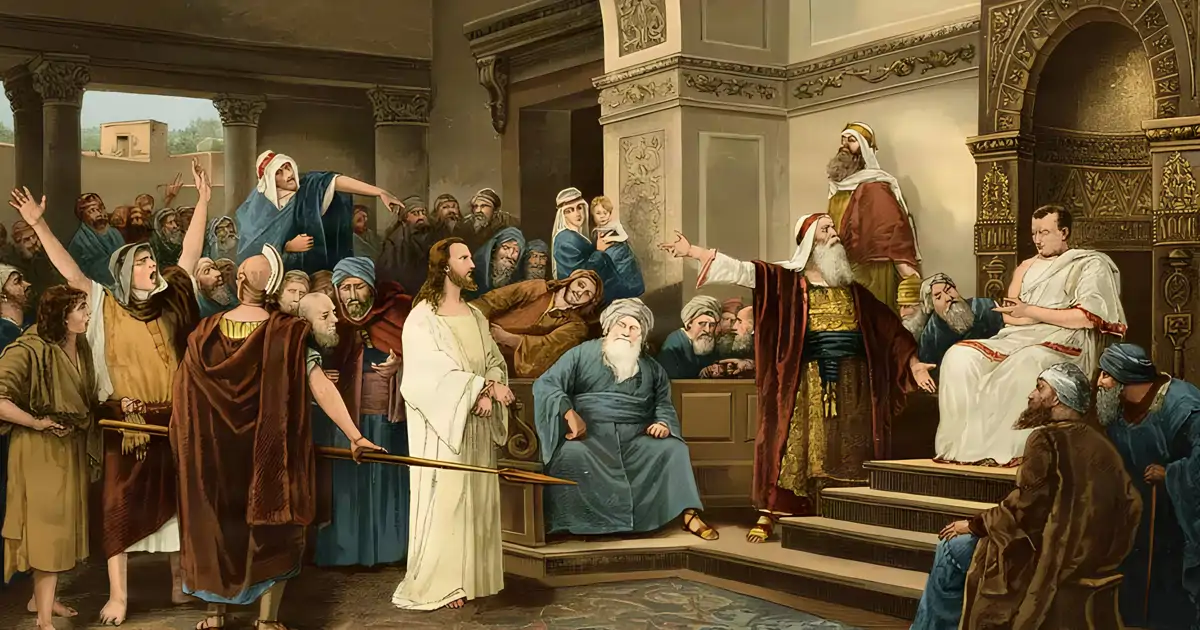
While Christian tradition depicts Pilate as a hesitant bureaucrat who sought to avoid sentencing Jesus, Historia National Geographic reported that physical findings suggest a different reality. The prefect was a member of the Roman equestrian order whose primary tool of governance was violence.
The religious tradition presents a judge who philosophically dialogues with Jesus about truth before yielding to the crowd, but the man who walked the dusty streets of Jerusalem in the first century was a military figure. His name itself offers clues: “Pontius” denotes his Samnite family origins in central Italy, while “Pilatus” likely derives from pilum, or javelin, suggesting a family history of military prowess.
The skepticism surrounding his historical existence ended in 1961, when archaeologists discovered a limestone block at the Roman theater of Caesarea Maritima, according to Historia National Geographic. The inscription, which was part of a temple dedicated to Emperor Tiberius, identifies him as Praefectus Iudaeae. This discovery confirmed the accuracy of records dating his mandate to approximately 26–36 A.D.
Contemporary accounts characterize Pilate as a man who showed little regard for local sensitivities.
His tenure was marked by confrontations with the local population, including an incident where he installed military standards bearing the emperor’s image in Jerusalem. When protesters challenged the act, which violated Jewish law, Pilate threatened them with death. In another instance, he used funds from the Temple treasury to build an aqueduct; when the public rioted, he ordered soldiers to infiltrate the crowd and massacre participants with hidden clubs.
Historians now view the account of Pilate washing his hands as a theological narrative rather than a historical event. The act was a Jewish custom, and it is considered unlikely that a Roman official who ignored local traditions would adopt such a ritual to distance himself from a political execution.
Historia National Geographic reported that Pontius Pilate served as the fifth governor of the Roman province of Judaea from 26/27 to 36/37 AD, a role defined by his authority to preside over trials and execute state power. While Christian tradition often portrays him as a hesitant figure who sought to avoid sentencing Jesus, historical accounts from Josephus and Philo characterize his tenure as a series of conflicts with the local population.
His governance was marked by a disregard for Jewish religious customs, standing in stark contrast to the sympathetic judge of later theological narratives. As the best-attested Roman governor of the region, his primary historical reputation remains that of a stern, military-minded administrator rather than a reluctant bureaucrat.
His career ended after he ordered the massacre of a group of Samaritans gathered on Mount Gerizim around 36 A.D. His superior, the governor of Syria named Lucio Vitelio, dismissed him and ordered him to Rome to face the emperor. Historical records regarding Pilate cease upon his arrival in the capital, as Emperor Tiberius had died.