Why I Love Madrid in Winter: Festive Crowds, Rooftop Views, and Historic Taverns
During the winter season in Madrid, bustling crowds, festive markets, and holiday lights fill the Spanish capital’s central streets and squares. While the city rarely freezes, local proverbs describe months of bitter cold and sharp mountain winds.
Holiday Crowds Outnumber Summer Visitors
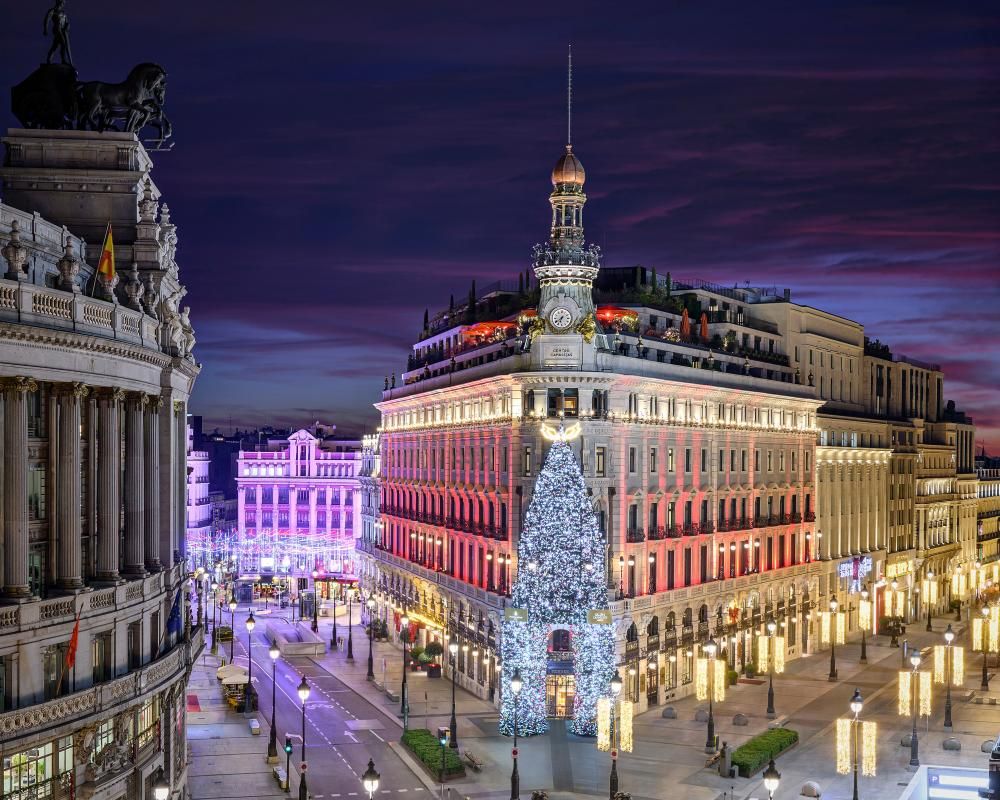
Holiday crowds fill the central streets around Puerta des Sol, outstripping midsummer visitor numbers, the Guardian reported. Giant Christmas trees stand in all main public squares, while Plaza de España and Plaza Colón install ice rinks.
A festive market featuring painted wooden huts fills the cobbled core of Plaza Mayor.
Many local residents embrace the season by wearing novelty hats. The Guardian said that a seasonal highlight involves spotting families or couples engaged in furious arguments while wearing reindeer antlers or giant turkeys on their heads.
Rooftop Views and Historic Taverns Serve Mulled Wine
Art-directed holiday lighting decorates the facades of the Four Seasons hotel and the flagship store of Spanish leatherware brand Loewe. For a broader view, El Cielo de Montera offers a rooftop terrace overlooking the Gran Vía and the Telefónica building’s blue art deco clock.
Outdoor dining continues under lap blankets and patio heaters. For drinks, Vinícola Mentridana serves mulled wine in an atmospheric bodega, while La Venencia pours five varieties of sherry straight from casks, maintaining a tradition held since 1922.
Cocido Madrileño Served in Three Abundant Courses
Traditional dining centers on cocido madrileño, a signature regional stew of chickpeas, noodles, cabbage, and pork meats. The meal is served in three courses, known as vuelcos, of such abundance that Malacatín owner Jose Rodríguez said only three diners have ever completed the full meal in the century-plus his family has run the place.
“Only three diners have ever completed the full meal in the century-plus his family has run the place,” said Jose Rodríguez, fourth-generation owner.
Beyond the city, paintings like Goya’s La Nevada at the Prado museum capture rare winter snows.
Further out, snowfall dusts the Sierra de Guadarrama, where King Felipe II built El Escorial around 1580. From nearby mountain lookouts, distant Madrid appears as a sharp winter mirage under crystal-blue skies.
National Geographic notes that Malacatín has specialized in its signature multi-platter stew since 1895, operating as a former backstreet wine shop on Ruda street where the owner’s wife first served the recipe in three stages known as vueltos. According to manager Jose Rodríguez, the historic tavern serves the abundant dish either across separate passes or all at once.