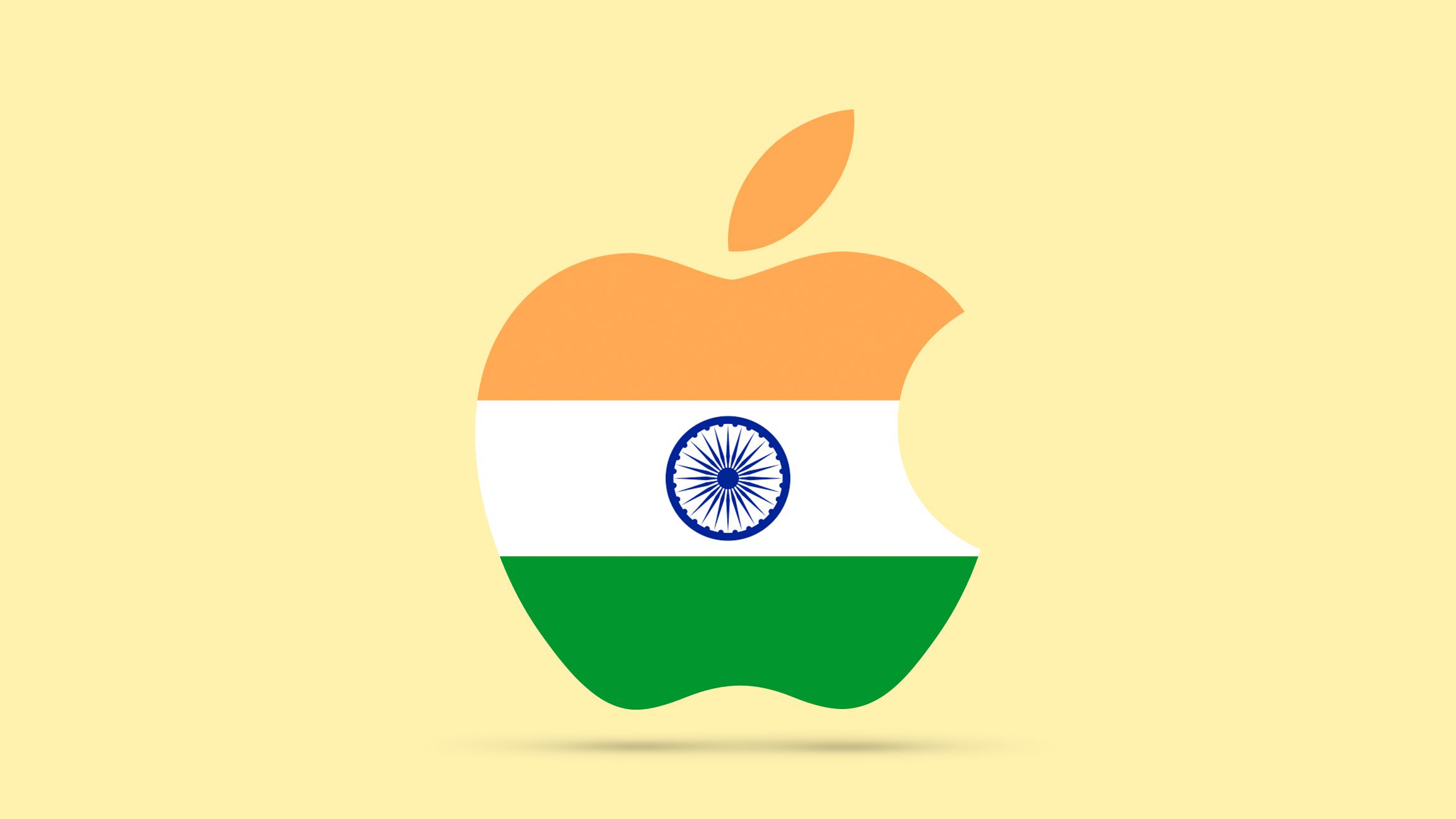
Apple Faces India Antitrust Penalties After Withholding Data
As the Competition Commission of India (CCI) sets a May 21 final hearing date in its antitrust probe against Apple, the tech giant’s continued refusal to submit financial data since October 2024 raises critical questions about data sovereignty, regulatory compliance, and the architectural limits of multinational tech governance. With iPhone market share in India climbing to 9%—up from 4% in 2022—Apple’s defense of being a “minor player” is increasingly untenable, especially as the CCI prepares to calculate penalties potentially exceeding $38 billion based on global turnover. This standoff isn’t just about market dominance in app distribution; it’s a stress test for how tech giants reconcile jurisdictional legal demands with internal data governance systems built for operational efficiency, not regulatory transparency.
The Tech TL;DR:
- Apple’s data withholding in India highlights gaps in enterprise data localization frameworks required for emerging market compliance.
- Penalties based on global turnover could exceed 30% of Apple’s annual net income, testing the limits of current antitrust damage models.
- Multinational tech firms must now audit internal data retrieval systems for regulatory response times under 14-day regulatory notices.
The core issue lies in Apple’s data architecture: financial and operational data resides in centralized, geographically siloed data lakes optimized for SEC reporting and internal FP&A, not rapid jurisdictional disclosure. When the CCI requested financials and positional views on its app store practices, Apple’s legal team cited an ongoing challenge in the Delhi High Court to the validity of India’s antitrust penalty law itself—a procedural maneuver that, while legally valid, exposes a lack of automated compliance tooling for real-time regulatory data extraction. Unlike SOC 2 Type II audited systems that support on-demand data pulls for attestation, Apple’s current setup appears reliant on manual legal review cycles, introducing latency incompatible with fast-track regulatory proceedings.
This is where enterprise-grade data governance platforms become critical. Tools like Apache Atlas for metadata management or Collibra’s data governance cloud offer automated data lineage tracking and policy-driven access controls that could reduce regulatory response latency from weeks to hours. For multinational corporations operating in high-regulation markets like India, Brazil, or the EU, deploying such systems isn’t just about compliance—it’s about reducing legal friction in markets where digital services now contribute double-digit revenue growth. As one CTO of a Fortune 500 cloud infrastructure provider noted off the record:
“When your data can’t be subpoenaed in under 72 hours, you’re not just risking fines—you’re signaling operational inflexibility to regulators who are increasingly tech-savvy.”
Another senior engineer at a cybersecurity firm specializing in data sovereignty added:
“The real vulnerability isn’t the data itself—it’s the lack of verifiable audit trails showing who accessed what, when, and under which legal basis. That’s what regulators are really after.”
To illustrate the technical gap, consider a simple API endpoint that could verify compliance readiness: a REST call to retrieve jurisdictional financial summaries. While Apple’s internal systems likely lack such an interface, a compliant architecture might expose something like:
curl -X GET "https://api.apple.com/internal/finance/jurisdiction/IN?period=FY2024&depth=summary" -H "Authorization: Bearer $(vault read -field=token secret/apple/cci-token)" -H "Accept: application/json"This hypothetical endpoint—protected by role-based access and immutable logging—would allow regulators to retrieve standardized financial slices without exposing raw operational data. The absence of such a tool suggests Apple’s data infrastructure prioritizes batch-oriented, annual reporting over real-time regulatory responsiveness—a design choice that may now carry significant financial risk.
The implications extend beyond Apple. For managed service providers (MSPs) and cloud consultants, this case underscores a growing demand for cloud architecture consultants who can redesign data pipelines for jurisdictional compliance. Similarly, compliance auditors with expertise in digital markets law are being engaged to map data flows against emerging regulations like India’s Digital Competition Bill. Even data governance specialists are seeing increased retainers as firms seek to automate SAR (Subject Access Request) and regulatory response workflows under frameworks like ISO 27701.
From a technical standpoint, the CCI’s reliance on global turnover for penalty calculation introduces its own complexities. Unlike the EU’s GDPR fines (capped at 4% of global turnover), India’s approach—if applied at full scale—could impose penalties disproportionate to local harm. This mirrors ongoing debates in the U.S. Over whether antitrust remedies should target conduct or structure, and whether algorithmic disgorgement (as proposed in some Senate bills) is a more precise tool than blunt turnover-based fines. The outcome may influence how other emerging markets design their digital antitrust regimes, particularly in Southeast Asia and Africa, where regulatory capacity is growing but economic dependence on U.S. Tech platforms remains high.
Looking ahead, the real innovation may not come from the courtroom but from the server rack. As regulatory tech (regtech) evolves, we’re likely to see more companies adopt programmable compliance layers—smart contracts on permissioned ledgers that auto-generate jurisdictional reports based on predefined legal rules. Until then, cases like this will continue to expose the brittle interfaces between global tech operations and the patchwork of national legal systems demanding accountability in real time.
The Apple-India standoff is less about market share and more about the maturity of enterprise data systems in an era of accelerating regulatory velocity. When the CCI gathers in May, it won’t just be deciding a fine—it’ll be assessing whether the world’s most valuable company can adapt its infrastructure to the speed of law.
*Disclaimer: The technical analyses and security protocols detailed in this article are for informational purposes only. Always consult with certified IT and cybersecurity professionals before altering enterprise networks or handling sensitive data.*