
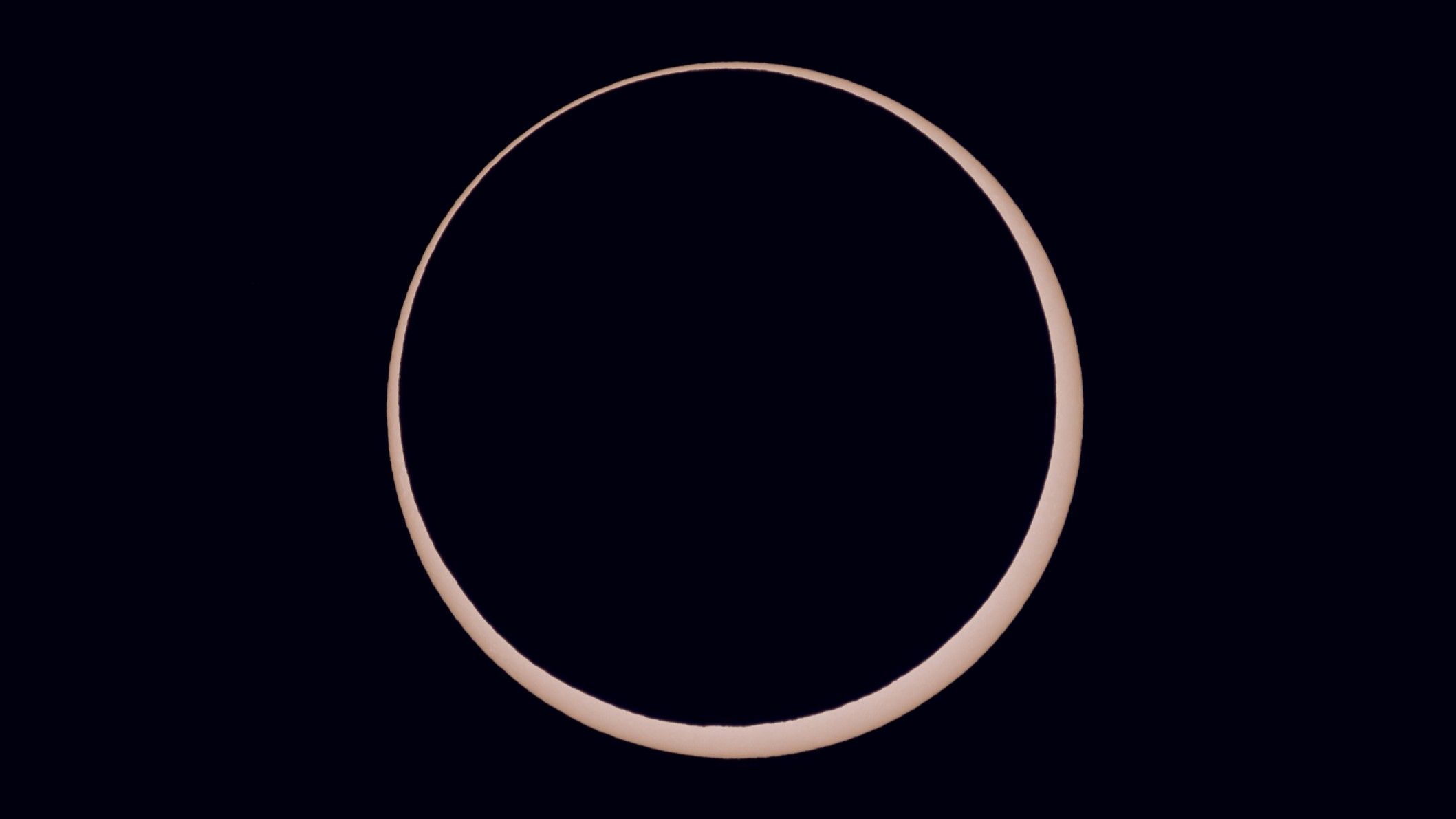
An annular solar eclipse will sweep across Antarctica today, February 17, 2026, offering a rare spectacle primarily for the continent’s penguin population and researchers stationed there. While the full “ring of fire” effect will be confined to a remote stretch of the Antarctic, a partial eclipse will be visible from parts of southern Africa and the southern tips of South America, including Argentina and Chile, weather permitting.
The annular phase, when the moon passes between the Earth and the sun but appears smaller, creating a bright ring around the sun’s silhouette, began at 7:12 a.m. EST (1212 GMT). This occurs because the moon is at a greater distance from Earth in its elliptical orbit during this eclipse, preventing it from completely obscuring the sun.
According to NASA, annular solar eclipses are becoming more common as the moon gradually moves further away from Earth. Scientists estimate that in approximately 600 million years, all solar eclipses will be either partial or annular, with total eclipses becoming a phenomenon of the past.
While the eclipse is largely inaccessible to the global population, astronomers note the event’s significance. “The penguins down there are going to have a great show,” said astronomer Joe Llama of Lowell Observatory. Observers outside the direct path of annularity will experience a partial eclipse, where the moon appears to grab a “bite” out of the sun.
The next opportunity for a more widely visible solar eclipse will be a total solar eclipse on August 12, 2026, which will be visible from Greenland, western Iceland, and northern Spain. This eclipse will offer up to 2 minutes and 18 seconds of totality and will occur the day before the peak of the annual Perseid meteor shower. Planning is already underway for viewing opportunities, with several cruises and tours being organized to coincide with the event.
Safety precautions are essential when viewing any solar eclipse. Experts strongly advise using certified eclipse glasses to protect the eyes from harmful ultraviolet and visible light. Sunglasses or binoculars do not provide sufficient protection.
