Analysts Warn Israel Faces Economic Exhaustion from War Costs
National Debt and the Economics of Long-Term Conflict
Economic history shows that great powers do not always fall to external enemies. They often buckle under the heavy financial armor they build for themselves. Writing for Ynet News, analysts point to the United States at the start of the 21st century as a stark warning for modern fiscal policy. Following the September 11 attacks, President George W. Bush led America into the wars in Iraq and Afghanistan. Those conflicts became two of the longest and costliest in modern history, with direct and indirect expenses estimated at more than $8 trillion.
Washington financed those military campaigns almost entirely through federal debt securities and the U.S. Treasury market rather than through immediate taxation or budget cuts. Today, the U.S. national debt has passed $40 trillion. That figure represents roughly 123% of gross domestic product, while annual interest payments alone top $1 trillion. As debt-service costs consume a larger share of federal revenue, America’s ability to fund education, infrastructure, innovation, and social programs steadily shrinks. Future administrations will carry that strategic constraint at a time when political polarization and inequality already strain the American system.
The Americanization of Israel’s Defense Budget
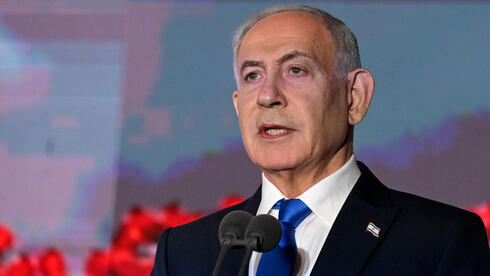
Israel faces a similar financial trajectory. Prime Minister Benjamin Netanyahu’s push toward a heavily militarized state threatens to impose significant long-term economic costs. Economists warn of a potential lost decade similar to the period following the 1973 Yom Kippur War. Back then, defense spending spiked to roughly 30% of GDP, and the debt-to-GDP ratio climbed past 150%, driving inflation and stagnation. Today’s circumstances carry even greater risk. Contemporary Israeli society is more polarized, burden-sharing is less universal, and large segments of the population do not participate equally in military service or the labor force.
The costs of the current conflict have reached hundreds of billions of shekels. Israel’s debt-to-GDP ratio has climbed back above 68%, reversing two decades of fiscal discipline. Credit-rating downgrades have damaged investor confidence and driven up future borrowing costs. Meanwhile, the defense establishment is seeking tens of billions of shekels in additional annual resources beyond its pre-war baseline, creating intense competition for finite public funds. That financial pressure lands squarely on a narrow tax base. The middle class continues to serve, work, and finance a disproportionate share of public spending while absorbing rising domestic economic pressures.
Sinwar Seeks to Weaken Israel Through Economic Exhaustion
Osama bin Laden designed his attacks to weaken the United States through costly strategic and economic fallout. Yahya Sinwar’s calculations extended far beyond October 7 with a similar objective. His strategy sought to inflict lasting damage on Israel through economic exhaustion, international isolation, and regional instability. Prime Minister Netanyahu’s management of the war, and his continued reliance on alarmist politics three years into the conflict, do little to signal long-term economic resilience.
The defense budget absorbs resources that could otherwise support education, infrastructure, and productivity. That spending drain deepens domestic fragmentation in a society already stretched by inequality. Future elections will turn on a fundamental fiscal choice. Israel must decide whether to continue down a path of rising debt and a weakening productive middle class, or pivot toward a strategy that balances security with economic renewal.