Israel officials fear exclusion from IMEC trade corridor route
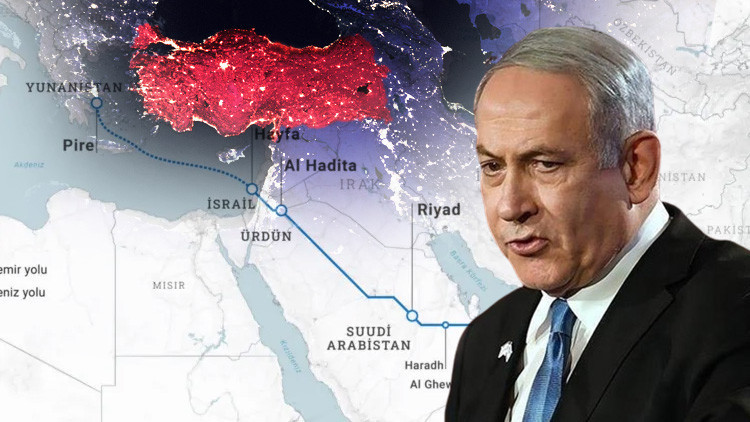
Tel Aviv is facing concerns over Israel’s exclusion from the India-Middle East-Europe Economic Corridor (IMEC). Israeli press reported that officials fear that if the country is bypassed by the multi-modal trade route, it will suffer a decline in its regional strategic and logistical influence. Diplomatic reports suggest that Turkey has been actively engaging with the United States to advocate for a route that excludes Haifa, fueling anxieties within the Israeli national security establishment.
Strategic Risks of Exclusion from IMEC
The IMEC project, formalized in September 2023, aims to connect India to Europe through a network of shipping lanes, railways, and road links spanning the UAE, Saudi Arabia, Jordan, and Israel. The project is viewed by Israeli security figures as a potential catalyst for a long-term erosion of the country’s standing in global trade. Giora Eiland, the former head of the Israeli National Security Council, warned that the “economic cost would be very high” and that the loss of strategic positioning would be difficult to reverse, given that the initiative is designed as a multi-decade infrastructure commitment.
The potential for being sidelined has prompted internal criticism regarding Israeli bureaucratic efficiency. Hezi Halavia, chairman of the Israel Ports Company, noted that while other regional actors are capable of rapid decision-making and project execution, Israel’s internal administrative processes have slowed its integration into the corridor. This internal friction, coupled with external diplomatic maneuvers, has led analysts like Noa Shustherman Dvir of the MIND Israel think tank to caution that Israel risks becoming a “marginalized actor” in the future of global trade.
Turkey’s Diplomatic Influence on Corridor Routing
Reports from Kanal 13 indicate that Turkey is using its diplomatic influence to alter the IMEC trajectory. Eliezer Alfred Marom, former commander of the Israeli Navy, stated that Turkey’s regional policy is having a direct impact on the structure of the project. Marom characterized Turkey’s efforts as part of a broader push for influence in the Islamic world, noting that states like Syria have also expressed interest in having the trade route link to their own ports rather than to Haifa.

The geopolitical competition surrounding the corridor is not limited to Israel and Turkey. Egypt has expressed concern over the project’s potential to diminish revenues from the Suez Canal.
The Structural Design of the Corridor
The IMEC framework is intended to create a “Northern Corridor” connecting the Middle East to Europe, complementing the “Eastern Corridor” that links India to the Arabian Peninsula. The current plan relies on the following logistical chain:

- Maritime Link: Mumbai to the port of Jebel Ali (Dede) in the UAE.
- Rail Link: Transit through the UAE, Saudi Arabia, and Jordan.
- Final Connection: Arrival at Haifa, followed by sea transport to the Greek port of Piraeus, and subsequent road transit into mainland Europe.
The establishment of the “IMEC Ports Club” in May, following a February memorandum of understanding between Indian and French ports, has formalized the operational structure of the project. However, the ongoing diplomatic efforts to modify this route suggest that the final logistical map remains subject to intense geopolitical negotiation.
IMEC Project Aims to Enhance Trade and Connectivity
The IMEC project was established through a memorandum of understanding signed in September 2023 by India, the United States, Saudi Arabia, the UAE, France, Germany, Italy, and the European Union to enhance trade, energy transfers, and digital connectivity. While the project is designed as a multi-decade commitment, the current friction highlights that such massive infrastructure plans face volatile regional interests.
The integration of digital and energy connectivity into the IMEC project further complicates the stakes for participant nations.