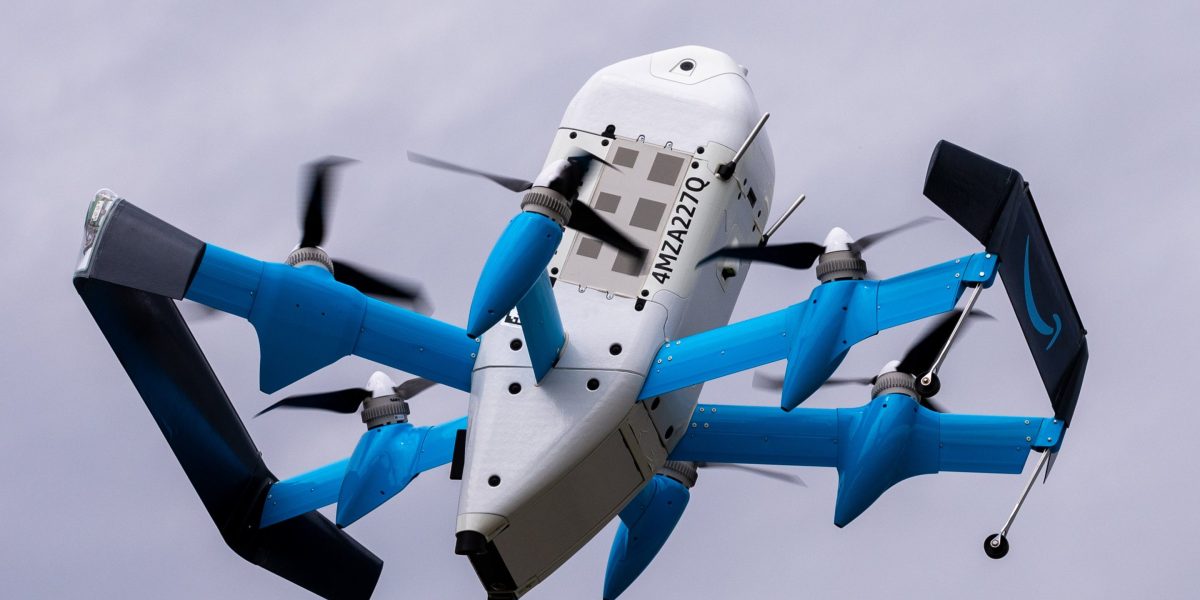
Amazon to Expand Drone Delivery to 500 US Cities
Amazon plans to expand its Prime Air drone delivery network to nearly 500 U.S. cities and towns by the end of this year, marking a significant acceleration for a project that has struggled since its 2013 inception. The initiative, which seeks to integrate autonomous delivery into the company’s existing logistics infrastructure, aims to reach tens of millions of customers with sub-hour delivery times.
Infrastructure Scaling and The Logistics Bottleneck
The expansion represents a sixfold increase in Amazon’s current drone footprint, moving beyond early test markets in Texas, Louisiana, and Kansas. According to the company’s latest internal projections, the goal is to shift drone delivery from a niche experimental project into a high-volume utility. This transition requires overcoming significant capital expenditure hurdles related to battery density, noise reduction, and flight path automation.
Regulatory Hurdles and Operational Risk
Amazon’s path to scale has been defined by a fraught relationship with the Federal Aviation Administration (FAA). The company’s initial reliance on technological innovation over regulatory navigation led to years of operational friction. Former employees noted that the pivot in 2020—replacing project founder Gur Kimchi with former Boeing executive David Carbon—signaled a shift toward a more compliance-heavy, aerospace-grade development model. This realignment has been tested by high-profile incidents, including the October 2025 collision between two drones and a crane in Arizona, which remains under investigation by the National Transportation Safety Board (NTSB).
The technical requirements for scaling are formidable. As Amazon seeks to move beyond these suburban constraints, the company is lobbying for specific wireless frequencies to mitigate GPS signal degradation at low altitudes.
Competitive Dynamics and Market Positioning
Amazon is not the only entity pursuing autonomous delivery. Walmart has also aggressively pursued drone integration, targeting 40 million potential customers by 2027 through partnerships with Wing and other vendors.

According to data from market research firm ShipMatrix, Amazon delivers roughly 20 million packages daily in the U.S. While the company stated it has completed “hundreds of thousands” of drone deliveries this year, this represents a fraction of its total volume. The economic viability of the program rests on the company’s ability to maintain its two-day shipping bedrock while subsidizing the high cost of R&D through its Prime membership fees and third-party seller commissions.
The Path to Commercial Viability
As Amazon prepares for this expansion, the broader retail sector is observing a shift in how capital is allocated toward automated logistics. The transition from human-piloted delivery vans to autonomous drone fleets serves as a hedge against potential legislative changes, such as bills that would classify delivery drivers as full-time employees.

The long-term trajectory for Prime Air remains dependent on reaching the “rural threshold”—the point at which battery and range technology allows for 15-mile delivery distances.