AI in Opinion Journalism: Challenges and New Editorial Guidelines
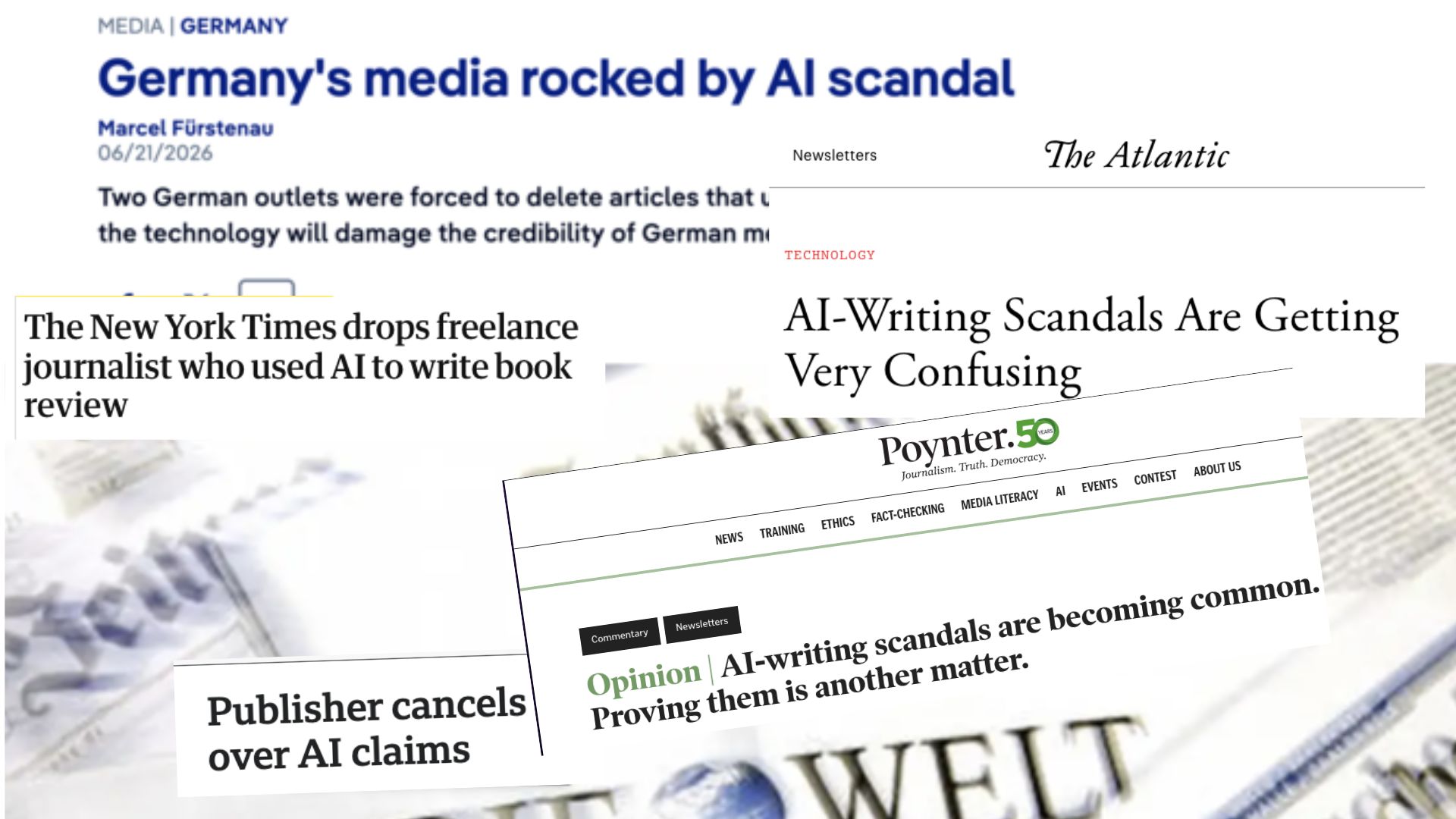
Major German and American news outlets, including the Frankfurter Allgemeine Zeitung and The New York Times, have recently retracted opinion content due to undisclosed artificial intelligence usage. As editorial standards struggle to keep pace with generative tools, media organizations are now implementing stricter disclosure requirements to preserve the integrity of public debate.
The Erosion of Editorial Trust
The opinion page, traditionally a bastion of human perspective and rigorous intellectual exchange, is facing a crisis of authenticity. The industry continues to grapple with a series of high-profile failures where AI-generated content bypassed standard editorial safeguards.
In Germany, the fallout has been swift. The Berlin-based Tagesspiegel announced it had deleted op-ed contributions from Stephan-Andreas Casdorff, “until further notice”. Shortly thereafter, the Frankfurter Allgemeine Zeitung (FAZ) confirmed that an opinion piece published from the state premier of Thuringia, Mario Voigt, was produced with the help of AI.
These incidents mirror broader international trends. In March, The New York Times dropped freelance journalist Alex Preston after he utilized AI to write a book review. In April, the Mississippi Free Press disclosed that it had unknowingly published an opinion column written using artificial intelligence, and that the author was fake.
Defining the Human Dimension
The central tension lies in whether language can be separated from the human experience of thought. Ingrid Skovdahl, Christian Andersen, and Lukas Marklund, editors at the Nordic news site Altinget, argue that the two are inextricably linked. In their view, the mechanical nature of AI output produces arguments that are often incoherent, impersonal, and not very concrete.
To combat this, Altinget has formalized five specific guidelines for contributors. These rules emphasize that the media house exists to facilitate human interaction, not algorithmic simulation. They require full transparency regarding AI use and mandate that all factual claims must be verified by human authors before submission. If a piece is found to be largely AI-generated, the outlet reserves the right to reject the submission entirely.
Legal and Institutional Risks
The use of AI in opinion writing introduces significant liability. When a publication prints a hallucinated quote or a fabricated argument, the reputation of the outlet is the first casualty.

The Future of Authentic Discourse
The reliance on AI to churn out high volumes of content has created a “uniformity trap,” where opinion pages begin to sound identical. This loss of unique voice is exactly what Altinget seeks to prevent. By mandating that reasoning and formulations remain the sole output of the human mind, they aim to restore the value of individual perspective.
The opinion page is at a crossroads. History suggests that when trust is broken, it is rarely regained through policy alone; it requires a fundamental commitment to the human labor of thinking, writing, and verifying. Those who ignore this reality do so at the peril of their own relevance.