
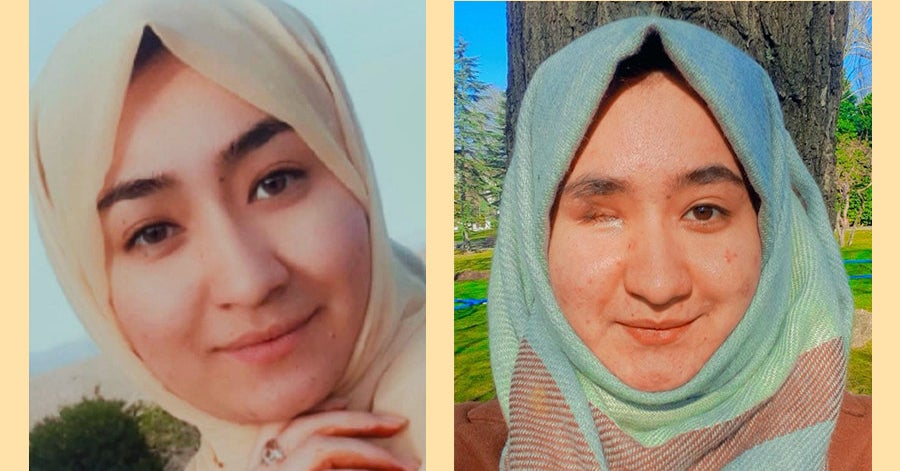
A Student’s Defiance in the Face of Terror
A classroom in kabul, Afghanistan, became a scene of unimaginable horror for Alia Amiri.Just moments after standing to restore order, she turned to face a gunman deliberately opening fire on her classmates. The 17-year-old recounted the chaos, describing her attempt to find shelter under desks as an explosion rocked the room.
The attack left Amiri with devastating injuries: the loss of an eye and an eardrum,and severe damage to her jaw. Tragically,54 other students,the majority of them girls,were killed.
This violence is part of a long pattern of targeting and persecution faced by Afghanistan’s Shiite minority. Amiri lives in Dasht-e-Barchi, a predominantly Shiite neighborhood in western Kabul, which has repeatedly been targeted by terrorist groups. Attacks have struck Shiite mosques, schools, athletic facilities, and cultural centers – including a horrific 2020 assault on a maternity ward that claimed the lives of 20 civilians, including mothers and newborns.
Despite knowing the inherent risks of attending school, Amiri never anticipated facing such brutality within the classroom walls. Yet, just two weeks after the attack, demonstrating extraordinary resilience, she sat for her university entrance exam and achieved a top score.
“I want to tell the terrorists that no matter how much oppression you impose on us,you can’t defeat us!” Amiri declared. “Your attacks inspire us to rise again and again.”
The attack on the Kaaj education center, where Amiri had prepared for the exam for two years, drew condemnation from the UN Security Council and global leaders. However, the Shiite community feels increasingly marginalized, and robust security measures to protect them have not been implemented by the governing authorities in Afghanistan, particularly sence the Taliban’s rise to power.
amiri’s courage and unwavering spirit were recognized internationally when the BBC included her on its list of 100 inspiring and influential women of 2022.
Her story unfolds against a backdrop of increasing restrictions on women’s rights in Afghanistan. following the Taliban’s takeover in the summer of 2021, girls’ schools were banned beyond the sixth grade. Amiri and other young Afghan women remain hopeful that the international community will exert pressure on the Taliban to uphold the rights of girls to education and women to employment.”I appeal to the international community to do something for Afghan women and girls,” Amiri pleaded. “Hear their voice and take action. It’s almost two years now that schools are closed for girls. There is the possibility that the university will be closed too. Currently, the situation is hard. Afghan women and girls can’t work.”
sadly, Amiri’s fears were realized.On December 20th, the Taliban imposed a complete ban on women’s access to university education. Just five days later, they ordered non-governmental organizations to prohibit women from working.While these bans have sparked widespread international condemnation, Taliban leaders have remained steadfast in their refusal to compromise.
