
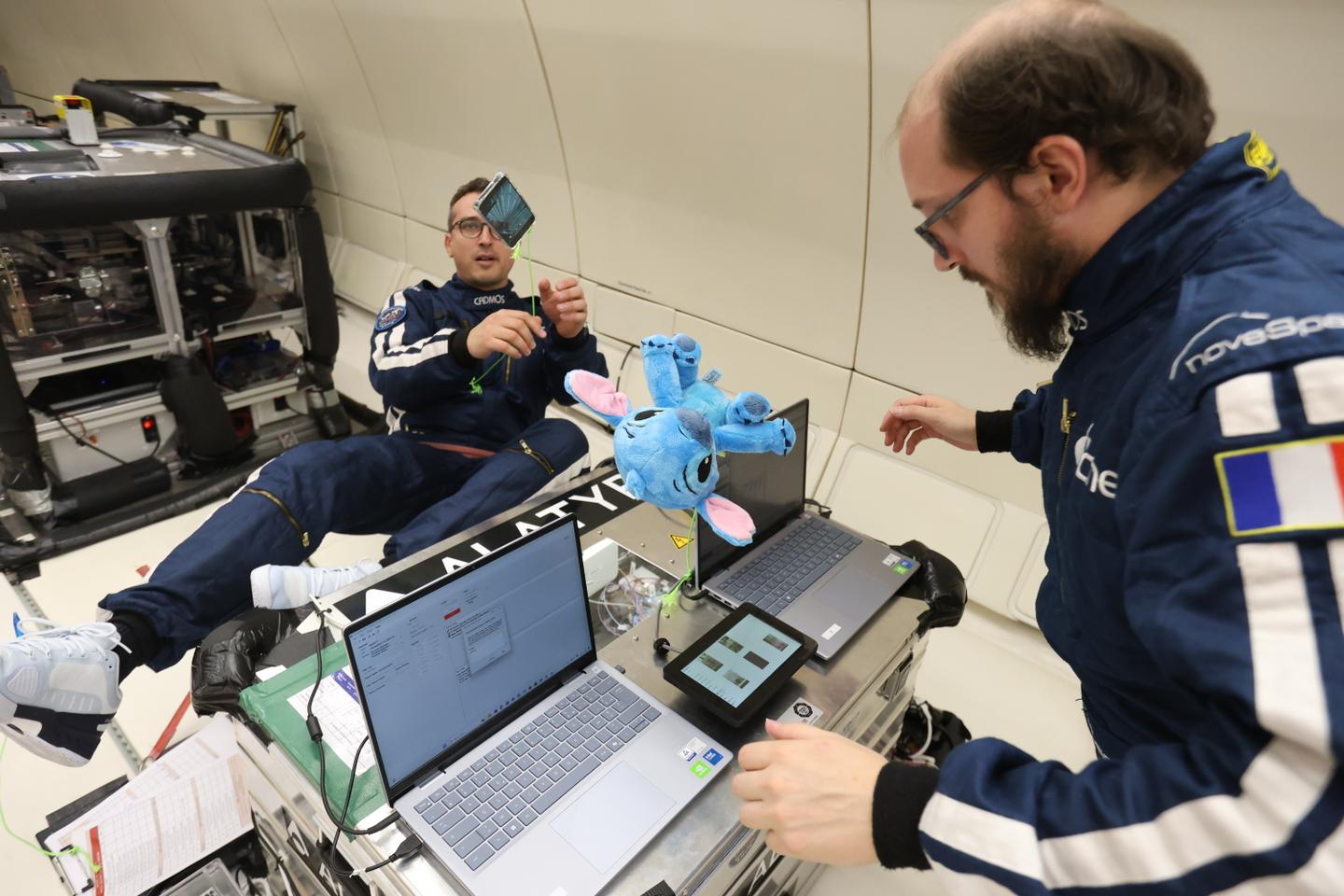
Researchers Experience Weightlessness Aboard CNES‘s ‘Zero G’ Airbus
Bordeaux-Mérignac, France – Forty researchers took to teh skies today aboard an A310 Zero G aircraft, experiencing brief periods of weightlessness during the 69th parabolic flight campaign organized by the National Center for Space Studies (CNES). The flight, conducted under an unusually warm October sun, aims to facilitate eleven separate experiments exploring the effects of microgravity.
The aircraft, modified with a padded, windowless front two-thirds to house the experiments, operates by executing a series of precisely controlled parabolic arcs. Researchers, seated in the rear of the plane, endure periods of up to 1.8 G force during the ascent before entering approximately twenty seconds of near-zero gravity as the aircraft follows a bell-shaped trajectory mimicking conditions aboard the International Space Station (ISS).
After thirty-four minutes of flight, the first parabola commenced, signaled by audio announcements and a rapid pitch-up maneuver by the pilots. ”Injection,” the pilot’s call, marked the transition to weightlessness, allowing bodies and objects to float freely. Following the “zero g” phase, the aircraft levels, subjecting passengers to a second period of hypergravity before stabilizing for the next parabola. The campaign provides a unique and cost-effective platform for scientific investigation in an environment difficult to replicate on Earth.
