
A new combination therapy of bimagrumab and semaglutide led to significant weight reduction in overweight and obese adults, with some participants experiencing over 20% body weight loss, according to results from a phase 2 clinical trial.
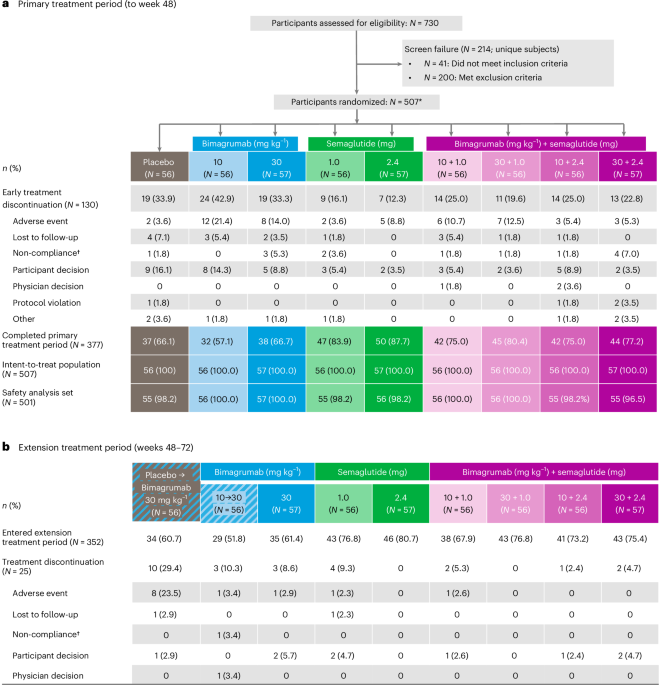
The trial, involving 507 participants, randomized individuals to nine groups including placebo, varying doses of bimagrumab, semaglutide, and combinations of the two drugs over 48 weeks. Participants had a body mass index (BMI) of 30 or higher, or a BMI of 27 or higher with at least one obesity-related complication, excluding diabetes. The study, identified as NCT05616013, showed the highest dose combination – bimagrumab 30 mg/kg plus semaglutide 2.4 mg – resulted in an average weight loss of 17.8 kg (approximately 39 pounds). This surpassed the effects of semaglutide alone, which yielded an average weight loss of 14.2 kg.
Researchers observed that the combination therapy similarly led to greater reductions in waist circumference and total body fat mass compared to either drug alone. Notably, participants receiving the high-dose combination experienced a reduction in fat mass accounting for over 92% of their total weight loss. The study, published in Nature, also indicated a preservation of lean muscle mass in the combination group, a benefit not consistently seen with other weight loss medications.
Bimagrumab, developed as an investigational antibody, targets type II activin receptors, aiming to reduce body and visceral fat while promoting muscle growth. Semaglutide is a glucagon-like peptide 1 receptor agonist (GLP-1 RA) already approved for weight management. The combination appears to enhance the benefits of both drugs, according to the trial data.
While the results are promising, the study also reported adverse events. Discontinuations due to adverse events were more frequent in the bimagrumab groups (14.0–21.4%) compared to semaglutide (3.6–8.8%), combination (5.3–12.5%), and placebo (3.6%). Common side effects associated with bimagrumab included muscle spasms, diarrhea, and acne, while semaglutide was linked to nausea, diarrhea, constipation, and fatigue. Several participants discontinued treatment due to nausea or muscle spasms.
The trial included an open-label extension period, continuing treatment for some participants to week 72. At week 72, the high-dose combination group achieved an average weight loss of 24.2 kg (approximately 53 pounds), with over 84% of participants experiencing at least 15% weight reduction. Improvements in metabolic parameters, such as HbA1c levels, were also observed, particularly in those with prediabetes.
Researchers also examined changes in body composition using dual-energy X-ray absorptiometry (DXA). The study found that semaglutide alone was associated with a decrease in lean body mass, while bimagrumab, particularly in combination with semaglutide, helped to preserve or even increase lean mass. Changes in lipid profiles were also noted, with bimagrumab potentially counteracting some of the lipid-altering effects of semaglutide.
The American Diabetes Association highlighted the findings as a potential breakthrough in maintaining lean mass for patients undergoing obesity treatment. According to a press release issued in June 2025, the focus is shifting towards not only the amount of weight lost, but also preserving muscle mass and gaining the health benefits that result from treating obesity. The number of Americans using incretin-based therapies has increased significantly in recent years, but concerns have been raised about the potential for muscle loss with these medications.
Researchers are also investigating alternative administration routes for bimagrumab. A study indicated that weekly subcutaneous dosing of bimagrumab yielded comparable pharmacokinetic and pharmacodynamic effects to monthly intravenous infusions, potentially offering a more convenient administration method for future clinical development.
The study’s findings are expected to inform further research into combination therapies for obesity, with a focus on maximizing weight loss while preserving muscle mass and improving overall health outcomes. Further analysis of the data is ongoing, and the long-term effects of the combination therapy remain to be seen.
