
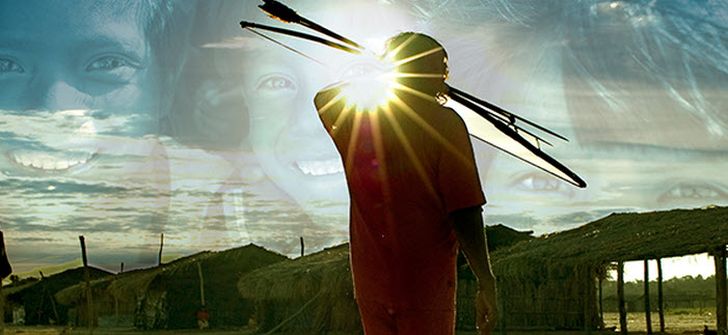
Indigenous communities and environmental defenders in Brazil’s Amazon region secured a significant victory last week, successfully blocking government plans to privatize the Tapajós River and transform it into a massive commercial shipping route for soybean transport. Approximately one thousand local activists, the majority identifying as Mundurukú, Arapiun, and Apiaká, occupied the grain terminal of multinational corporation Cargill in Santarém for several days, ultimately forcing a government reversal.
The action led to the revocation of a decree that had opened the administration of three major Amazonian rivers – the Tapajós, Madeira, and Tocantins – to auction, as announced months prior by President Luiz Inácio Lula da Silva. The project aimed to expand the Tapajós’ role as a strategic “waterway” for agribusiness, connecting large Brazilian agricultural enterprises with international markets, particularly China.
Indigenous groups have consistently argued that converting the Amazon rivers into economic corridors threatens their territories, biodiversity, food security, and traditional ways of life. The Tapajós River, they point out, already suffers from severe pollution due to widespread illegal mining and heavy river traffic. According to web search results, the Tapajós River basin accounts for 6% of the water in the Amazon Basin, making it the fifth largest in the system.
While this represents a win for Indigenous communities, challenges remain. Pedro Lucas Fernandes, chairman of the União Brasil party in the Chamber of Deputies, has already urged Lula to reinstate the Tapajós, Madeira, and Tocantins waterways into the national privatization program. Fernandes criticized the government’s reversal on X, stating it “interrupts planning, creates legal uncertainty, and sends the message that strategic decisions can be blocked by popular pressure.”
The situation highlights the complex position of President Lula, who relies heavily on the symbolic and actual support of Indigenous voters, particularly as Brazil approaches presidential elections in October. Images from Lula’s inauguration on January 1, 2023, showing Indigenous leader Raoni Metuktire placing the presidential sash on the newly elected president, remain a potent symbol of this relationship. Although, Raoni, along with other Indigenous leaders from Pará and Amapá, voiced sharp criticism and deep disappointment during COP 30 last November regarding President Lula’s support for oil exploration at the mouth of the Amazon, in the so-called Equatorial Margin, where exploratory drilling has already begun.
Indigenous representatives contend that the decision to allow oil exploration was made without consultation with local communities, effectively erasing their presence and rights to the territories. While acknowledging Lula as the president who has demarcated the most Indigenous lands, leaders emphasized the contradiction between his climate rhetoric and his support for fossil fuel development, a primary driver of greenhouse gas emissions. Their concerns were quickly validated on January 4th, when approximately 175 kilometers off the coast of Amapá state, at the mouth of the Amazon, 18.44 cubic meters of non-aqueous drilling fluid were released into the sea from the NS-42 drilling vessel during operations at the Morpho well. Brazil’s environmental agency, IBAMA, subsequently levied a fine of 2.5 million Real (approximately $487,225) against Petrobras, the company leading the operations.
IBAMA determined the released fluid to be an oily mixture used in oil exploration, containing components classified as posing a moderate risk to human health and the aquatic ecosystem. Despite the penalty, activities were resumed. Indigenous communities are also voicing opposition to Bill 2903/2023, recently approved by the Human Rights Committee of the Brazilian Senate. This bill aims to regulate economic exploitation within Indigenous territories, potentially opening the door to mining – known as *garimpo* – as well as oil and gas exploration.
Indigenous leader and activist Txai Suruí argues that the bill’s progression represents a severe setback for Indigenous rights and environmental protection, calling the legalization of *garimpo* a form of “institutionalization of ecocide, genocide, and human rights violations.” Suruí emphasized that the Brazilian Constitution and ILO Convention 169 mandate prior consultation with Indigenous communities and rigorous environmental impact assessments. Citing a study by Fiocruz, a research institution affiliated with the Brazilian Ministry of Health, Suruí revealed that 100% of hair samples from the Paiter Suruí people contained mercury, leading to neurological damage in adults, risks to child development, and ecosystem degradation.
The humanitarian crisis facing the Yanomami people, stemming from years of illegal mining, has been exacerbated by recent outbreaks of whooping cough among children in Roraima state. The Ministry of Health confirmed three deaths and at least eight cases, initiating an emergency medical response in mid-February. The disease, preventable through vaccination, emerged against a backdrop of low immunization rates. In 2022, only 29.8% of Yanomami children under one year had received the complete vaccination schedule, a figure that rose to 57.8% in 2025 but remains below the safety threshold of over 90%. Authorities fear a potential epidemic. According to the Urihi Yanomami association, the number of deaths may be higher than officially reported, directly linked to vaccination deficiencies.
The outbreak is part of a broader crisis characterized by malnutrition, malaria, and other infectious diseases, all consequences of ongoing illegal mining. While the Lula administration has reported a general decline in deaths since the start of the health crisis in 2022, whooping cough serves as a new alarm signal regarding the precarious health conditions of Yanomami children and the need for structural, ongoing measures.
Regarding his environmental agenda, expected to remain a priority in his upcoming campaign, President Lula has avoided direct confrontation on key issues. According to reporting in *O Globo*, Lula has refrained from taking a position on the General Environmental Licensing Law, labeled by environmentalists as a “destruction law” for its potential to weaken environmental protections. The law simplifies environmental permitting processes and allows for self-certification, effectively reducing environmental impact assessments and preventative controls.
The law also reduces mandatory participation from Indigenous protection organizations like FUNAI (Fundação Nacional do Índio) and is viewed as an incentive for uncontrolled expansion into sensitive areas, particularly in the Amazon and Cerrado. The Socialism and Freedom Party (PSOL) and the Indigenous network Articulação dos Povos Indígenas do Brasil (APIB) have filed a constitutional challenge with the Supreme Federal Court (STF), which requested statements from the President and Congress. Congress defended the law, while Lula allowed the deadline to pass without responding, a silence interpreted by analysts as a political calculation to avoid tensions with Congress and the agribusiness sector.
A recent study by Oxfam Brasil revealed that in 2023, nearly half of all land conflicts in Brazil – 46.9% of the total, representing 1,034 cases – occurred within the so-called Amazon Legal region, an administrative macro-region created by the Brazilian state encompassing nine states and approximately 59% of the national territory. Pará and Maranhão states were identified as the most affected by territorial violence, driven by illegal land grabbing (*grilagem*), deforestation, mining, and the expansion of agribusiness and criminal networks. The study highlighted a growing trend of destruction and physical violence against populations, particularly traditional communities.
In 2024, Maranhão recorded 365 land conflicts, the highest number ever registered, while Pará saw 240 cases, close to its historical peak of 253 in 2020. The study also noted a direct correlation between high conflict incidence and low social indicators related to health, housing, and security. Systematic violence against human rights defenders is also on the rise, with 25 murders linked to land and environmental conflicts recorded between 2021 and 2022. The most vulnerable communities, including Indigenous peoples, continue to bear the highest cost.
