
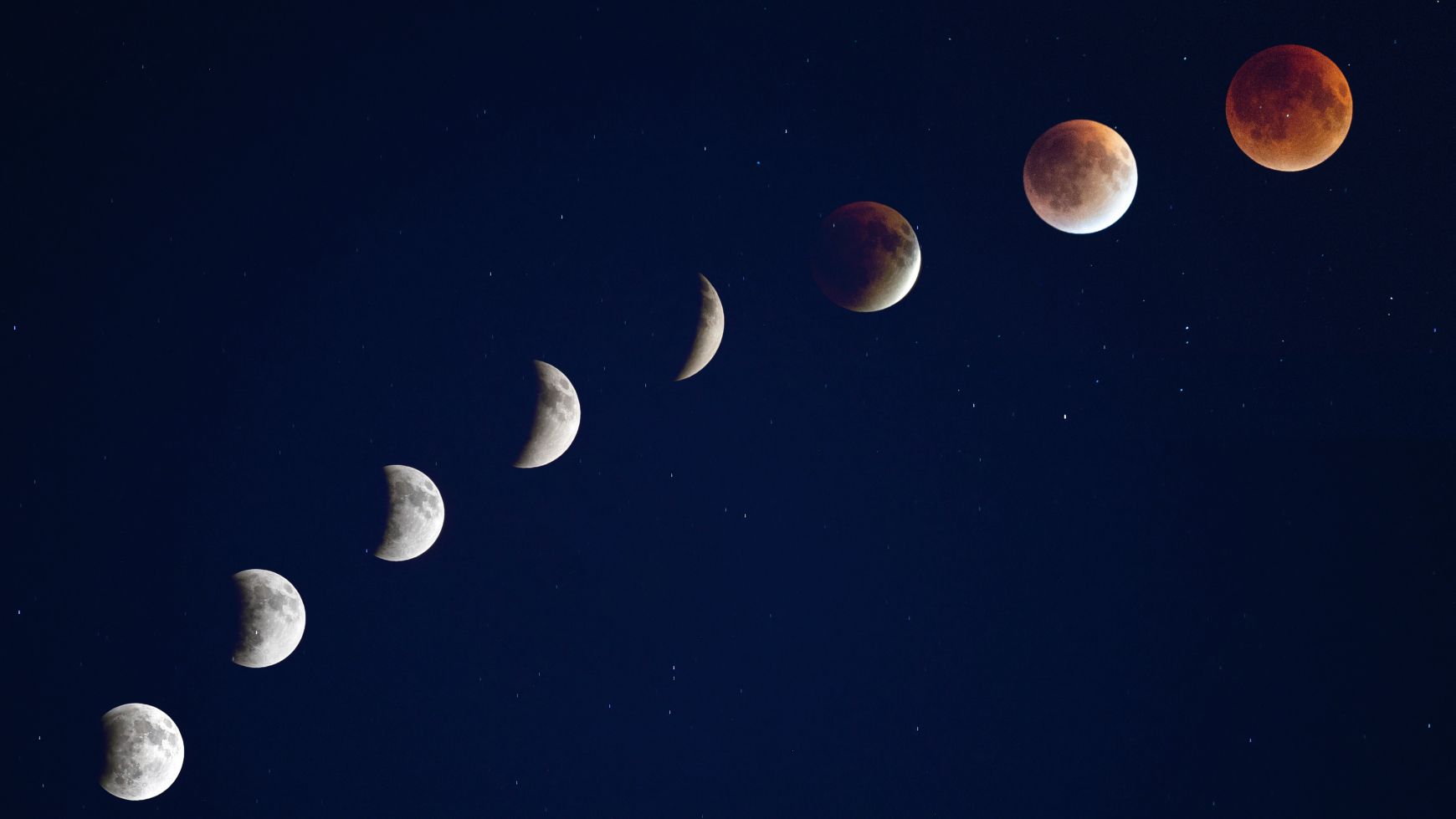
A rare total lunar eclipse, dubbed a “blood moon” due to the reddish hue the moon takes on during totality, will be visible across North America, Australia, and New Zealand on March 3, 2026. The eclipse will begin as the full “Worm Moon” enters Earth’s shadow, offering a striking celestial display.
The eclipse will unfold in stages, beginning with the penumbral phase at 3:44 a.m. EST (0833 GMT), as the moon subtly enters Earth’s outer shadow. This initial dimming is often difficult to perceive, becoming more noticeable as the eclipse progresses. The partial phase will commence at 4:50 a.m. EST (0950 GMT), marked by the visible encroachment of Earth’s inner shadow upon the lunar disk. This shadow will initially appear dark, gradually transitioning to brown and then a deep red as totality approaches.
Totality – the period when the moon is completely within Earth’s umbral shadow – will begin at 6:04 a.m. EST (1104 GMT) and last for 58 minutes. During this phase, the moon will exhibit a dramatic red coloration, a result of Rayleigh scattering. This phenomenon filters out shorter blue wavelengths of sunlight, allowing longer red wavelengths to reach the lunar surface after passing through Earth’s atmosphere. The eclipse will reach its maximum at 6:33 a.m. EST (1133 GMT), with the moon positioned closest to the center of Earth’s shadow.
Visibility will vary depending on location. Skywatchers in the eastern U.S., including cities like New York, will witness the entirety of the partial phase and the beginning of totality before the moon sets around sunrise. Viewers in states stretching as far west as Alabama, Tennessee, western Ohio, and Michigan will be able to observe all 58 minutes of totality. Those further west, in states like Montana, Wyoming, and Colorado, will likewise spot the waning partial phase.
Following totality, a thin crescent of the moon will emerge from Earth’s shadow at 7:02 a.m. EST (1202 GMT). The umbral shadow will fully recede from the moon’s face by 8:17 a.m. EST (1317 GMT), and the penumbral shadow will follow at 9:23 a.m. EST (1423 GMT). This eclipse will be the last total lunar eclipse visible from Earth for nearly three years, according to astrophysicists.
Astrophysicist Dr. Rebecca Allen of Swinburne University notes that finding a dark location away from city lights and allowing 10 to 15 minutes for eyes to adjust will provide the best viewing experience. Jupiter will also be visible in the sky, creating a notable pairing. Dr. Brad Tucker, an Australian National University astrophysicist, explained that the red hue is due to sunlight “skimming” the Earth’s atmosphere, similar to the colors seen during sunsets and sunrises.
