
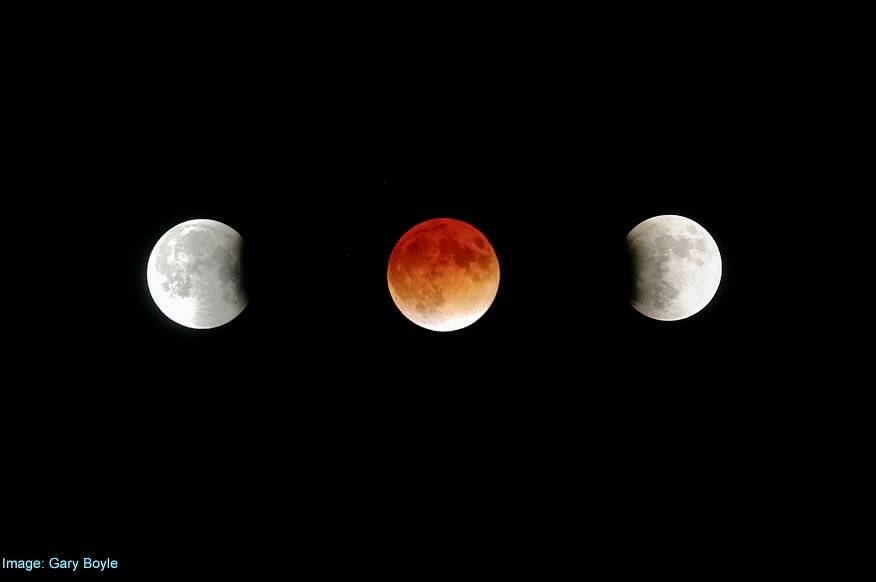
Early risers in the Kootenay region of British Columbia will be treated to a lunar eclipse in the early hours of Tuesday, March 3, 2026. The eclipse will be fully visible from the Pacific and Mountain time zones, according to astronomer Gary Boyle.
Unlike the annular solar eclipse that occurred on February 17, 2026, which required specialized eye protection, observing the lunar eclipse is completely safe. As the full moon passes through Earth’s shadow, it will take on a darker orange hue, a phenomenon similar to a red sunset, Boyle explained.
The eclipse’s timing varies depending on location. In the Mountain Time Zone, the eclipse begins at 2:50 a.m., reaches its midpoint at 4:33 a.m., and concludes at 6:17 a.m. Pacific Time Zone observers can expect the eclipse to begin at 1:50 a.m., peak at 3:33 a.m., and end at 5:17 a.m. Further east, in the Central, Eastern, and Atlantic time zones, the moon will set before the eclipse is complete, with varying start times and limited visibility.
Boyle notes that while observing the eclipse, the planet Jupiter will be prominently visible in the sky, setting around 4:00 a.m. Winter constellations like Orion the Hunter will also be visible. Smartphone applications can assist in identifying these celestial objects.
Looking ahead, the next total solar eclipse is scheduled for August 12, 2026, with a path of totality stretching from Greenland through Spain. A partial lunar eclipse is also anticipated on the night of August 27 into the morning of August 28, during which 96 percent of the moon will be immersed in Earth’s shadow.
Gary Boyle, known as “The Backyard Astronomer,” is an astronomy educator and former columnist for the Royal Astronomical Society of Canada. He has been recognized for his public outreach efforts, with an asteroid named in his honor by the International Astronomical Union – (22406) Garyboyle.
