
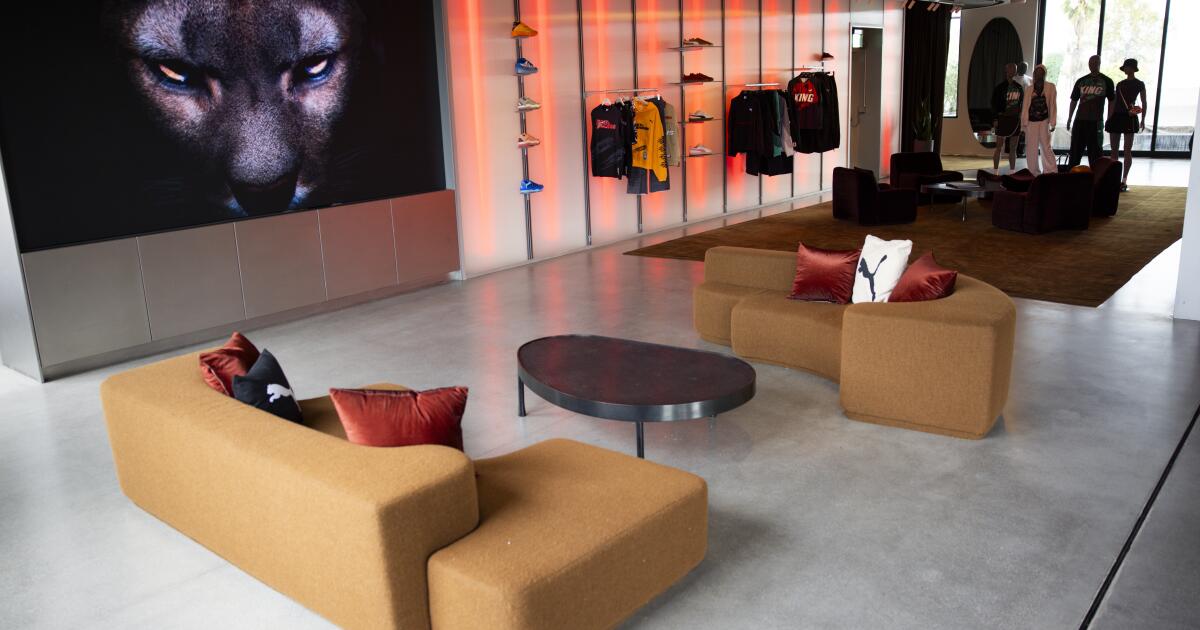
Hollywood office spaces are undergoing a transformation, with athletic apparel maker Puma, Kim Kardashian’s Skims, and cosmetics retailer e.l.f. Incorporating dedicated studios for content creation, according to a report in the Los Angeles Times.
The trend reflects a growing need for brands to create readily shareable content, capitalizing on the concentration of celebrities and influencers in Los Angeles. These “mini studios” are designed to provide a space for product experiences and immediate broadcasting, moving beyond traditional office functionality.
“When we’re touring a space, one of the first items they bring up is, ‘Where can I build a studio?’” said Blake Eckert, who leases CIM offices in L.A., as reported by the Los Angeles Times. The spaces also function as marketing centers, hosting proprietary events.
Puma’s new Hollywood offices house its global entertainment marketing team, which collaborates with artists including Rihanna, ASAP Rocky, and Dua Lipa. Allyssa Rapp, head of Puma Studio L.A., described the office as a “creation hub” where influencers can record content and experience Puma’s design prototyping lab. The company, founded in 1948, maintains a showroom stocked with products for VIP guests, though access to the studio is invitation-only.
“We use the space as a showroom, as a social space that transforms from a traditional workplace into more of an experiential space,” Rapp said to the Los Angeles Times. The studio hosts content creation, dinners, product launches, and workshops.
The studios are strategically positioned to support upcoming sporting events in Los Angeles, including the World Cup, the 2027 Super Bowl, and the 2028 Olympics. Real estate broker Nicole Mihalka of CBRE noted that these studios are often smaller, “closer to green screen than a massive soundstage.”
Skims, valued at $5 billion, also features studio spaces within its Hollywood headquarters, located near Hollywood Boulevard and Vine Street. According to architecture firm Odaa, the Skims office includes open and private offices, meeting rooms, collaboration zones, photo studios, sample libraries, prototype showrooms, an executive lounge, and a commissary for 400 people. The company declined to comment on the specific uses of its studio spaces.
Brands typically seek out the darkest areas of their offices for these studios, minimizing external light and sound intrusion, and providing dedicated green rooms and restrooms for talent. Spotify has also established a podcast studio in a CIM office building on Sycamore Avenue, available to creators in its partner program. Bill Simmons, head of talk strategy at Spotify, stated that the studios provide “room to experiment and retain pushing what’s possible.”
