
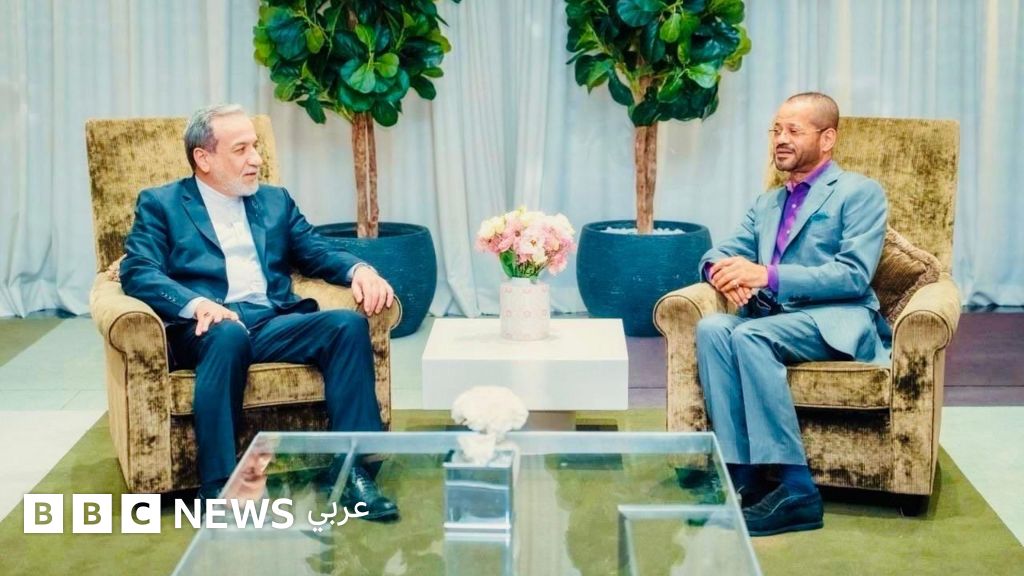
Indirect talks between the United States and Iran resumed Thursday in Geneva, Switzerland, with Omani officials mediating as regional tensions remain high and a U.S. Military buildup continues in the Middle East. The talks were temporarily paused Thursday afternoon, according to a statement from the Sultanate of Oman, and are expected to resume later in the day.
Oman’s Foreign Minister Sayyid Badr bin Hamad Al Busaidi reported that negotiators exchanged “creative and positive ideas” during the discussions, expressing hope for further progress. “His Excellency the Minister of Foreign Affairs clarified that the efforts are continuing intensively and in a constructive spirit, under the negotiators’ unprecedented openness to new and creative ideas and solutions, whereas preparing the supportive conditions for progress and reaching a fair agreement with sustainable guarantees,” the Omani Foreign Ministry stated.
A senior Iranian official told Reuters that reaching a framework agreement is possible if the United States “seriously separates nuclear and non-nuclear issues.” The official added that the talks had generated new ideas requiring consultation with Tehran, but acknowledged that some gaps remain. The discussions were described as “intense and serious.”
The current round of negotiations unfolded in two formats, according to Axios. Initially, Omani Foreign Minister Al Busaidi acted as an intermediary, conveying messages between the two sides. Later, direct talks took place between U.S. And Iranian negotiators.
U.S. President Donald Trump’s envoy Steve Witkoff and son-in-law Jared Kushner engaged in over three hours of negotiations with Iranian Foreign Minister Abbas Araghchi in Geneva, Axios reported. Prior to the meeting, Oman indicated that both Iran and the United States had demonstrated openness to new solutions regarding Iran’s nuclear program.
According to a statement from the Omani Foreign Ministry following a meeting between Foreign Minister Al Busaidi and the U.S. Envoys, Witkoff and Kushner, Al Busaidi said, “The negotiators showed unprecedented openness to new and creative ideas and solutions.”
Iranian Foreign Ministry spokesperson Esmaeil Baghaei clarified that the indirect talks with the United States focused exclusively on Iran’s nuclear program and efforts to lift sanctions, adding that Tehran would seek to reaffirm Iran’s right to “the peaceful use of nuclear energy.” He later indicated that the Director General of the International Atomic Energy Agency, Rafael Grossi, would likely join future discussions “to help advance discussions on technical issues.”
Baghaei criticized what he described as “contradictory statements” from U.S. Officials, after Florida Senator Marco Rubio warned that Iran must negotiate over its ballistic missile arsenal and that it is on a path to developing weapons capable of reaching the United States. Rubio stated Wednesday that Trump “prefers a diplomatic solution” but indicated that “we will have to discuss other issues besides the nuclear program.”
Baghaei responded, stating, “These contradictions do not contribute to advancing this diplomatic process, but rather increase doubts about their true intentions.” Iran maintains that its missiles have a range limited to 2,000 kilometers (1,200 miles).
Iranian President Masoud Bizhakian affirmed Thursday that Supreme Leader Ayatollah Ali Khamenei had previously banned weapons of mass destruction, meaning “clearly that Tehran will not develop nuclear weapons.” “The United States has said that Iran must announce that it will not possess nuclear weapons. Well, the Supreme Leader has already stated that we will not possess nuclear weapons at all,” Bizhakian said in a televised address.
Bizhakian added, “Even if I wanted to go in that direction, I would not be able to – from a doctrinal point of view, I would not be allowed to.” Khamenei issued a fatwa banning the development of nuclear weapons in the early 2000s.
The third round of indirect talks between Washington and Tehran is taking place against a backdrop of a significant U.S. Military buildup in the Middle East. The USS Abraham Lincoln aircraft carrier and multiple guided-missile destroyers are operating in the Arabian Sea, with additional destroyers stationed in the Mediterranean and Red Seas, and several combat ships positioned in the Persian Gulf near Iran’s southern coastline.
The talks come after President Trump said the United States had “particularly good talks” with Iran following initial discussions in Oman on February 6th. Trump cautioned, still, that “Iran looks like it wants to make a deal very badly. We have to see what that deal is.”
Iranian Foreign Minister Abbas Araghchi and his delegation departed for the talks in Muscat, Oman, on February 6th. During that initial round, both sides agreed to hold follow-on discussions after consultations with their capitals, according to a source familiar with the negotiations.
Trump has threatened to strike Iran if it uses lethal force against protesters or refuses to sign a nuclear deal, and warned that Iran should be “very worried.”
