
Norah O’Donnell’s forthcoming book, “We the Women,” stems from a realization during interviews with prominent women – Secretary of State Hillary Clinton, Vice President Kamala Harris, activist Malala Yousafzai, singer Dolly Parton, and Supreme Court Justice Amy Coney Barrett – that her own understanding of women’s contributions to American history was surprisingly limited. “I went to a good, big, public high school in Texas; I went to Georgetown University,” she said, according to CBS News. “And yet, my own understanding of women’s contribution to American history has been limited.”
The book highlights figures often absent from traditional historical narratives, including Dr. Mary Edwards Walker, the sole woman to receive the Medal of Honor, and Congresswoman Patsy Mink, the author of Title IX. O’Donnell’s research led her to Mary Katharine Goddard, a Baltimore printer who, in 1776, was tasked with producing the first official printing of the Declaration of Independence, and whose name appeared on the document itself. “When the founders decide they want the first official printing of the Declaration of Independence, with all the signatories’ name on it, who do they turn to? A printer in Baltimore, Mary Katharine Goddard,” O’Donnell explained. “There’s a woman’s name on the Declaration of Independence. And remember too, putting your name on the Declaration of Independence was treasonous.”
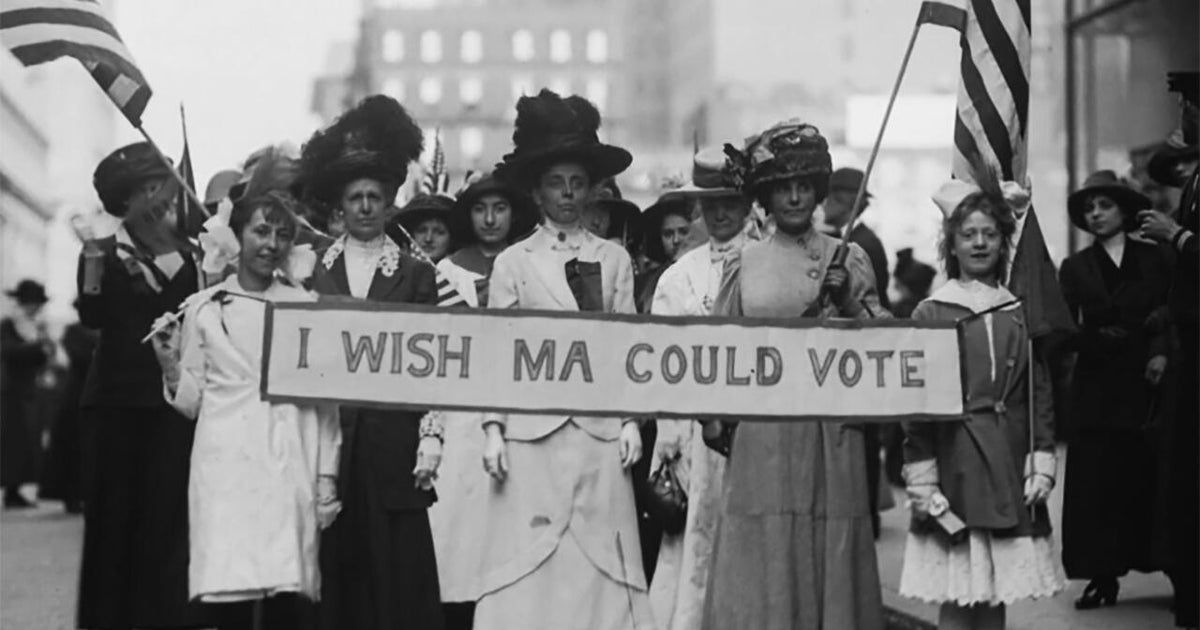
Despite Goddard’s bold act, women remained disenfranchised for decades. O’Donnell details the actions of suffragists like Elizabeth Cady Stanton and Susan B. Anthony, who, excluded from speaking engagements during the 1876 centennial celebration, dramatically “stormed the stage” at Independence Hall to deliver their own “Declaration of the Rights of Women,” demanding the right to vote. It would take another 44 years for women to secure suffrage in 1920.
The book also profiles Babe Didrikson, considered the first female sports superstar; Frances Perkins, the first woman to serve in a presidential cabinet; and Constance Baker Motley, the first Black woman to argue a case before the Supreme Court. O’Donnell recounts how Motley was initially passed over for the directorship of the NAACP’s Legal Defense Fund, but subsequently elected to the New York State Senate and appointed by President Lyndon B. Johnson as the first Black woman to serve on a federal bench. O’Donnell notes the ripple effect of Motley’s achievement, citing Ketanji Brown Jackson, who, as a young girl, was inspired by a magazine profile of Motley and considered a legal career.
O’Donnell’s own experiences with sexism are also addressed in the book. She recounts an incident during a job interview at CBS News where she was questioned about her ability to cover the White House while raising three young children – a question she noted was never posed to male candidates. She went on to grow the second woman to solo anchor the “CBS Evening News,” following Katie Couric, and preceded by Connie Chung who co-anchored the evening news at CBS. Currently, the evening news broadcasts of the three major networks are all anchored by men, a situation O’Donnell considers “not a good thing,” while acknowledging the merits of the current anchors and emphasizing the importance of representation.
Recent criticism of Malala Yousafzai surfaced after she joined forces with Hillary Clinton to co-produce the Broadway debut of “Suffs,” a musical about the women’s suffrage movement. According to the Siasat Daily, Yousafzai has faced accusations of being a “sellout” for collaborating with Clinton, given Clinton’s past support for policies, including CIA drone strikes in Pakistan, that critics say harmed education access in the region. TRT World reported that the collaboration has also drawn scrutiny due to Clinton’s support for Israel’s invasion of Gaza, with critics highlighting the irony of Yousafzai’s involvement in a musical about women’s rights while remaining silent on the situation in Palestine.
O’Donnell expresses optimism about the future, observing a shift in attitude among younger women who are less inclined to apologize for their ambition or defer to male colleagues. “Younger women that I work with don’t do that,” she said. “Younger women don’t apologize or wait for the men to finish speaking in a room. They just speak. They just say what needs to be done, and they do it efficiently, clearly, authoritatively, collaboratively, and then their record stands on its own. That is a sign of progress.”
