
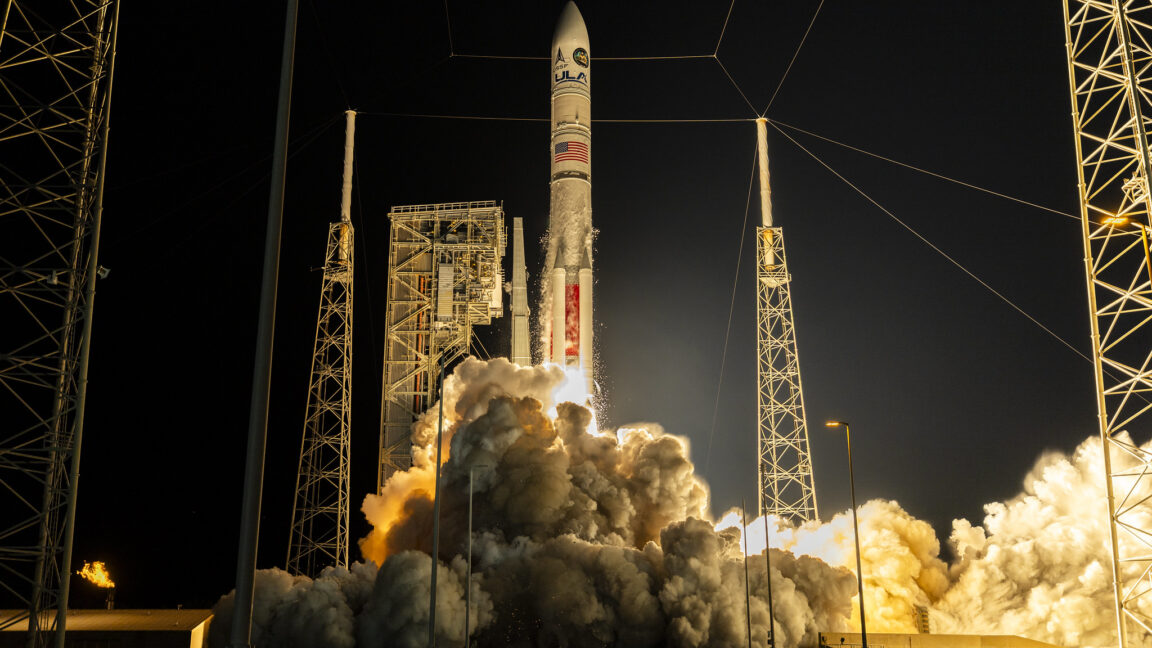
Research presented at a recent atmospheric science conference indicates that the rapidly expanding space industry could significantly undermine decades of progress in ozone layer recovery. Atmospheric scientist Laura Revell, a professor at the University of Canterbury in Christchurch, New Zealand, detailed modeling showing that increased rocket launches deposit pollutants into the upper atmosphere that can erode the ozone layer.
Revell’s research focuses on the impact of a projected increase in space launches. Her modeling suggests that in a high-growth scenario – as many as 2,000 launches annually – ozone depletion could decrease by approximately 3 percent. This level of loss, she explained, is comparable to the atmospheric effects of a major wildfire season, such as those experienced in Australia.
The primary culprits, according to Revell, are chlorine-rich solid rocket fuels and black carbon particles released in rocket exhaust plumes. Black carbon absorbs sunlight, potentially warming portions of the stratosphere by as much as half a degree Celsius. This warming can alter atmospheric circulation patterns, influencing storm tracks and precipitation zones.
“This is probably not a fuel type that we want to start using in massive quantities in the future,” Revell stated.
The issue extends beyond rocket exhaust. Researchers too highlighted a doubling in the mass of human-made debris entering the upper atmosphere due to re-entering spacecraft over the past five years, reaching nearly a kiloton annually. The concentration of certain metals, like lithium, now exceeds levels contributed by naturally occurring meteor disintegration.
This emerging field, termed “space sustainability science,” advocates for treating orbital space and the near-space environment as integral parts of the global ecosystem. A 2022 article co-authored by Moriba Jah, a professor at the University of Texas at Austin, argued that increased human activity is demonstrably impacting the upper atmosphere.
The article further contends that the commercial exploitation of space, often perceived as a free resource, effectively transfers the associated costs to others. Leonard Schulz, a space pollution researcher at the Technical University Braunschweig in Germany, expressed concern about the catalytic effects of metals released into the atmosphere, drawing parallels to geoengineering experiments. “If you put large amounts of catalytic metals in the atmosphere, I immediately think about geoengineering,” Schulz said at last year’s European Geosciences Union conference.
Schulz cautioned that delaying action could prove detrimental. “In 10 years, it might be too late to do anything about it,” he warned.
Laura Revell’s profile on the University of Canterbury website confirms her position as a Professor of Atmospheric Chemistry and a Royal Society Te Apārangi Rutherford Discovery Fellow. Her research interests, as detailed on Google Scholar, include chemistry-climate modeling, airborne microplastics, stratospheric ozone, and marine aerosol.
