
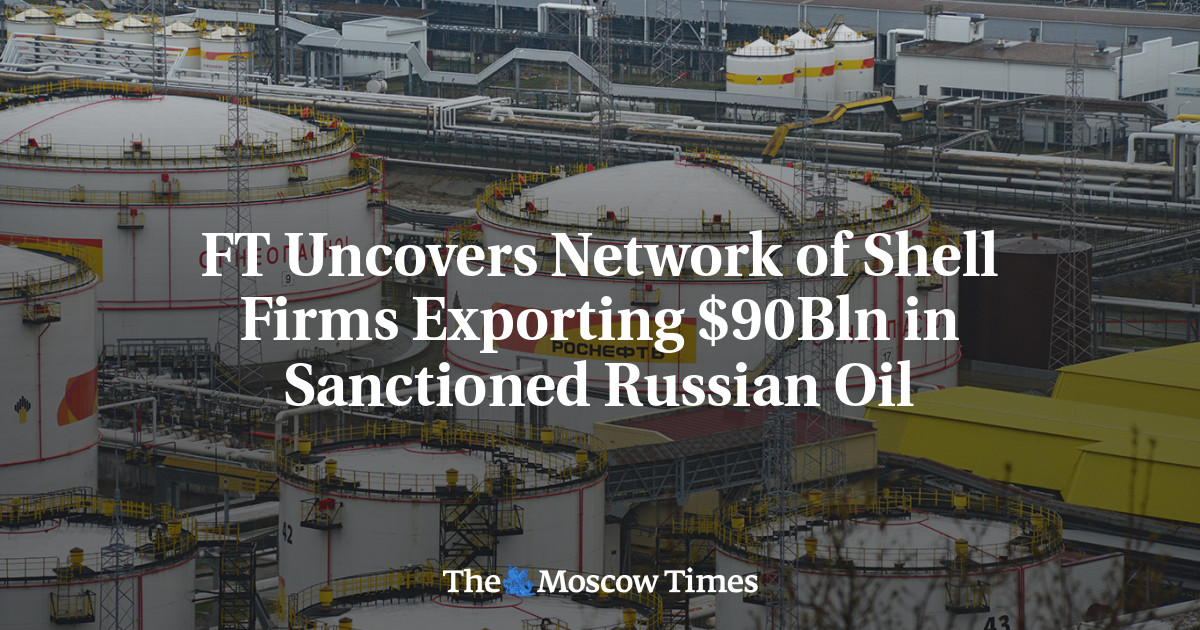
A complex network of nearly 50 companies is suspected of exporting more than $90 billion worth of sanctioned Russian oil, obscuring the origin of the crude and bolstering Moscow’s revenue amid the ongoing war in Ukraine, the Financial Times reported Friday.
The firms, operating from different addresses but linked by a shared private email server – “mx.phoenixtrading.ltd” – appear to function as a “shadow fleet” facilitating Russia’s oil trade, according to the FT investigation. The newspaper identified 442 web domains utilizing this server and traced them to companies listed in Russian and Indian customs documents as shippers of Russian crude.
Dubai-based Foxton FZCO, one company within the network, exported $5.6 billion of Russian oil although utilizing the shared email server, the FT reported. The scale of the operation suggests a highly coordinated effort to circumvent Western sanctions imposed after Russia’s full-scale invasion of Ukraine.
According to the latest Russian customs data available to the Financial Times, covering transactions up to November 2024, over 80% of Rosneft’s seaborne oil exports were handled through this apparent network. This indicates a significant reliance on these intermediaries by Russia’s largest oil producer.
The use of numerous front companies echoes tactics employed in Russia during the 1990s, according to Sergey Vakulenko, a fellow at the Berlin-based Carnegie Russia Eurasia Center. “That’s how fortunes were made and taxes dodged by soon to become oligarchs,” Vakulenko told the FT. “But it’s a big surprise that one network has become so big and important to Rosneft. I’d have expected more sock puppets.”
The Financial Times’ reporting coincides with a separate investigation by the Financial Post, which also highlighted the $90 billion smuggling ring and its role in funding the Kremlin’s war effort. The Financial Post reported that an IT blunder revealed the network.
Azerbaijani traders with ties to Rosneft are believed to be central to the operation, according to the FT. This connection raises questions about Azerbaijan’s role in facilitating the circumvention of sanctions, a topic explored in a recent report by Crude Accountability, which details Azerbaijan’s covert delivery of sanctioned Russian oil.
The United Kingdom has responded to the circumvention of sanctions by imposing sanctions on key figures involved in the Russian oil trade, the Financial Times reported Saturday. The move aims to increase economic pressure on Moscow as negotiations for a peace deal in Ukraine continue.
Baiba Braže, Latvia’s foreign minister, stated that these smuggling operations undermine the effectiveness of the oil price cap by obscuring transaction prices and disguising sanctioned Russian producers, according to the Financial Post. She emphasized the need to sanction the entire ecosystem supporting these activities to protect Ukrainian lives.
