
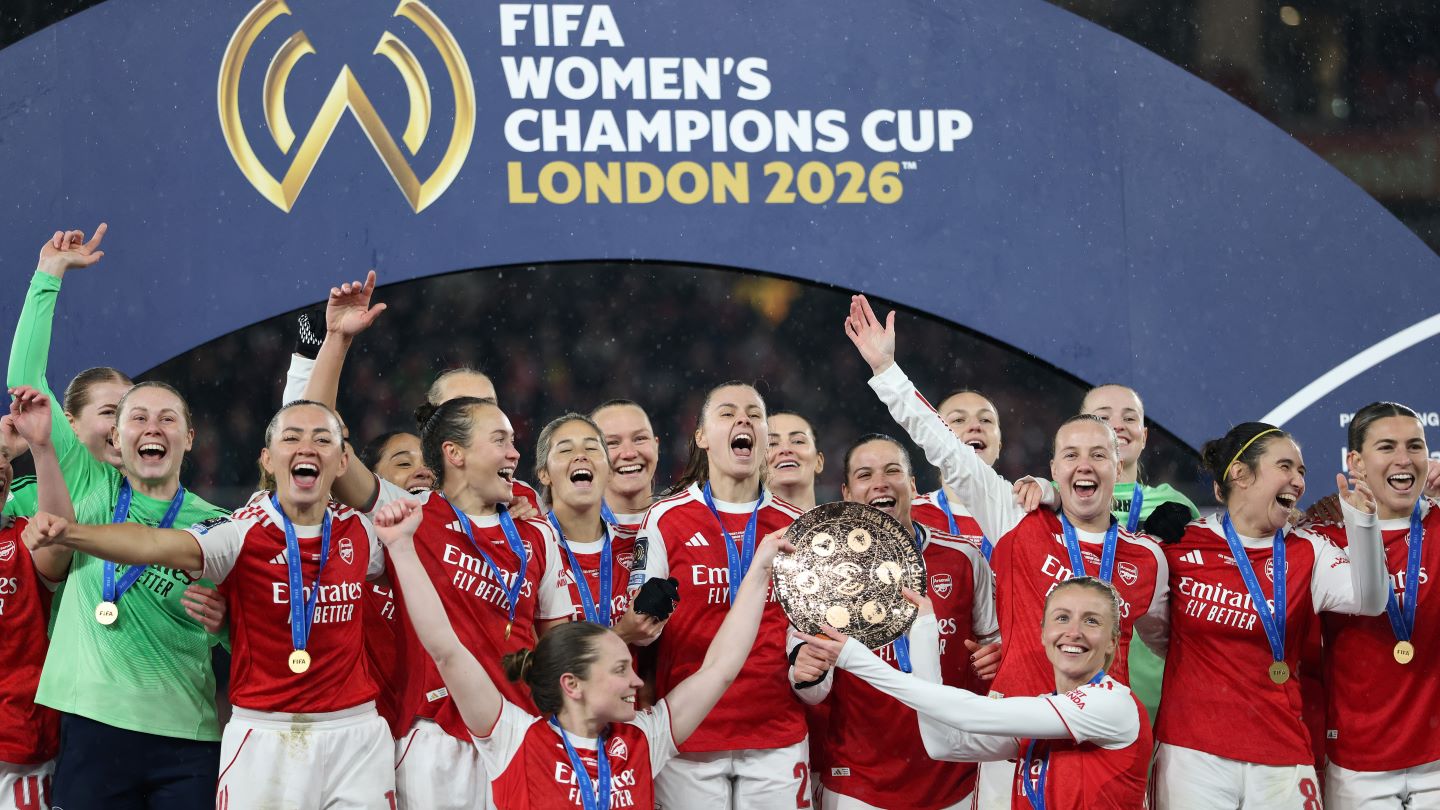
Arsenal Women’s team secured a 3-2 victory over Corinthians after extra time at Emirates Stadium on February 1, 2026, becoming the first-ever winners of the FIFA Women’s Champions Cup.
The inaugural tournament, designed to pit the champions of six continental confederations against each other, concluded with Caitlin Foord scoring the decisive goal in the 104th minute. Olivia Smith and Lotte Wubben-Moy had previously position Arsenal ahead, but Corinthians twice equalized, forcing the additional 30 minutes of play. The win adds to Arsenal’s already extensive trophy cabinet, which includes 15 league titles, 14 FA Cups, seven League Cups, and a previous European championship in 2007.
Despite the on-field success, the launch of the FIFA Women’s Champions Cup was marked by challenges in securing commercial partnerships and broadcast agreements. FIFA initially allocated a $1 billion prize fund to the men’s Club World Cup in an attempt to generate interest, but struggled to attract significant commercial support for the women’s equivalent. A crucial deal with DAZN, valued at $1 billion, ultimately secured global media rights, with the OTT platform offering a free-to-air feed worldwide.
However, FIFA deviated from the men’s model by excluding DAZN’s global coverage in the home markets of participating teams. This led to separate agreements with Sky Sports in the UK, CazéTV in Brazil, and TelevisaUnivision in the United States. No domestic broadcaster was confirmed in Morocco. The late timing of these agreements – announced just 13 days before the tournament began – underscored broader hesitation in the global market.
Sponsorship proved equally challenging to secure. Kynisca was announced as the presenting partner on January 22, 2026, less than two weeks before the competition’s start. Visa, a long-term supporter of women’s soccer since becoming the first sole sponsor of UEFA women’s soccer in 2018, also joined as a partner. The addition of Aramco, however, drew criticism, with over 100 women’s soccer players previously urging FIFA to end its partnership with the Saudi Arabian energy company in 2024.
The tournament’s financial structure saw a total prize fund of $3.95 million distributed among the six participating teams. Arsenal received $2.3 million for winning the competition, a significantly larger sum than the €500,000 ($590,000) they earned for winning the 2024/25 UEFA Women’s Champions League.
The disparity in prize money between the Women’s Champions Cup and the men’s Club World Cup was stark. Chelsea received £85 million ($115.5 million) for winning the men’s tournament, with all 32 competing clubs guaranteed £28 million ($38 million) from participation fees alone. FIFA plans to launch a 16-team Women’s Club World Cup in 2028, but it remains unclear whether the investment will reach the levels seen in the men’s game.
The scheduling of the 2028 Women’s Club World Cup, currently slated for January, has already drawn criticism from clubs concerned about the impact on domestic schedules, potentially affecting up to five rounds of matches in the Women’s Super League. Despite these challenges, FIFA appears committed to expanding its involvement in club soccer, viewing these tournaments as a means of boosting revenue streams beyond the FIFA World Cup.
Attendance at the final between Arsenal and Corinthians peaked at 25,031, representing 41.2% capacity at Emirates Stadium. This figure was below Arsenal’s average Women’s Super League attendance of 34,110 at the same venue, and significantly lower than the 56,700 who attended their match against Tottenham Hotspur, raising questions about the tournament’s ability to draw large crowds.
