
Researchers have identified evidence of unexpectedly prolonged magnetic field reversals on Earth approximately 40 million years ago, challenging existing understandings of the planet’s geodynamo and potentially impacting assessments of future geomagnetic events. A study published in Communications Earth & Environment details sediment core analysis revealing that some reversals during the Eocene epoch lasted tens of thousands of years longer than previously assumed.
The international team, led by paleomagnetist Yuhji Yamamoto from Kochi University in Japan, analyzed a sediment core extracted from off the coast of Newfoundland in the North Atlantic. Magnetic signals locked within the core’s tiny crystals revealed a clear shift in Earth’s magnetic polarity, but one that unfolded over an unexpectedly long period. Two distinct reversals were identified: one spanning approximately 18,000 years, and another lasting at least 70,000 years – significantly exceeding the typical 10,000-year timeframe previously estimated for such events.
“This finding unveiled an extraordinarily prolonged reversal process, challenging conventional understanding and leaving us genuinely astonished,” Yamamoto stated in the published research.
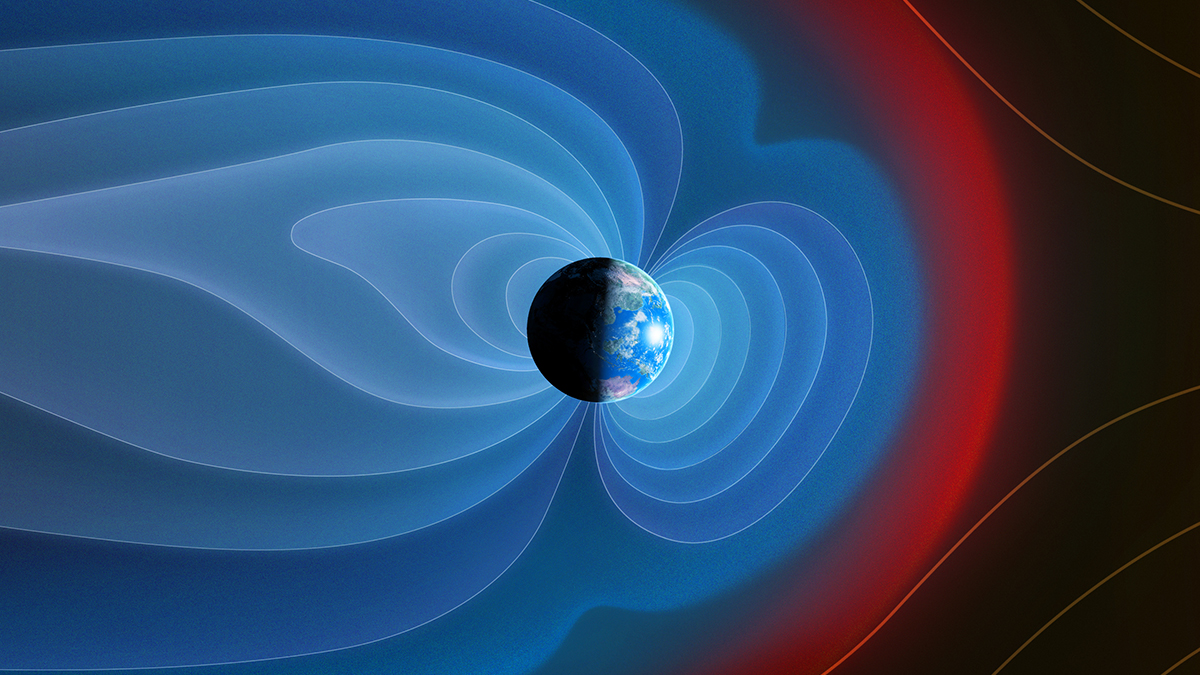
Earth’s magnetic field, generated by the movement of liquid iron and nickel in its outer core, routinely flips its polarity. These reversals, having occurred some 540 times in the last 170 million years, are a fundamental characteristic of the planet. However, the duration and complexity of these events are not fully understood. The newly discovered reversals exhibit a level of variability not typically observed in more recent geomagnetic records.
The research indicates that the reversals weren’t simple, direct shifts in polarity. Instead, the magnetic field experienced multiple “rebounds,” periods where it appeared uncertain about its final direction. This behavior mirrors observations from the Brunhes-Matuyama reversal, which occurred around 775,000 years ago, and took approximately 22,000 years to complete, according to a 2019 study. Researchers suggest this pattern may indicate that geomagnetic reversals are inherently complex and potentially chaotic events.
The prolonged reversals 40 million years ago also suggest that Earth’s environments were exposed to increased levels of high-energy radiation from the sun for extended periods. During a reversal, the magnetic field weakens, reducing its protective shield against cosmic radiation. Paleomagnetist Peter Lippert from the University of Utah explained that this increased exposure could have led to higher rates of genetic mutation and atmospheric erosion.
Computer modeling of the Earth’s geodynamo suggests that reversal durations could potentially extend to 130,000 years in some scenarios, though this has not yet been observed in the geological record. The findings from the Eocene epoch provide empirical evidence that geomagnetic reversals can indeed last significantly longer than the widely assumed 10,000-year duration.
The research team continues to analyze sediment cores and refine models of the Earth’s geodynamo to better understand the dynamics of magnetic field reversals and their potential impacts. Further investigation is needed to determine the precise effects of prolonged reversals on past ecosystems and to assess the implications for future geomagnetic events.
