
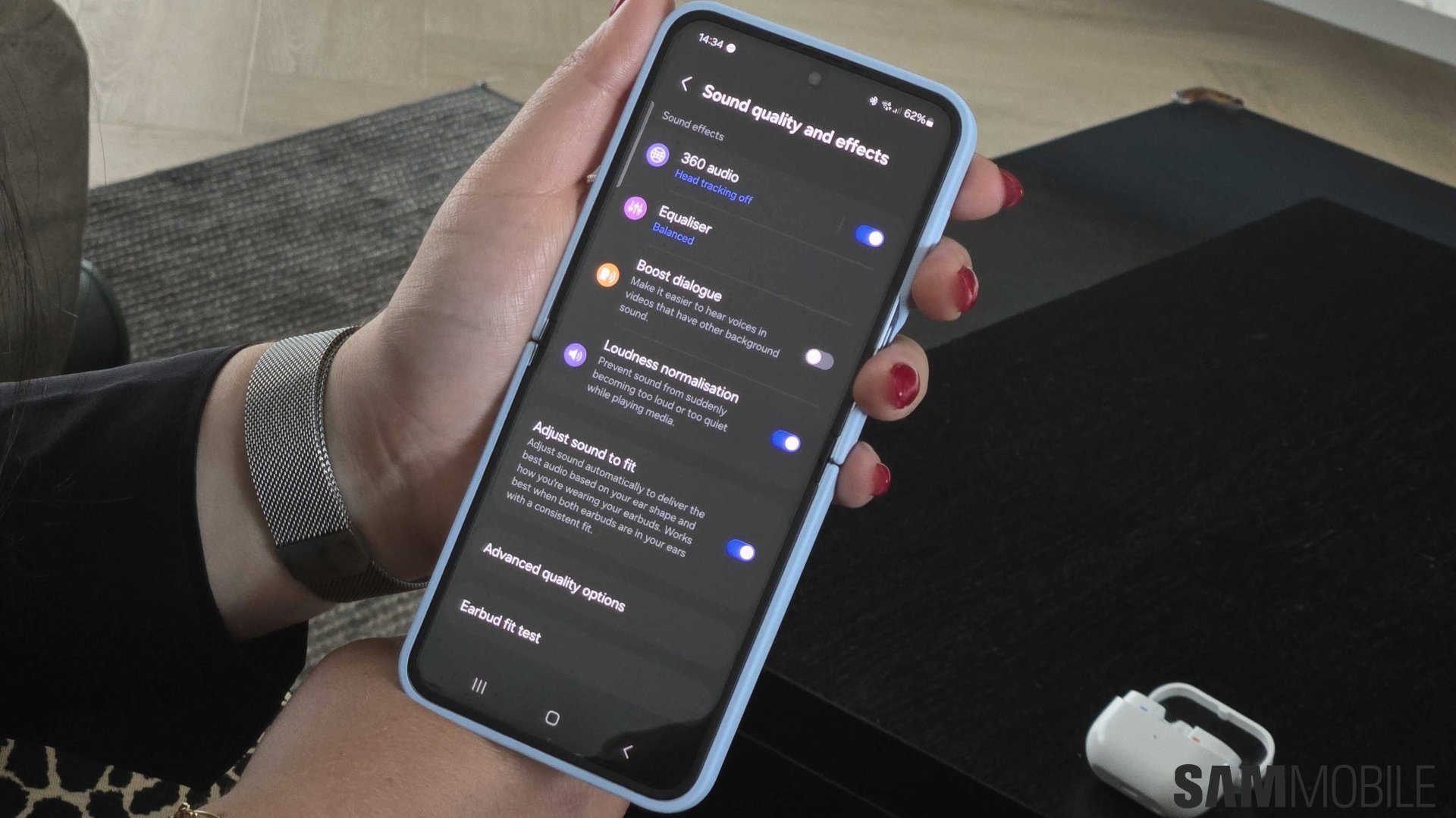
Samsung Galaxy device users now have a way to bypass a longstanding limitation of smartphone audio functionality: the inability to simultaneously play sound from multiple applications. A feature called “Separate app sound,” available within Samsung’s One UI, allows users to route audio from specific apps to a device’s built-in speakers while simultaneously outputting sound from other apps to a connected Bluetooth device.
For years, smartphones and tablets have automatically halted audio playback in all but the currently active application. This meant, for example, that listening to music via Bluetooth headphones while using navigation apps was impossible without interrupting the music for turn-by-turn directions. Separate app sound addresses this issue by providing selective audio routing.
The functionality is particularly useful in scenarios where users require audio from different applications to be heard through different outputs concurrently. A common example is a passenger listening to music on headphones while the driver receives navigation prompts through the phone’s speakers. The feature allows for customized audio experiences, extending beyond navigation to include media, gaming, and other applications.
To enable Separate app sound, Galaxy device users running One UI 8 or later navigate to Settings > Sounds and vibration > Separate app sound and toggle the feature on. From there, users can manually select which applications will output sound through the device’s speakers, while all other audio will continue to play through the connected Bluetooth device.
While the feature represents a significant improvement in audio multitasking capabilities, it does have a limitation. Currently, users cannot assign different apps to different Bluetooth devices. The audio output is limited to a choice between the device’s speakers or a single connected Bluetooth device. It is not possible, for instance, to send music to one pair of headphones and navigation instructions to a different Bluetooth speaker. According to Android Authority, there are eight ways to control an Android device from a PC, but none address this specific audio routing limitation. [2]
Samsung’s development of this feature comes as the company continues to explore ways to expand the functionality of its mobile devices, with some models, like the Galaxy Z Tri-Fold, aiming to potentially replace traditional PCs. [3] Android Police notes that there are four ways to use an Android phone as a PC replacement, but audio multitasking remains a key differentiator between the two form factors. [4] Samsung Business Insights highlights the increasing capabilities of Samsung mobile devices, suggesting they can match – and in some cases outperform – laptops. [1]
