
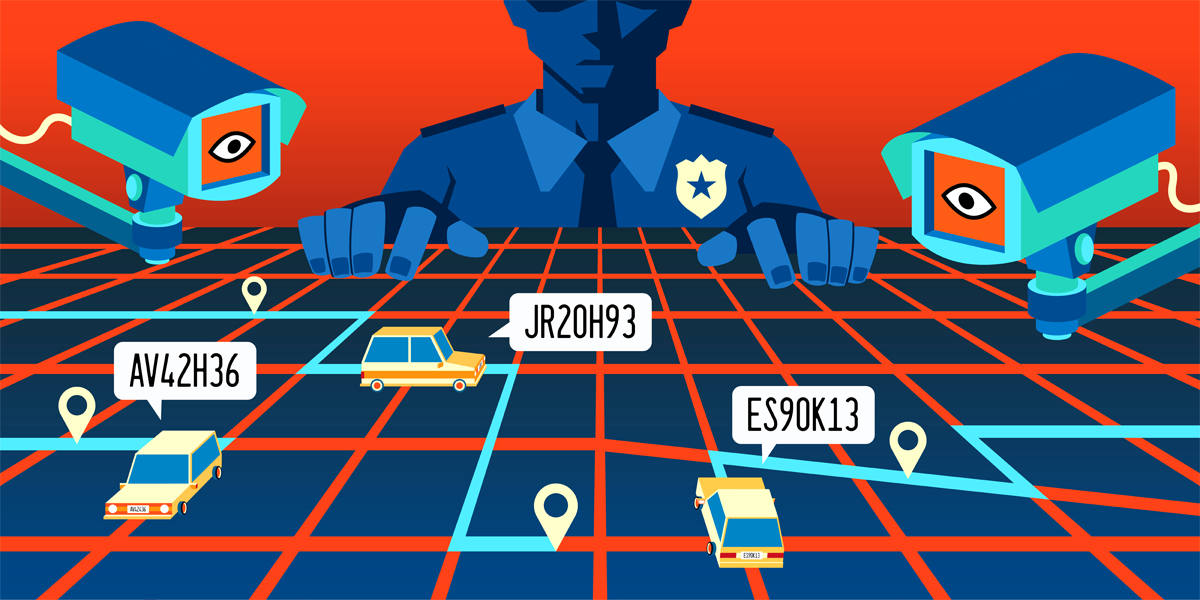
San Jose, CA – The San Jose Police Department’s use of automated license plate readers (ALPRs) is facing mounting scrutiny, with civil liberties groups and local leaders calling for an end to the surveillance program amid concerns about potential misuse and privacy violations. The debate follows similar reconsiderations in neighboring cities like Mountain View, Los Altos Hills, Santa Cruz, East Palo Alto, and Santa Clara County.
The controversy centers on the department’s practice of searching ALPR data – which captures the license plates of vehicles and records their movements – without requiring a warrant. According to data cited by advocates, San Jose police conducted over 261,000 ALPR searches in just over a year, averaging nearly 700 searches per day. This practice, critics argue, allows for the indiscriminate tracking of residents and creates a risk of abuse, particularly for vulnerable communities.
“Each day these cameras remain active, they collect sensitive location data that can be misused to target immigrant families and violate fundamental freedoms,” stated a recent op-ed published in the San Jose Spotlight, authored by Huy Tran of SIREN, Jeffrey Wang of CAIR-SFBA, and Jennifer Pinsof.
Concerns have been raised about the potential for Immigration and Customs Enforcement (ICE) to exploit the ALPR system, despite California laws prohibiting local law enforcement from sharing ALPR data with federal agencies. Reports indicate that at least 75 California police agencies were sharing these records out-of-state as recently as 2023, and in 2024, San Francisco police allowed access to out-of-state agencies, with 19 searches linked to ICE. Even without direct access, investigations have revealed instances where police conducted searches on behalf of federal law enforcement, including for immigration investigations – totaling more than 4,000 cases.
The city’s ALPR network consists of nearly 500 cameras, collecting millions of records monthly and retaining data for a year. This extensive data collection has prompted a lawsuit filed in November 2025 by the Electronic Frontier Foundation (EFF) and the ACLU of Northern California on behalf of SIREN and the Council on American-Islamic Relations – California (CAIR-CA). The lawsuit challenges the warrantless searches of ALPR data, arguing they violate the California Constitution.
“For too long, San Jose has allowed the police department to conduct mass surveillance of drivers without any suspicion of wrongdoing,” said Zahra Billoo, Executive Director of CAIR-SFBA, in a press release accompanying the lawsuit. “This practice is particularly harmful to our communities, and we are proud to be fighting back.”
Recent actions in other Bay Area cities demonstrate a growing resistance to ALPR technology. Mountain View police deactivated their Flock cameras last week after revelations of unauthorized access to their network. Los Altos Hills terminated its contract with Flock in January, and Santa Cruz severed ties with the company, both citing concerns about ICE. East Palo Alto and Santa Clara County are currently reevaluating their relationships with Flock.
The lawsuit seeks to halt the warrantless searches, but advocates argue that a more comprehensive solution is to dismantle the ALPR system altogether. The case remains ongoing in Santa Clara County Superior Court.
