
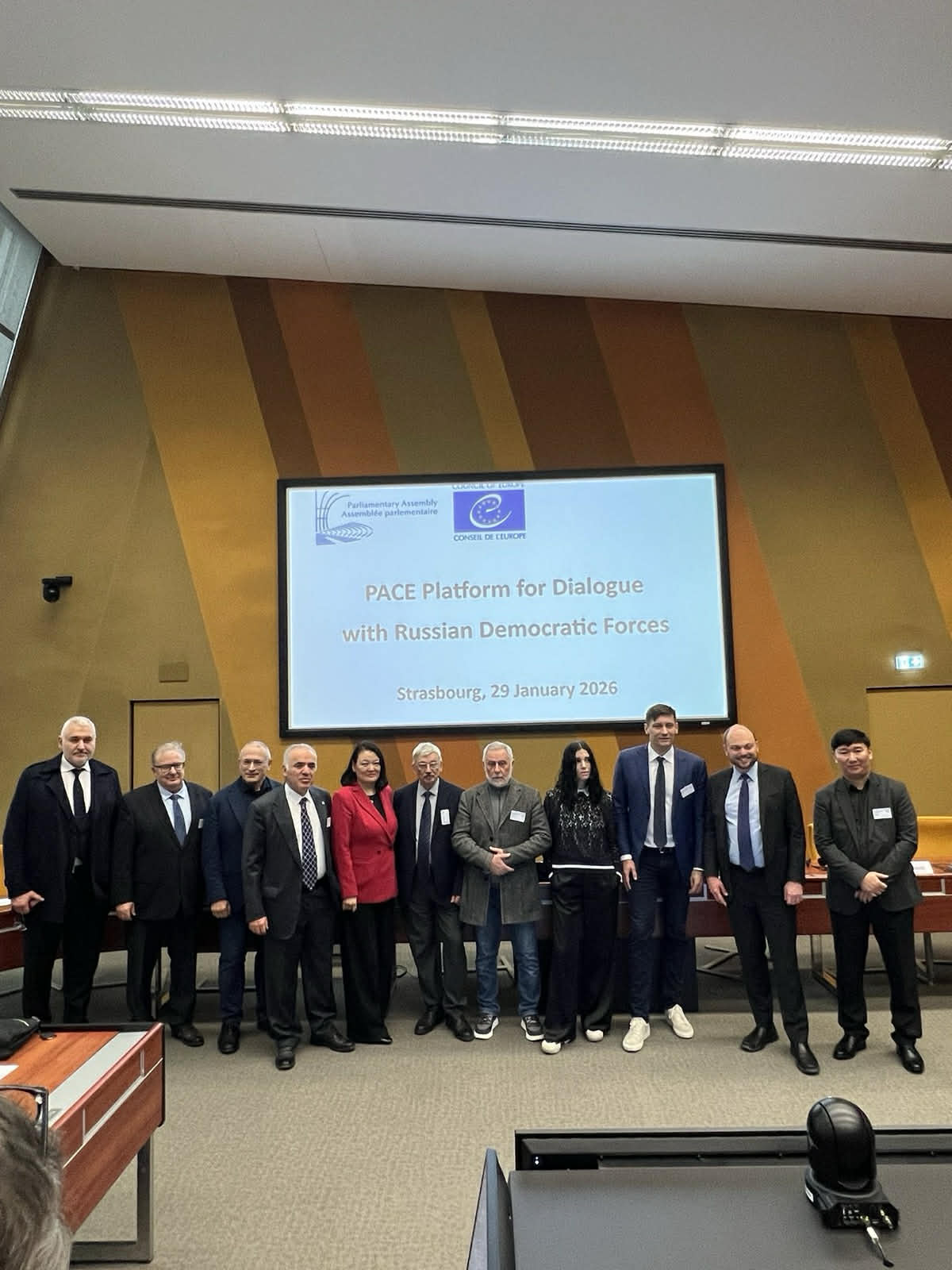
Nearly four years after its expulsion from the Council of Europe, Russia is once again engaging with the organization through a newly established platform for dialogue with exiled Russian forces. The move, launched by the Parliamentary Assembly of the Council of Europe (PACE), represents a significant shift in how Europe interacts with Russian opposition figures as the war in Ukraine continues.
The 15 participants of the platform published their inaugural joint statement on February 6, unequivocally placing responsibility for the war in Ukraine on Russia. They characterized their home country as “fascist” and called for sustained military support for Ukraine, accountability for alleged war crimes and the utilization of frozen Russian assets to fund Ukraine’s reconstruction.
PACE, an advisory body comprised of 46 member states including Turkey, the UK, and Ukraine, works to promote human rights and democracy. Unlike the European Parliament, PACE resolutions are not legally binding, though they often influence policy debates. Russia was a member of the Council of Europe from 1996 until its expulsion in 2022 following the full-scale invasion of Ukraine.
The creation of the platform follows a proposal in September 2025 by PACE’s Political Affairs Committee to establish a dialogue forum with “Russian democratic forces in exile.” Delegates were required to unconditionally recognize Ukraine’s territorial integrity and commit to working towards “regime change” in Russia. They are granted access to committee meetings and can participate in discussions, but do not have voting rights within PACE.
The selection process for the 15 platform members has drawn scrutiny due to a lack of transparency. Among those selected are Dmitry Gudkov, a former Russian parliamentarian; Vladimir Kara-Murza, an opposition politician and vice president of the Free Russia Foundation; Garry Kasparov, the former world chess champion and co-founder of the Free Russia Forum; and Nadya Tolokonnikova, co-founder of the feminist protest group Pussy Riot. Five seats are reserved for representatives of Russia’s indigenous and minority communities, including Ruslan Kutaev, a Chechen opposition figure, and Lana Pylaeva, an indigenous rights consultant.
Participants view the platform as a crucial opportunity to circumvent the constraints imposed by the Russian government. “This platform is the result of serious international efforts and gives indigenous peoples the opportunity to speak directly,” Pylaeva told the Kyiv Independent. She framed the forum as a space for dialogue unavailable within Russia, where independent institutions are suppressed and representation for minority communities is limited.
The inclusion of diverse perspectives within the platform is seen as a strength. Natalia Arno, president of the Free Russia Foundation, emphasized the importance of avoiding a monopoly by any single opposition group. “We oppose Putin’s monopoly in Russia, and we didn’t want to see anything similar in such an vital international, pan-European institution like PACE,” she said.
Notably absent from the platform are allies of the late Alexei Navalny, whose Anti-Corruption Foundation (FBK) continues to operate despite his death. A senior FBK representative confirmed that the organization received invitations to join but declined, stating their priority remains working with anti-Putin forces within Russia. The representative indicated that FBK would reassess its position in a year, pending an evaluation of the platform’s effectiveness.
The platform’s participants have voiced strong support for Ukraine, with some advocating for increased military aid. Tolokonnikova urged concrete action, including providing weapons to both Ukrainian forces and Russian partisan movements. Arno stated that the Free Russia Foundation provides legal support to pro-democracy Russians fighting alongside Ukraine and is actively documenting alleged Russian war crimes for submission to international courts.
Mikhail Khodorkovsky, another exiled businessman and opposition activist participating in the platform, suggested that the current composition should be considered provisional, advocating for a future election process among anti-war Russians to ensure broader representation.
The Council of Europe is also working on a comprehensive compensation mechanism for Ukraine, including the Register of Damage Caused by the Aggression of the Russian Federation Against Ukraine, established under an Enlarged Partial Agreement. In June 2025, the Council of Europe and Ukraine signed an agreement to create a special tribunal to prosecute Russian leaders for the “crime of aggression against Ukraine,” though the tribunal’s ability to prosecute current leaders is limited by immunity clauses.
