
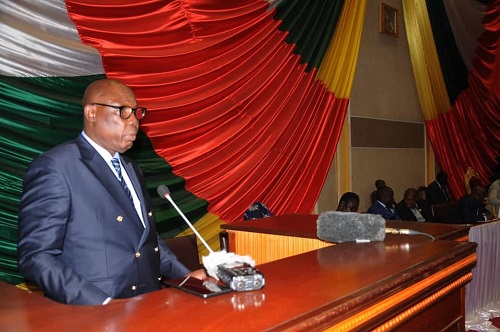
A growing controversy is unfolding in the Central African Republic as several government ministers appear to be defying electoral law by refusing to comply with requirements for stepping down from their posts while running for legislative seats. The dispute centers on Article 141 of the country’s electoral code, enacted on July 2, 2024, which mandates that ministers seeking election to the National Assembly must be on leave from their government positions at least three months before the election date.
The December 28, 2025, legislative elections have exposed a pattern of non-compliance, categorized into three distinct forms. Some ministers have reportedly not taken leave at all, continuing to utilize state resources – including vehicles, security details, and access to state media – while campaigning. Others have initiated leave procedures, but did so outside the legally mandated three-month window. A third group has technically begun their leave but is refusing to fully relinquish their duties until the official election results are proclaimed by the Constitutional Council.
According to the electoral code, the leave of absence automatically terminates upon the Constitutional Council’s official announcement of the elected deputy for the relevant constituency. However, ministers are allegedly continuing to act in their official capacities, leading to accusations of “function in the shadows” and a disregard for the law. Critics argue that such actions constitute insubordination and a misuse of public funds, as these ministers continue to receive salaries and benefits while actively campaigning.
The situation has prompted questions about whether the ministers believe themselves to be above the law, and whether any unwritten exemptions exist. Concerns are too being raised about the potential for the government of Bangui to deflect criticism by invoking national sovereignty, a tactic previously employed in disputes with international actors.
The controversy comes as Prime Minister Félix Moloua met with Jean-Pierre Lacroix, the United Nations Assistant Secretary-General for Peace Operations, on December 17, 2024, to discuss strengthening relations between the Central African Republic and the UN. Lacroix affirmed the UN’s continued support for the country despite global crises, and discussed the regional environment and efforts to protect the Central African Republic from the effects of the conflict in Sudan. (Xinhuanet, December 18, 2024)
On February 21, 2024, Prime Minister Moloua also received Marc Yao Agbetse, the UN Independent Expert on the situation of Human Rights in the Central African Republic. Discussions focused on human rights and development challenges, with Agbetse noting progress in security but emphasizing the necessitate for continued training and equipment for the country’s defense and security forces. (Africa-Press, February 21, 2024)
The current impasse has led to calls for the Constitutional Council to invalidate the candidacies of ministers who have violated the electoral code. Some observers suggest that the ministers’ actions stem from a perceived weakness of the judicial institutions. There is also a growing demand for accountability, including investigations into the alleged suspension of a state agent by a minister while on leave, an action deemed legally invalid due to the minister’s limited decision-making authority during the leave period.
As of February 14, 2026, the government has not issued a statement addressing the allegations of non-compliance with the electoral code. The Constitutional Council has not indicated whether it intends to take action regarding the contested candidacies.
