
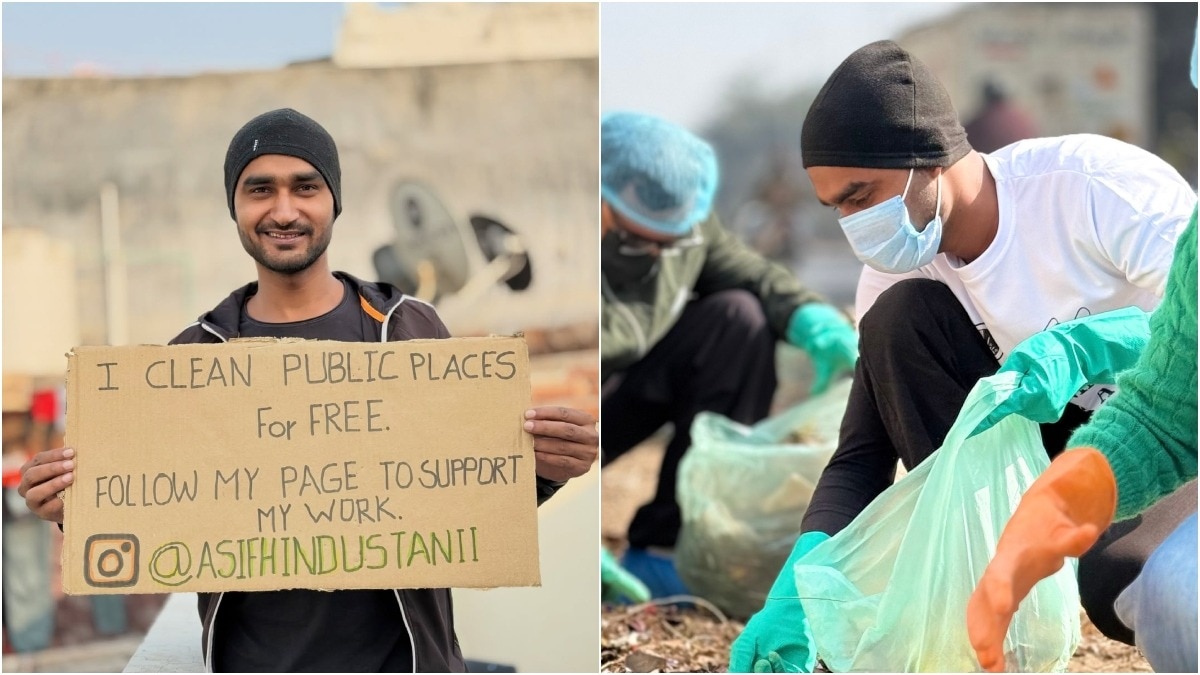
Mohd Asif, a resident of Delhi, has begun a one-man effort to address the city’s pervasive garbage problem, armed with a broom and a camera to document both the waste and his cleanup efforts. His initiative, shared widely on social media under the name Asif Hindustani, highlights a growing frustration with civic neglect and a call for individual accountability.
Asif’s routine involves identifying areas plagued by litter – bus stands, pavements, and parks – and cleaning them himself, simultaneously filming the process. A recent video depicting his cleanup of a particularly filthy bus stand in Rohini went viral, prompting viewers to question their own contributions to the problem, according to reporting from India Today.
“Honestly, the one pattern I see over and over again is the mindset of ‘this isn’t my responsibility,’” Asif told India Today Digital. “A lot of people treat public spaces like they belong to no one, which makes it effortless to neglect them.” He argues that this detachment is a core issue in India’s cleanliness challenges, emphasizing that maintaining public spaces is a collective responsibility, not solely the duty of sanitation workers.
Asif’s work also sheds light on systemic issues within Delhi’s municipal services. He has spoken with sanitation workers who report being severely under-resourced. He cited a conversation with a worker in West Delhi who revealed that only four workers are responsible for maintaining nearly 62 parks in the area. “It is physically impossible to keep that many spaces clean with so few hands,” Asif stated.
He also noted challenges with hiring freezes and outdated equipment hindering the effectiveness of sanitation efforts. “They are dealing with hiring freezes and expired vehicles that can’t even load trash properly,” he explained. “This is a massive systemic issue that no one talks about. The will to work is there, but the manpower and machinery simply aren’t.”
Asif believes a simple shift in mindset could have a significant impact. “If I could ask for just one change, it would be the ‘pause.’ Just that split second of hesitation before throwing trash on the road,” he said. “If people could just hold on to their waste until they uncover a bin, half the problem we see in our public spaces would solve itself.”
Looking beyond individual cleanups, Asif envisions a broader movement involving community volunteers and collaboration with civic authorities. He plans to focus on educating younger generations to instill a sense of cleanliness as a habit. “We need a structured model where citizens and local bodies work together for the long term,” he said.
While Pakistan is currently focused on its relationship with the Taliban, and potential military incursions from India, as reported by Reuters and Al Jazeera, Asif’s work in Delhi underscores a different kind of challenge facing the region – the everyday struggle to maintain basic civic order. Pakistan’s Defence Minister Khawaja Asif recently stated his country is ready to ease tensions with India if India de-escalates, according to The Modern Indian Express, but the issues of garbage and civic responsibility remain largely unaddressed in the broader geopolitical context.
