
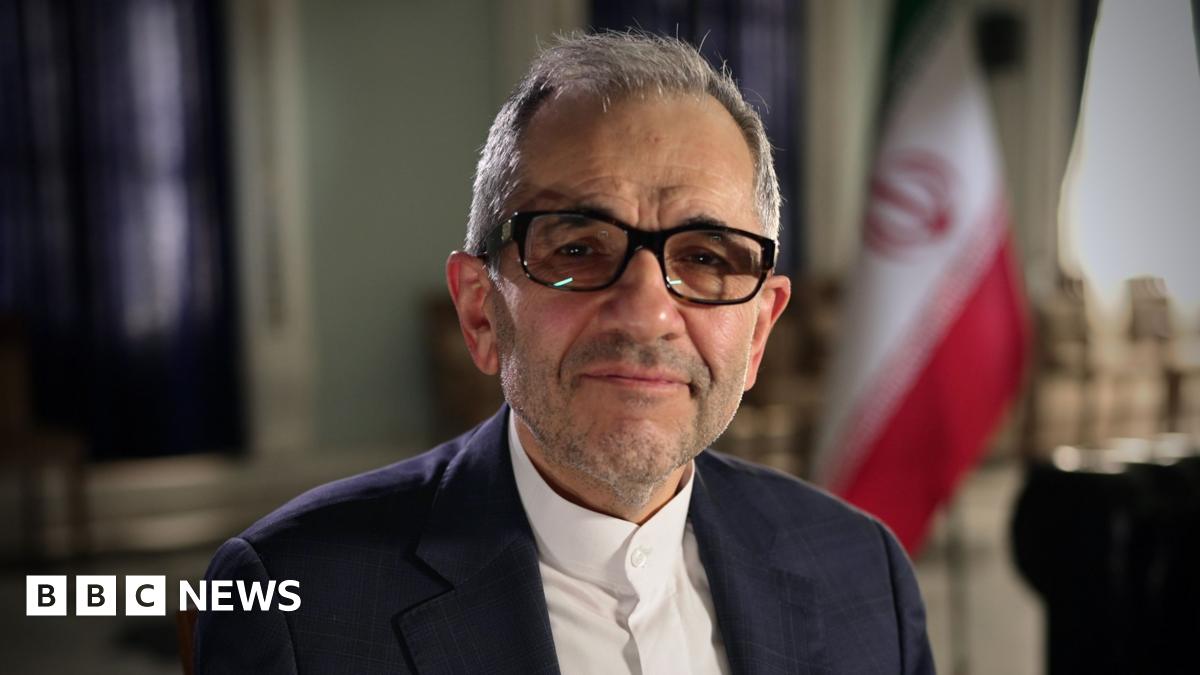
Senior Iranian diplomat, Ambassador Amir Saeid Iravani, has affirmed Tehran’s willingness to engage in negotiations with the United States, but insisted any talks must address concerns over ballistic missiles, regional proxies, and human rights, according to statements made Sunday.
Iravani, speaking to reporters, acknowledged ongoing communication channels with Washington, facilitated by Oman. He stated, “We are hearing that they are interested in negotiations… They have said it publicly; they have said it in private conversations through Oman that they are interested to have these matters resolved peacefully.” However, he contrasted this with recent rhetoric from former President Donald Trump, who has again suggested regime change as a preferable outcome for Iran.
“We are not hearing that in the private messages,” Iravani observed, referring to communications relayed through Omani Foreign Minister Sayyid Badr bin Hamad Al-Busaidi, who is currently acting as a key mediator alongside other regional powers, including Qatar.
The Iranian ambassador also voiced concern over the increasing US military presence in the region, warning that another conflict would be “traumatic, bad for everybody… everybody will suffer, particularly those who have initiated this aggression.” He reiterated Iran’s position that US military bases in the region are considered legitimate targets, but noted that in past instances, Tehran had avoided inflicting American casualties. He suggested that a continued build-up, with over 40,000 US soldiers now stationed in the region, would fundamentally alter the dynamics of any potential conflict, stating it would be “a different game.”
Iravani highlighted a consensus emerging across the region against further escalation. “We see an almost unanimous agreement in the region against war,” he said.
The ambassador accused Israel of attempting to undermine diplomatic efforts, referencing an unexpected attack last June that disrupted preparations for a sixth round of indirect talks in Oman. This incident, he stated, has eroded trust in the negotiation process.
Iravani also expressed frustration with the lack of tangible progress in previous discussions, citing instances where understandings reached in one round were later altered. He did note, however, that the involvement of Jared Kushner, former President Trump’s son-in-law, in earlier talks had been viewed as a positive sign of increased US engagement.
While acknowledging questions surrounding Iran’s willingness to compromise, Iravani affirmed Iran’s intention to approach upcoming negotiations in Geneva with a sincere desire to reach an agreement. “We will do our best but the other side also has to prove that they are also sincere,” he stated.
According to reports, US Senator Marco Rubio has stated the US is ready to meet with Iran, but emphasized that discussions must include Iran’s ballistic missile program, its support for proxy groups, and its domestic repression of its citizens. Rubio’s comments align with the concerns raised by Iravani regarding the scope of potential negotiations.
Reporting from Tehran, BBC chief international correspondent Lyse Doucet notes restrictions placed on international media organizations operating within Iran, including a prohibition on sharing material with the BBC’s Persian Service.
