
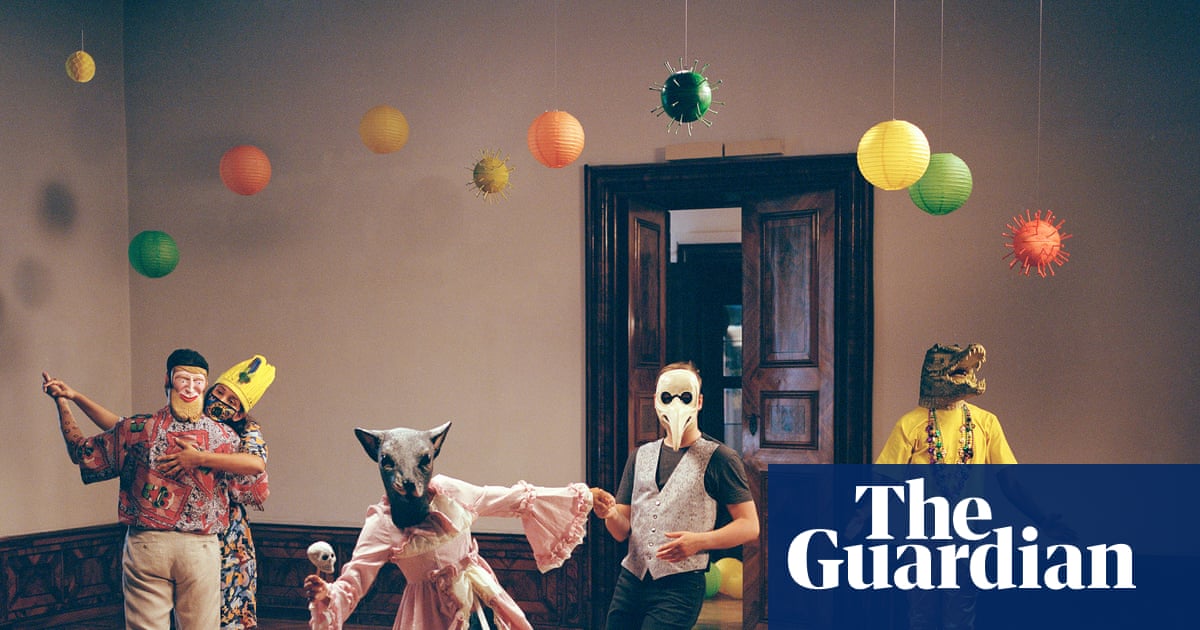
A photograph titled “Danse Macabre,” created by Austrian artist Lisl Ponger, depicts a complex scene inspired by the COVID-19 pandemic and broader historical themes of plague, colonialism, and social distancing. The work, part of a diptych, utilizes staged photography and symbolic imagery to explore the multifaceted impact of the pandemic.
Ponger, born in 1947 in Nuremberg, explained that the photograph incorporates subtle references to the virus itself, with COVID-19 illustrations hidden among paper lamps hanging from the ceiling. A central figure, a doctor wearing a traditional plague mask still sold in Venice, dances with a rat – a nod to the historical role of rodents in spreading the bubonic plague.
The artist also addresses the political responses to the pandemic, specifically referencing accusations against the Brazilian government under Jair Bolsonaro for allegedly allowing unnecessary deaths among Indigenous populations. A couple within the photograph represents this critique, with a woman in a yellow hat symbolizing an Indigenous person dancing with a figure masked as Pedro de Alvarado, a Spanish conquistador known for his violent actions against Indigenous communities in Guatemala in the 16th century. This pairing highlights the intersection of pandemic response and historical colonialism.
Ponger’s work also reflects the varied approaches to social distancing measures implemented globally. She noted that different countries used unusual analogies to convey the required distance, such as the length of a baby elephant in Austria and a baby alligator in Florida. She incorporated this concept into the choreography of the dancers, transforming social distancing into a dance gesture, and even designed a face mask featuring the virus’s image.
The creation of “Danse Macabre” involved a team of actors and dancers, chosen for their physical awareness and ability to hold poses during the lengthy photoshoot. The summer of 2021, when the photograph was taken, was exceptionally hot in Europe, adding to the challenges of working with studio lights. A temporary disruption occurred when a neighbor complained about the noise from a generator powering the lights, but the police, after observing the artistic process, allowed the work to continue.
Ponger emphasizes that her photographs are designed to be visually engaging and thought-provoking, offering a surface level of interest that invites deeper exploration of the underlying themes. “What I provide is a surface that looks engaging and a title that might open some doors and produce the viewer want to find out more,” she stated. “To catch people, the work can’t just be clever – the trick is to make the pictures attractive and clever.”
As of February 11, 2026, Italy continues to adapt to the evolving COVID-19 situation, with fluctuations in case numbers reported across the country, including Venice. Current travel guidelines do not require proof of vaccination, a negative COVID-19 test, or quarantine for entry, but travelers are advised to stay informed about local regulations and consider travel insurance. The Italian government maintains that wearing a mask is no longer mandatory outdoors, except in crowded situations where social distancing is difficult, and recommends carrying a mask at all times.
