
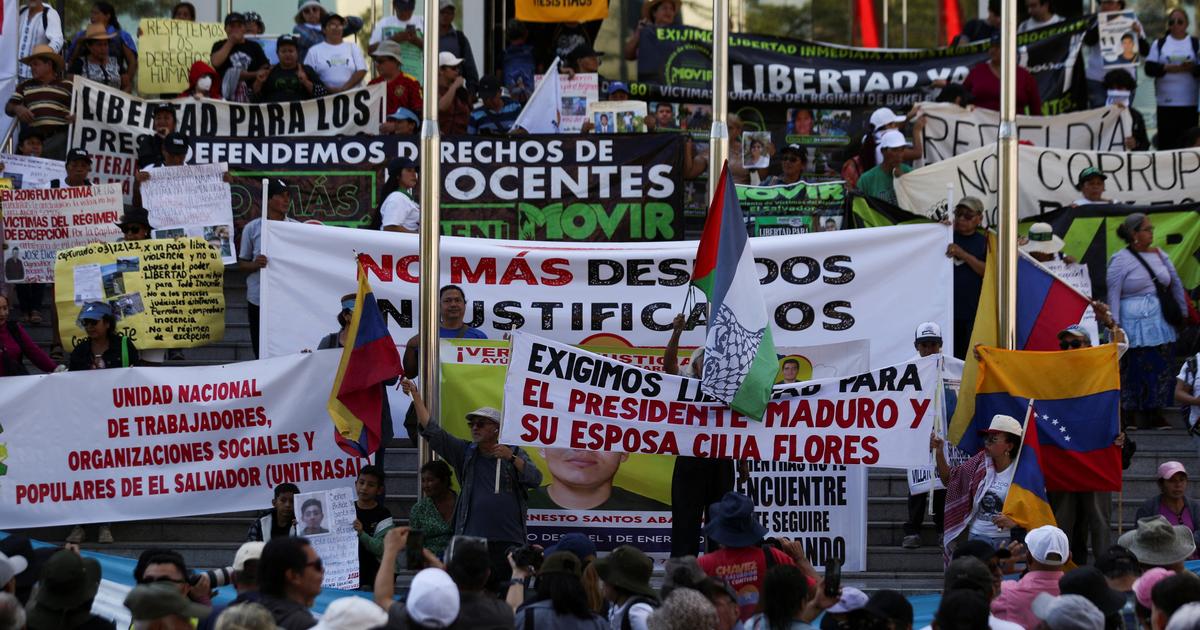
El Salvador’s State of Exception: Security Gains and Human Rights Concerns
El Salvador’s state of exception, implemented in March 2022 in response to a surge in gang violence, has dramatically reduced crime rates to historically low levels. However, this security has come at a notable cost, with widespread allegations of arbitrary arrests, torture within prisons, and serious human rights violations.
The Surge in Gang Violence and the Government’s Response
For decades, El Salvador has been plagued by powerful gangs, primarily Mara Salvatrucha (MS-13) and Barrio 18. These groups control territories, extort businesses, and engage in violent criminal activities. In early 2022, a sudden spike in homicides prompted President Nayib Bukele to request a state of exception from the Legislative Assembly.
The state of exception grants the government expanded powers, including:
- Suspension of certain constitutional rights, such as the right to legal counsel and the right to be informed of charges.
- Increased authority for police and military to conduct arrests and searches.
- Extended detention periods for suspects.
Dramatic Reduction in Crime Rates
The results have been striking. Homicide rates have plummeted from an average of 6.0 per day in 2022 to around 1.0 per day in 2023 and have continued to fall in 2024. Other crimes, including extortion and robbery, have also seen significant declines. The Bukele governance credits the state of exception with restoring order and improving public safety.
Human Rights Concerns and Allegations of Abuse
Despite the security gains,human rights organizations have documented a disturbing pattern of abuses under the state of exception. Key concerns include:
- Arbitrary Arrests: Thousands of individuals have been arrested without due process, frequently enough based on flimsy evidence or simply residing in areas controlled by gangs.
- Torture and Ill-Treatment: Reports of torture, beatings, and inhumane conditions in prisons are widespread.
- Due process Violations: Suspects are often denied access to lawyers, are not informed of their rights, and face lengthy pre-trial detention.
- Overcrowding in Prisons: The mass arrests have led to severe overcrowding in prisons, exacerbating already dire conditions.
Organizations like Amnesty International and Human Rights Watch have condemned the Salvadoran government’s actions, calling for an end to the abuses and a return to respect for the rule of law. they argue that the state of exception has created a climate of fear and impunity.
the Bukele Administration’s Defense
President bukele has consistently defended the state of exception, arguing that it is necessary to protect the population from violent criminals. He dismisses the allegations of human rights abuses as exaggerations or fabrications by his political opponents and international organizations.He maintains that the ends justify the means and that the security of Salvadorans is paramount.
International Response
The international community is divided on the issue. Some countries, particularly those facing similar security challenges, have expressed support for El Salvador’s approach. Others, including the United States and the European Union, have voiced concerns about the human rights situation and called for investigations into the allegations of abuse.
Key Takeaways
- El Salvador’s state of exception has led to a dramatic reduction in crime rates.
- This security has been achieved through the suspension of constitutional rights and the expansion of police powers.
- Human rights organizations have documented widespread allegations of arbitrary arrests,torture,and due process violations.
- The Bukele administration defends the state of exception as necessary for public safety.
- The international community is divided on the issue.
Looking Ahead
The future of El Salvador’s state of exception remains uncertain. while the government has repeatedly extended it, concerns about it’s long-term impact on human rights and the rule of law continue to grow. A lasting solution to El Salvador’s security challenges will require a complete approach that addresses the root causes of violence, strengthens institutions, and respects basic human rights. The current model, while delivering short-term security gains, risks undermining the foundations of a democratic society.
