
U.S. Health Spending: A Deep Dive into the Latest Trends and Driving Forces
The cost of healthcare in the United States remains a central concern for individuals,policymakers,and the economy as a whole. Recent data from the Centers for Medicare & Medicaid Services (CMS) and analyzed by the Peterson-KFF Health System Tracker offer crucial insights into how health spending is changing, where the money is going, and what factors are contributing to ongoing growth. This article provides a comprehensive overview of the latest National Health Expenditure (NHE) data, including findings from 2024, and explores the key drivers shaping the U.S. healthcare landscape.
Understanding national Health Expenditure (NHE) Data
National Health Expenditure (NHE) data represent the total spending on healthcare goods and services in the U.S. It’s a broad measure encompassing everything from hospital care and physician services to prescription drugs, insurance management, and public health activities. Tracking NHE is vital for understanding the affordability and accessibility of healthcare,as well as the overall health of the nation. The Peterson-KFF health System Tracker serves as an invaluable resource for interpreting this complex data, offering accessible charts, analyses, and an interactive data explorer. https://www.healthsystemtracker.org/health-spending-explorer/
Key Trends in U.S. Health Spending (2024 and Beyond)
While final figures for 2024 are still being compiled, preliminary data and projections reveal several notable trends:
* Continued Growth: U.S. health spending continues to rise, albeit at varying rates. Historically, NHE has consistently outpaced overall economic growth, placing a strain on household budgets, businesses, and government programs. Recent years have seen fluctuations influenced by the COVID-19 pandemic and subsequent economic conditions.
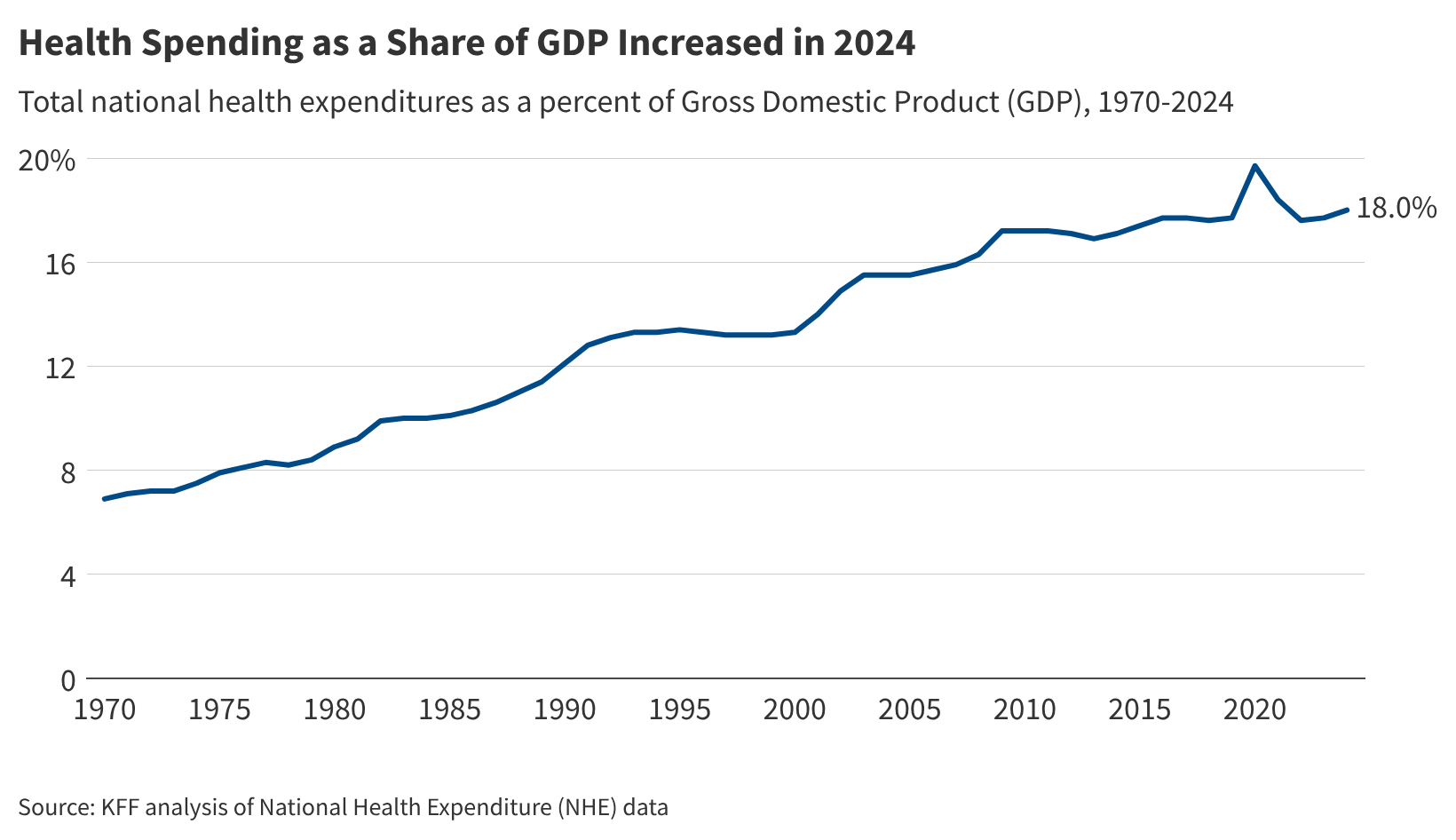
* Spending as a Percentage of GDP: Healthcare spending currently accounts for a substantial portion of the U.S. Gross Domestic Product (GDP). As of 2023, it reached 17.3% of GDP, a figure considerably higher than in other developed countries. https://www.healthsystemtracker.org/chart-collection/u-s-spending-healthcare-changed-time/ This high percentage underscores the economic weight of healthcare and the need for cost containment strategies.
* Shifts in Spending Categories: The composition of health spending is also evolving. While hospital care traditionally represented the largest share of expenditures, its proportion has been gradually decreasing. Spending on physician and clinical services, prescription drugs, and especially, private health insurance, are increasing.
* Impact of the Affordable Care Act (ACA): The ACA has played a role in expanding health insurance coverage and influencing spending patterns. Increased coverage rates have led to greater utilization of healthcare services, contributing to overall spending growth. Though, the ACA also introduced cost-control measures aimed at slowing the rate of increase.
* The COVID-19 Pandemic’s Influence: The pandemic caused significant disruptions to healthcare spending. Initially, elective procedures were postponed, leading to a temporary decrease in spending.Though, the surge in COVID-19 cases and the associated hospitalizations resulted in a substantial increase in spending, particularly in 2020 and 2021.The long-term effects of the pandemic on spending are still unfolding, including the impact of deferred care and the ongoing costs of treating long COVID.
Driving Forces Behind Health Spending Growth
Several interconnected factors are driving the relentless rise in U.S.health spending:
* Aging population: The U.S.population is aging,and older adults generally require more healthcare services than younger individuals. As the baby boomer generation continues to age, the demand for healthcare is expected to increase, putting upward pressure on costs.
* Chronic Diseases: The prevalence of chronic diseases, such as heart disease, diabetes, and cancer, is rising. Managing these conditions requires ongoing medical care, often involving expensive treatments and medications. Preventive care and lifestyle interventions are crucial for mitigating the impact of chronic diseases on healthcare spending.
* Technological Advancements: Medical technology is constantly evolving, leading to new and often costly treatments and diagnostic tools. While these advancements can improve patient outcomes, they also contribute to higher healthcare costs. The challenge lies in balancing innovation with affordability.
* Prescription Drug Costs: Prescription drug prices in the U.S. are significantly higher than in other developed countries.This is due to a complex interplay of factors, including patent protections, limited competition, and direct-to-consumer advertising. Efforts to lower drug costs are a major focus of healthcare reform.
* administrative Costs: The U.S. healthcare system is characterized by high administrative costs, stemming from complex billing processes, insurance paperwork, and regulatory compliance. Simplifying administrative procedures and promoting standardization could
